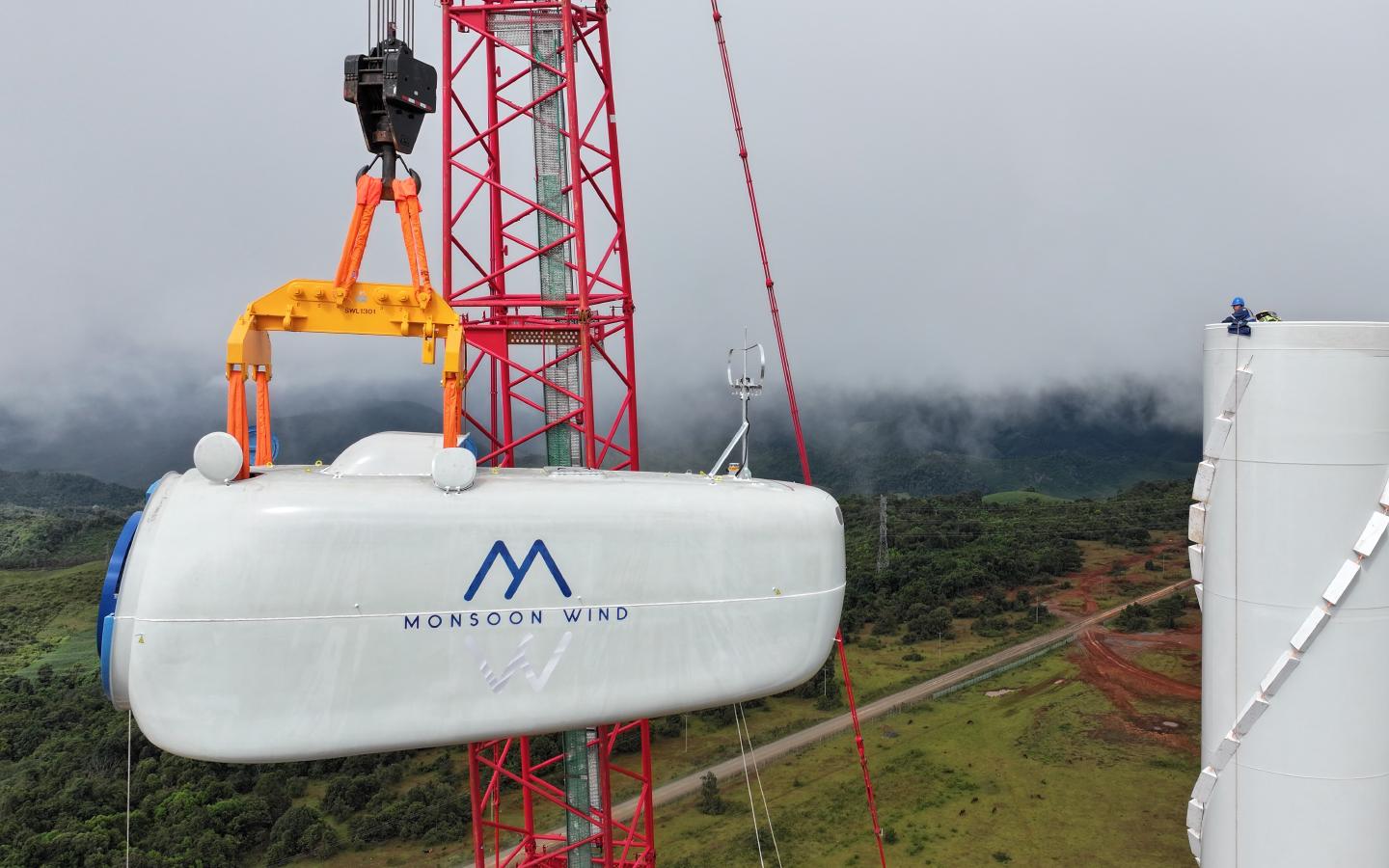
The energy landscape in Southeast Asia has reached a significant milestone with the commercial operation of the Monsoon Wind Power Project. This 600 MW onshore wind farm, located in southern Lao PDR, is not only the largest of its kind in Southeast Asia but also marks Asia’s first truly cross-border renewable energy venture, transmitting clean electricity directly into Vietnam’s national grid. For investors in the broader energy sector, this development signals a powerful shift towards regional energy integration and diversification, creating new avenues for capital deployment while underscoring the dynamic interplay between traditional fossil fuels and emerging green technologies.
Asia’s Pioneering Cross-Border Energy Infrastructure
The Monsoon Wind Power Project, which commenced commercial operations on August 22, 2025, represents a seminal achievement in Asia’s energy transition. With 133 turbines generating 600 MW, it is now providing enough clean electricity to power over one million homes in Vietnam. This landmark project, built four months ahead of its original schedule, is more than just a power plant; it’s a blueprint for regional cooperation. Infrastructure includes four substations, stepping power up to 500 kV, and a 27-kilometer transmission line seamlessly connecting to Vietnam’s 500 kV system and ultimately to EVN’s Thanh My substation. This technical and commercial viability bolsters the long-discussed vision of an ASEAN Power Grid, promising enhanced regional energy security and stability. For Laos, it diversifies an energy mix heavily reliant on hydropower, while for Vietnam, it offers a crucial influx of stable, clean power amidst soaring demand, all while offsetting an estimated 1.3 million tonnes of CO₂ annually.
Navigating Energy Market Volatility: A Dual Investment Focus
While the long-term trajectory for renewable energy projects like Monsoon Wind appears robust, investors in the wider energy sector must navigate significant short-term volatility in traditional markets. As of today, Brent crude trades at $90.38 per barrel, a notable decline of 9.07% within the day, fluctuating between $86.08 and $98.97. Similarly, WTI crude stands at $82.59, down 9.41% for the day, with a range of $78.97 to $90.34. This immediate downturn follows a broader trend; Brent has shed over 18.5% in just the past 14 days, falling from $112.78 on March 30, 2026, to $91.87 on April 17, 2026. Such dramatic price swings underscore the persistent geopolitical and economic factors influencing oil markets. Our readers are keenly watching these movements, with frequent inquiries about what price oil per barrel will reach by the end of 2026. This stark contrast between the stable, long-term returns expected from contracted renewable assets and the inherent volatility of crude markets highlights the evolving risk-reward calculus for energy investors, necessitating a diversified portfolio approach.
Investor Confidence and the Evolving Capital Landscape
The successful financing and execution of the Monsoon Wind project, backed by a formidable $1.1 billion, provides a compelling case study for investor confidence in large-scale renewable infrastructure. The project’s consortium includes a multinational array of developers such as Impact Electrons Siam, ACEN from the Philippines, BCPG and STP&I from Thailand, Mitsubishi Corporation with Diamond Generating Asia, and Lao-based SMP Consultation. Equally impressive is the coalition of regional and global lenders, led by the Asian Development Bank, and including the Asian Infrastructure Investment Bank, Japan International Cooperation Agency, Export–Import Bank of Thailand, Hong Kong Mortgage Corporation, Sumitomo Mitsui Banking Corporation, Kasikornbank, and Siam Commercial Bank. This broad alignment of private and public capital signals a growing conviction that cross-border clean energy projects can deliver both stable, predictable returns and significant climate benefits. Investors are increasingly evaluating energy plays through a wider lens, moving beyond traditional fossil fuel metrics. Questions from our readers, such as “How well do you think Repsol will end in April 2026?”, often reflect this shift, as companies with diversified energy portfolios, including significant renewable assets, are increasingly seen as better positioned for long-term growth and stability.
Upcoming Events and Forward-Looking Market Dynamics
Looking ahead, the next two weeks will be critical for shaping the near-term outlook for crude oil prices, even as renewable energy projects continue their steady expansion. Investor attention will be firmly fixed on the upcoming OPEC+ Joint Ministerial Monitoring Committee (JMMC) meeting on April 18 and the subsequent Full Ministerial Meeting on April 19. With Brent crude having experienced a significant retreat in recent weeks, market participants are eager to understand if the alliance will maintain, adjust, or even deepen current production quotas, a question frequently posed by our readership. Any decisions here will have immediate repercussions for global supply. Beyond OPEC+, the market will closely monitor the API Weekly Crude Inventory reports on April 21 and 28, followed by the EIA Weekly Petroleum Status Reports on April 22 and 29. These crucial data points offer granular insights into U.S. supply and demand dynamics, directly influencing price movements. Furthermore, the Baker Hughes Rig Count on April 24 and May 1 will provide an indication of future production trends. While projects like Monsoon Wind represent the future of energy, the immediate financial health of the traditional oil and gas sector remains deeply tied to these upcoming events, requiring active monitoring and strategic positioning from investors.


