Asia’s First VM0047 Carbon Project Signals New Revenue Streams for Savvy Investors
In an energy landscape increasingly defined by volatility and the imperative for sustainable practices, astute investors are seeking opportunities beyond traditional hydrocarbon plays. While the daily fluctuations of crude prices often dominate headlines, a significant development in Asia’s voluntary carbon market is signaling robust, diversified revenue streams for those looking to the future. The registration of Asia’s first VM0047 carbon project in Mindanao, Philippines, represents more than just an environmental initiative; it’s a testament to the growing financial viability and strategic importance of high-integrity carbon credits, offering a blueprint for value creation that extends far beyond conventional energy commodities.
Navigating the Current Energy Market: A Backdrop for Diversification
The traditional oil and gas market continues its dance with geopolitical shifts and supply-demand dynamics, presenting both opportunities and inherent risks for investors. As of today, Brent Crude trades at $98.01, reflecting a 1.39% decline on the day, with its range fluctuating between $94.42 and $99.84. Similarly, WTI Crude stands at $89.65, down 1.67%, moving within a daily band of $87.32 to $91.82. Gasoline prices have also seen a slight dip to $3.08, down 0.32% for the day. This recent snapshot fits a broader trend; over the past two weeks, Brent has seen a notable decline of 12.4%, dropping from $108.01 on March 26th to $94.58 by April 15th. This persistent volatility underscores a critical challenge for investors: relying solely on traditional energy prices can expose portfolios to significant swings. It is against this backdrop of fluctuating commodity markets that the emergence of stable, high-integrity carbon revenue streams becomes an increasingly attractive proposition, offering diversification and a pathway to more resilient returns.
Asia’s Pioneering Carbon Project: A Blueprint for High-Integrity Value
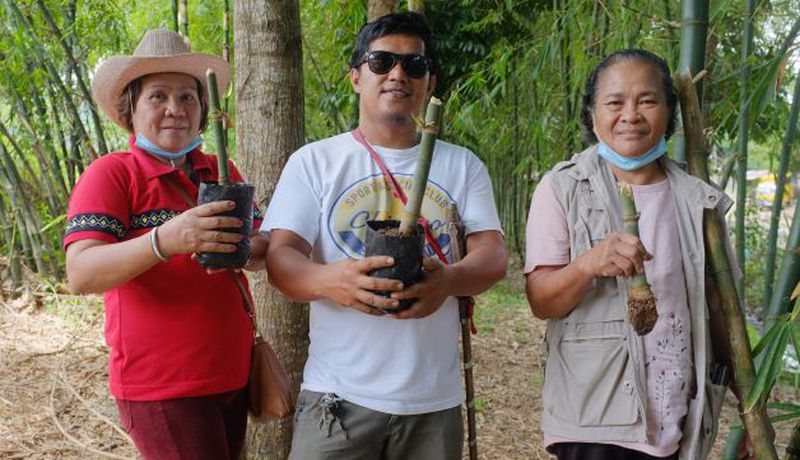
The recently registered VM0047 project in Mindanao, Philippines, marks a significant milestone as the first of its kind in Asia and only the second globally under this specific Verra methodology. This initiative, a collaboration between Climate Impact Partners and RIZOME, focuses on restoring degraded land through the planting of giant bamboo (Dendrocalamus asper). The project is projected to sequester over three million tonnes of carbon dioxide across two decades, a substantial environmental impact. Beyond carbon removal, the ecological benefits are extensive, including flood reduction, soil erosion prevention, and improved groundwater quality, all facilitated by bamboo’s deep root systems. For investors, this project offers more than just carbon credits; it represents an investment in a tangible, nature-based solution with verifiable, long-term environmental and social returns. The VM0047 methodology ensures a rigorous standard of project development and credit generation, addressing the increasing investor demand for transparency and credibility in the voluntary carbon market.
Carbon Finance as a Strategic Imperative: Addressing Investor Demand
One of the most compelling aspects of this pioneering project is its innovative financing model, which leverages carbon finance to generate income for local indigenous communities even before the bamboo reaches harvest maturity. This shared revenue model, derived from emissions reductions, provides a sustainable foundation for long-term community development, aligning with multiple UN Sustainable Development Goals, from poverty reduction to gender equality. For investors, this represents a crucial shift: carbon credits are no longer just an environmental cost but a viable asset class and a source of revenue. We observe that while many investors are intensely focused on questions like “What are OPEC+ current production quotas?” and “What is the current Brent crude price?”, a forward-looking segment is increasingly asking about new markets and sustainable investment opportunities. This project directly addresses that emerging investor appetite for ESG-compliant assets that offer both financial returns and measurable positive impact. By participating in or supporting such high-integrity carbon projects, investors can diversify their portfolios, mitigate climate-related risks, and tap into a market poised for significant growth as corporate net-zero commitments expand globally.
Forward-Looking Analysis: Beyond Traditional Drivers to Emerging Opportunities
While the next two weeks will see traditional energy markets react to a series of critical events, including the Baker Hughes Rig Count on April 17th and 24th, the OPEC+ JMMC meeting on April 18th, and the Full Ministerial OPEC+ Meeting on April 20th, along with the API and EIA weekly inventory reports on April 21st/22nd and 28th/29th, these events primarily drive short-term price movements in established markets. In contrast, the long-term trajectory of the voluntary carbon market, exemplified by projects like the VM0047 initiative, points to a more structural and sustained growth opportunity. The registration of additional VM0047 projects, as indicated by Climate Impact Partners, suggests a scaling up of these high-integrity solutions. For investors, this highlights the importance of looking beyond immediate commodity fluctuations and recognizing the strategic value of early engagement in emerging markets like voluntary carbon credits. As demand for verifiable carbon removal solutions intensifies, and as more companies commit to net-zero targets, these projects will not only offer crucial environmental services but also unlock a new frontier for investment returns, diversifying portfolios away from the singular focus on traditional oil and gas price drivers.


