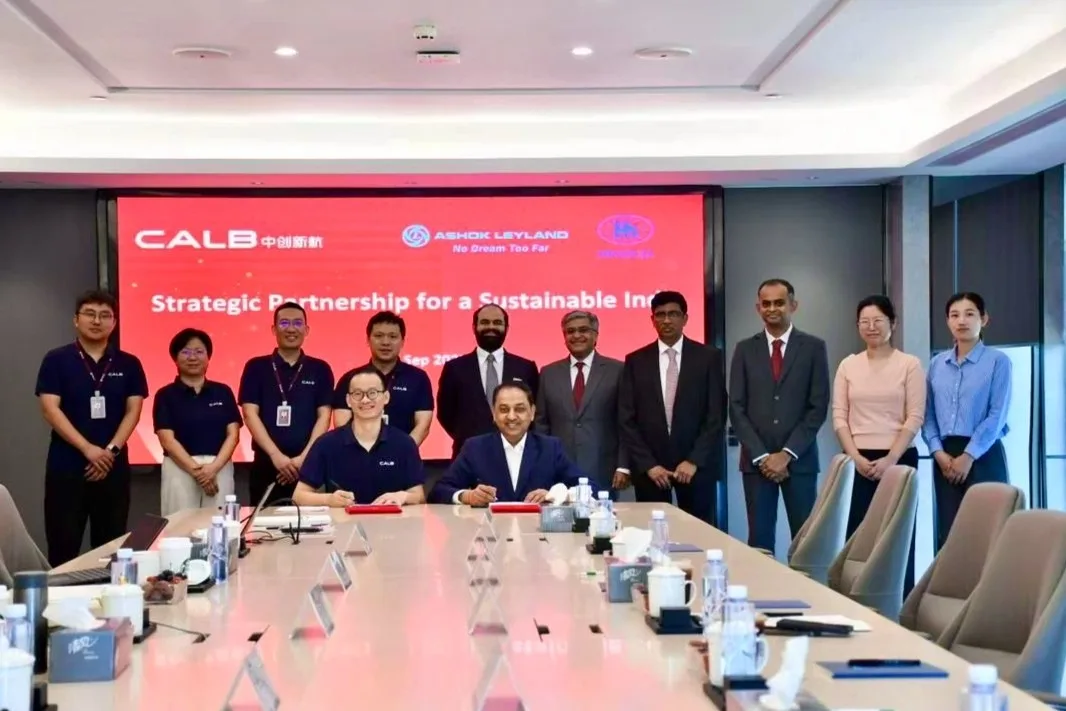
India’s commercial vehicle giant, Ashok Leyland, is making a definitive stride into localized electric vehicle (EV) battery production through a strategic partnership with China’s CALB. This move, poised to significantly bolster India’s EV ecosystem, represents a crucial inflection point for investors closely monitoring the global energy transition. While the immediate focus for oil and gas markets often revolves around supply-side dynamics and geopolitical tensions, developments like this underscore a profound, long-term shift in demand fundamentals, particularly in rapidly growing economies.
India’s EV Bet: Localizing for Long-Term Growth
Ashok Leyland’s agreement with CALB goes beyond a mere technology transfer; it signals a robust commitment to establishing a comprehensive domestic EV battery supply chain. The company, which sells EVs under its namesake brand and Switch Mobility, aims to leverage this collaboration to enhance the competitiveness and strengthen the supply chain of its electric offerings. Beginning with the production of LFP battery packs by September 2026, the initiative anticipates expanding into full cell production and the localization of additional components in subsequent phases. This aggressive timeline and the significant investment of over 50 billion rupees (approximately 487 million euros) over the next seven to ten years highlight the strategic importance Ashok Leyland places on this venture. Critically, the plan includes supplying localized batteries not only to its own brands but also to other vehicle manufacturers, energy storage providers, and non-automotive industries, effectively positioning Ashok Leyland as a cornerstone of India’s broader electrification efforts. This ambition, coupled with plans to establish a Global Centre of Excellence for battery materials, recycling, and advanced manufacturing, paints a clear picture of an integrated, future-proof strategy.
Navigating Volatility: The Macro Backdrop to Energy Transition
This long-term strategic pivot by a major industrial player unfolds against a backdrop of considerable volatility in the global crude oil markets. As of today, Brent crude trades at $90.38 per barrel, marking a significant 9.07% decline within a day range that saw prices fluctuate between $86.08 and $98.97. Similarly, WTI crude has experienced a sharp contraction, settling at $82.59, down 9.41% from its daily highs. This recent downturn follows a notable trend over the past two weeks, where Brent shed over 18% of its value, dropping from $112.78 to $91.87. Such dramatic price swings, also reflected in gasoline prices at $2.93 per gallon, down 5.18%, illustrate the ongoing sensitivity of energy markets to myriad factors. For investors, this short-term turbulence in fossil fuel prices paradoxically reinforces the strategic imperative behind initiatives like Ashok Leyland’s. While lower oil prices might temporarily ease pressure on fuel costs, the fundamental drivers for energy independence, decarbonization, and supply chain resilience remain potent, solidifying the long-term investment thesis in cleaner energy technologies.
Investor Focus: Long-Term Demand Shifts and Oil Price Projections
Our proprietary data indicates that investors are keenly focused on the future trajectory of crude oil, with a frequently asked question being, “What do you predict the price of oil per barrel will be by end of 2026?” Ashok Leyland’s battery localization project offers a tangible data point for shaping these long-term demand projections, particularly in a market as crucial as India. India is a significant growth engine for global energy demand, and a substantial shift towards electrification in its commercial vehicle sector directly impacts future diesel consumption. This strategic move, backed by a multi-billion rupee investment and the establishment of a robust local supply chain, signifies a structural change that will likely temper future oil demand growth in the region. The decision for CALB not to invest directly, thereby avoiding potential regulatory complications, places the financial commitment squarely on Ashok Leyland. While this ensures greater control for the Indian firm, it also underscores the substantial capital required to de-risk the supply chain and build domestic capacity, a clear signal to investors about the scale of the energy transition. These localized efforts contribute to a broader narrative of demand erosion, which cannot be overlooked when forecasting crude oil prices over the medium to long term.
Upcoming Events and the Evolving Energy Calculus
The immediate attention of many oil and gas investors will undoubtedly be drawn to critical upcoming events that could influence near-term market dynamics. The OPEC+ Joint Ministerial Monitoring Committee (JMMC) meeting scheduled for April 18th, followed by the full OPEC+ Ministerial Meeting on April 19th, will be closely scrutinized for any signals regarding production quotas and supply management strategies. This is particularly relevant as our readers are actively inquiring about “What are OPEC+ current production quotas?” These meetings are designed to respond to current market conditions, such as the recent price declines and demand uncertainties. However, it is crucial for investors to contextualize these short-term supply-side interventions against the backdrop of long-term structural shifts. While OPEC+ nations manage existing crude supply, companies like Ashok Leyland are actively working to reshape future demand. The weekly API and EIA inventory reports, due on April 21st and 22nd respectively, will offer snapshots of immediate supply-demand balances, but the overarching trend of electrification, exemplified by this Indian initiative, points to an undeniable long-term transformation of the energy landscape. Investors must therefore look beyond the immediate headlines and consider how strategic investments in new energy technologies will progressively redefine the equilibrium of the global energy market.