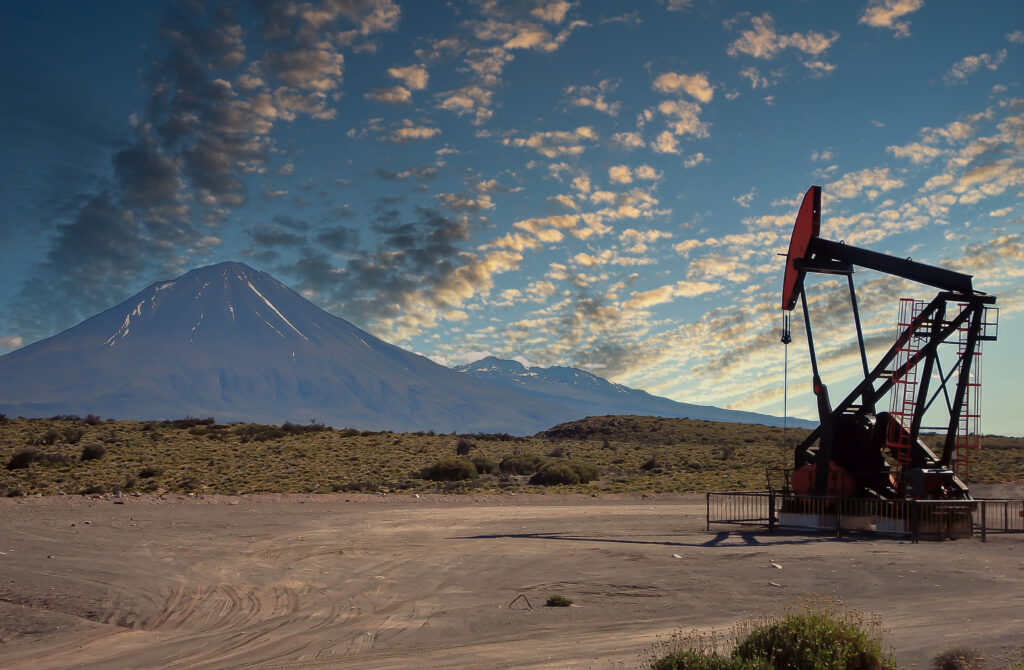
Argentina’s Shale Ascent: A New Force in Global Oil Dynamics
Argentina has quietly, yet decisively, reshaped the South American energy landscape, vaulting past Colombia to claim the region’s fourth-largest oil producer spot. This remarkable surge is not a transient anomaly but the culmination of a decade-long unconventional hydrocarbon boom, spearheaded by the prolific Vaca Muerta shale play. For investors tracking global supply shifts, this development warrants close attention, as Argentina’s persistent production growth presents both significant opportunities and critical infrastructure challenges that will define its future trajectory in the international energy arena.
Vaca Muerta’s Unstoppable Momentum: Production Metrics and Underlying Drivers
The numbers from November 2025 underscore Vaca Muerta’s transformative impact. Argentina’s crude oil production reached an impressive 844,386 barrels per day. While a slight dip from October’s record, this figure still represents a robust 12.5% increase year-over-year, marking a sustained upward trend that had previously seen six consecutive months of record highs. The engine behind this growth is unequivocally shale oil, which hit a new monthly record of 578,461 barrels per day in November 2025. This constitutes a staggering 30.68% year-over-year expansion and accounts for 68.51% of Argentina’s total oil output. The national oil company, YPF, remains at the vanguard of this development, leveraging the vast potential of the 8.6-million-acre Vaca Muerta, a formation comparable to the Permian and Eagle Ford in scale and resource richness, estimated to hold 16 billion barrels of light tight oil and 308 trillion cubic feet of tight gas.
However, the natural gas narrative within Vaca Muerta is more nuanced. Despite the shale play’s significant gas potential, Argentina’s overall natural gas production declined 7% year-over-year in November 2025, reaching 4.2 billion cubic feet per day—its lowest level since December 2023. This is a sharp contrast to the July 2025 record of 5.7 billion cubic feet per day. While shale gas still comprised 65% of total gas production at 2.7 billion cubic feet daily, it also saw a 1% year-over-year decrease. This divergence highlights a critical point for investors: while the resource base is immense, operational and logistical hurdles are currently creating a disconnect between oil and gas production trends.
Addressing Investor Concerns: Infrastructure, Prices, and Future Growth
Our proprietary reader intent data reveals a consistent theme among investors: a keen interest in the factors influencing oil price direction and the sustainability of supply growth from emerging plays. For Argentina, the primary constraints on achieving its full hydrocarbon potential, especially for natural gas, are stark. Since July 2025, a combination of planned well maintenance, reduced drilling activity influenced by weaker spot prices, and crucially, a persistent lack of adequate infrastructure—particularly storage and pipeline facilities—has weighed on output. This deficit in takeaway capacity has long been identified as a critical bottleneck for the Vaca Muerta. Investors are right to question how sustained growth can occur without significant investment in these areas.
The current market environment adds another layer of complexity. As of today, April 21, 2026, Brent Crude trades at $90.38 per barrel, showing a slight daily dip of -0.06%, while WTI Crude stands at $86.68 per barrel, down -0.85%. This follows a notable downward trend over the past two weeks, with Brent falling from $118.35 on March 31 to $94.86 on April 20, representing a nearly 20% decline. Such price volatility directly impacts the economic viability of new drilling and infrastructure projects. For Argentina to fully capitalize on its Vaca Muerta potential and attract the necessary foreign direct investment, addressing these infrastructure gaps becomes paramount. Investors are looking for clear signals that these operational challenges are being actively managed to ensure long-term, predictable supply growth.
Navigating the Global Energy Calendar: Argentina’s Role in a Dynamic Market
The trajectory of Argentina’s shale boom does not unfold in isolation; it is deeply intertwined with the broader global energy market and upcoming key events that will shape investor sentiment. Today, April 21, 2026, marks the OPEC+ Joint Ministerial Monitoring Committee (JMMC) Meeting. Decisions emanating from this gathering regarding production quotas will directly influence global crude supply and, consequently, price levels, impacting the economic calculus for Vaca Muerta operators. Investors will be keenly watching for any signals on supply adjustments in response to recent market shifts and the growing contributions from non-OPEC+ sources like Argentina.
Further forward, the EIA Weekly Petroleum Status Reports on April 22 and April 29 will provide crucial insights into U.S. crude inventories and refinery activity, offering a snapshot of demand dynamics in the world’s largest oil consumer. These reports, alongside the Baker Hughes Rig Count on April 24 and May 1, which indicates drilling activity, help contextualize Argentina’s domestic production trends within a global framework. The EIA Short-Term Energy Outlook scheduled for May 2 will be particularly significant, offering comprehensive forecasts on global supply and demand. For investors asking about the price of oil per barrel by the end of 2026, Argentina’s ability to consistently add supply, contingent on infrastructure development, will be a contributing factor, alongside geopolitical events and the strategic moves of major producers. The Vaca Muerta’s continued expansion, if unconstrained, could represent a material addition to global supply, potentially influencing long-term price stability and investment decisions across the upstream sector.
Strategic Outlook: Investment Horizons in Argentina’s Unconventional Future
Argentina’s emergence as a significant oil producer, propelled by the Vaca Muerta shale, presents a compelling narrative for oil and gas investors. The sheer scale of the resource, combined with YPF’s operational expertise, underpins a strong growth trajectory for crude oil. However, the existing infrastructure deficits, particularly for natural gas, and the sensitivity to global price fluctuations highlight the risks. For investors, the focus should be on companies actively investing in takeaway capacity and those demonstrating resilience in a volatile pricing environment. While the overall energy market remains subject to OPEC+ decisions and broader economic trends, Argentina’s unconventional sector represents a unique opportunity for those willing to evaluate the long-term potential against current operational challenges. Monitoring policy developments, infrastructure project timelines, and the sustained commitment of major players will be crucial for positioning in this evolving frontier of global energy supply.