Argentina Secures Brief Reprieve on $16.1 Billion YPF Judgment
In a high-stakes legal battle with profound implications for the global energy investment landscape, Argentina has been granted a temporary stay on the court-ordered transfer of its 51% controlling stake in the state-run oil and gas behemoth, YPF. A U.S. District Court judge has extended a critical deadline by three days, pushing the enforcement date to July 17. This brief window offers the financially strained nation a final opportunity to secure emergency relief from a staggering $16.1 billion judgment through an appeal.
The decision, issued by District Judge Loretta Preska, follows an urgent request from Argentina to the 2nd U.S. Circuit Court of Appeals to intervene. Judge Preska, however, underscored the provisional nature of this delay, voicing strong disapproval of Argentina’s persistent attempts to sidestep the original ruling. In a pointed statement, she declared, “The Republic has abused the court’s accommodations and thus will not be given additional ones,” signaling that further leniency is highly improbable.
The Genesis of a Billion-Dollar Legal Confrontation
At the heart of this protracted legal dispute is Argentina’s controversial 2012 decision to nationalize YPF shares previously held by Spain’s Repsol. Crucially, the Argentine government failed to extend a mandatory tender offer to all minority shareholders at the time. This omission sparked a lawsuit initiated by affected investment entities, Petersen Energia and Eton Park Capital. Backed by the prominent litigation financier Burford Capital, these shareholders pursued their claims in U.S. courts, ultimately securing a massive $16.1 billion judgment last year. Industry observers anticipate that Burford Capital stands to collect a significant portion, estimated between 70% and 75%, of this substantial payout.
Argentina’s defense hinges on the assertion that its YPF shares are shielded from seizure under the provisions of the U.S. Foreign Sovereign Immunities Act. Furthermore, the nation argues that relinquishing control of YPF, its largest energy company, would trigger severe economic instability. In its recent emergency appeal, the Argentine government also cautioned that a forced divestment of YPF at this juncture could result in an irreversible loss, even if a subsequent legal victory were to overturn the current judgment.
Economic Headwinds and YPF’s Pivotal Role
The timing of this legal pressure could not be more challenging for President Javier Milei’s administration. Argentina is currently grappling with a confluence of formidable economic crises, including rampant inflation, a crippling sovereign debt burden, and a critical shortage of foreign currency reserves. In this volatile financial environment, YPF represents an indispensable pillar of the nation’s economic stability and future growth trajectory.
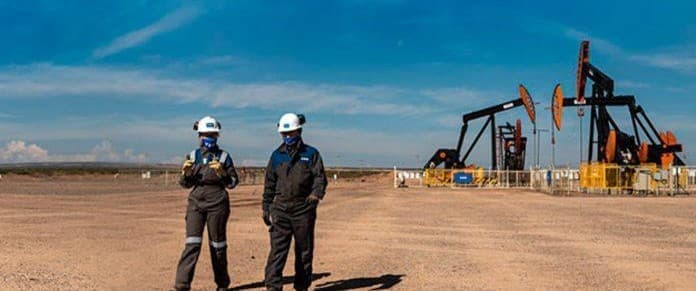
YPF is not merely an energy producer; it is the cornerstone of Argentina’s ambitious energy strategy, particularly its drive to unlock the vast potential of the Vaca Muerta shale basin. This world-class unconventional play is central to the nation’s aspirations for energy self-sufficiency and becoming a significant global energy exporter. In March, Vaca Muerta demonstrated robust growth, with crude oil production reaching 447,000 barrels per day (bpd), a remarkable 26% increase year-over-year. YPF leads the charge in this critical region, spearheading key infrastructure projects, including a $3 billion crude pipeline expansion and the development of three liquefied natural gas (LNG) projects. These initiatives include a high-profile 12 million tonnes per annum (mtpa) floating LNG (FLNG) joint venture with Italian energy giant Eni, underscoring the company’s pivotal role in monetizing Argentina’s substantial gas reserves for export.
Strategic Vision Under Threat: Implications for Energy Investors
Under the leadership of CEO Horacio Marín, YPF has articulated an aggressive “four-by-four” strategy, aiming to quadruple the company’s value within four years. Marín has expressed confidence in YPF’s inherent profitability, even projecting positive returns if global oil prices were to fall to $40 per barrel. This ambitious roadmap, designed to propel YPF and Argentina into a new era of energy prosperity, now faces significant jeopardy. The potential loss of government control over YPF could severely disrupt this strategic direction, undermining Argentina’s efforts to capitalize on Vaca Muerta’s immense potential through crucial LNG export ventures.
For investors monitoring the global oil and gas sector, particularly those with exposure to Latin American markets, the unfolding situation around YPF presents a complex risk-reward scenario. The outcome of this legal battle will not only determine the future ownership structure of a key energy asset but also signal the broader investment climate and sovereign risk perceptions within Argentina. A forced transfer of YPF’s controlling stake could send ripple effects across the nation’s financial markets and its energy development plans, potentially deterring future foreign direct investment into other crucial sectors.
The Final Countdown
While the immediate threat of a forced turnover of YPF shares has been temporarily averted, the clock is ticking rapidly for Argentina. The nation’s fate now rests with the appeals court. Should the appellate judges decline to intervene by the July 17 deadline, the order to surrender YPF’s controlling interest could proceed. Such a development would deliver a profound financial and political blow to Argentina, arriving at a moment when the government is strenuously attempting to stabilize its economy and restore investor confidence. The resolution of this monumental legal challenge will undoubtedly shape Argentina’s energy future and its standing on the global investment stage for years to come.