Aramco Navigates Headwinds: Q1 Profit Dips Amidst Market Volatility, Dividend Structure Shifts
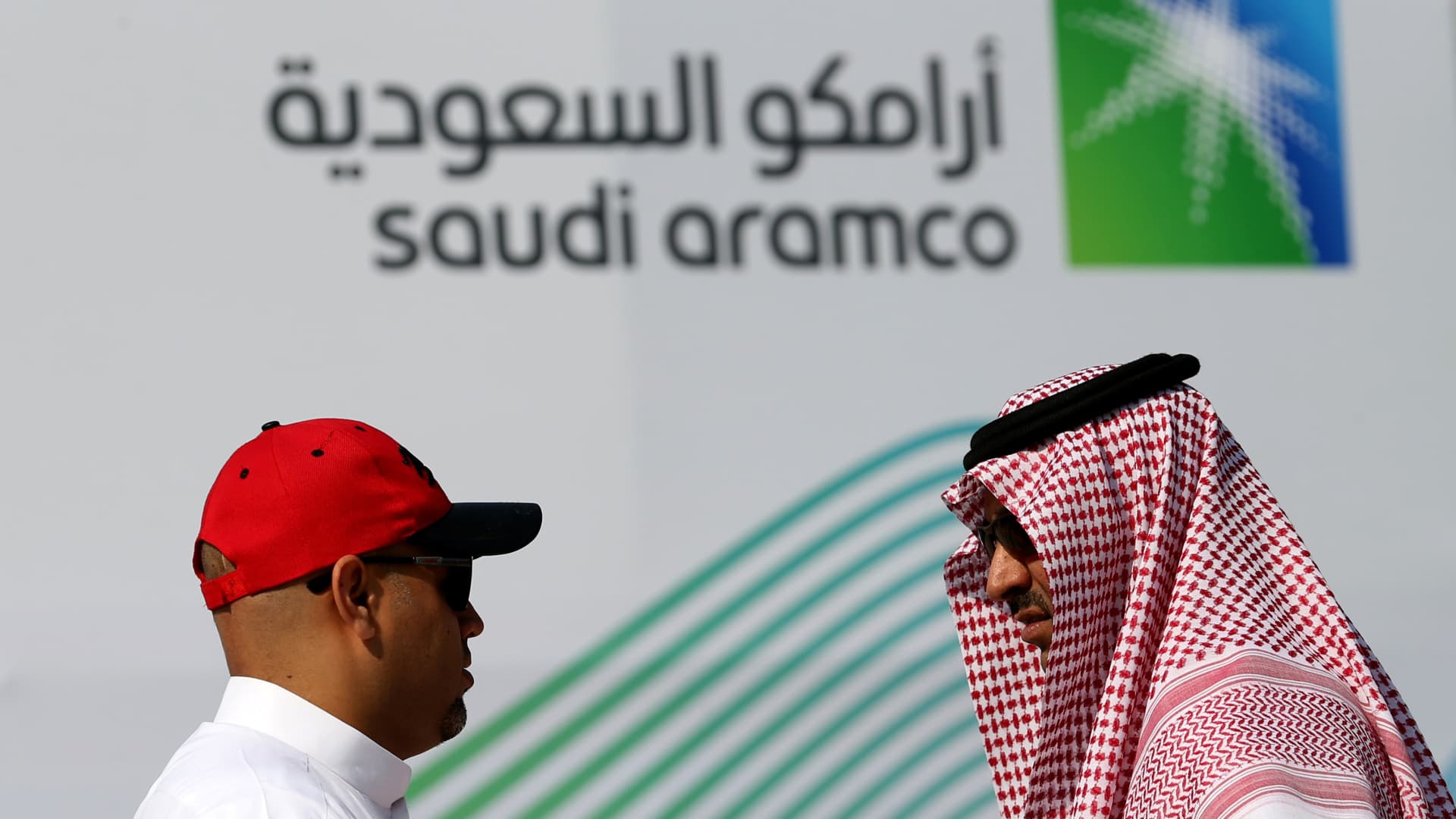
Saudi Arabian Oil Company (Aramco) has reported a 5% year-over-year decline in net profit for the first quarter, reflecting the persistent pressures from subdued crude oil prices and reduced production volumes. For the three months ending March 31, the energy behemoth posted a net income of $26 billion, a decrease from the $27.3 billion recorded in the same period last year. Despite the dip, the results surpassed average analyst projections of $25.3 billion, offering a slight positive note amidst challenging market conditions.
These figures underscore a period of heightened scrutiny for the world’s largest oil producer. Global economic uncertainties continue to temper energy demand, impacting crude valuations and the overall financial health of major integrated energy companies. Investors closely monitoring the sector will note that Aramco’s free cash flow also experienced a contraction, coming in at $19.2 billion for Q1, down from $22.8 billion in the prior year’s comparable quarter. Similarly, cash flow from operating activities saw a reduction to $31.7 billion, compared to $33.6 billion previously.
Dividend Strategy Undergoes Significant Adjustment
Aramco’s dividend policy, a critical component of its investor appeal and a primary revenue stream for the Saudi government, has undergone a notable recalibration. The company announced a substantial cut to its performance-linked dividend payout. For the fourth quarter of 2024, this component was slashed to a mere $200 million, a dramatic reduction from the $10.2 billion distributed in the preceding quarter. This $200 million figure was reiterated for the first quarter of the current year, slated for payment in Q2.
While the performance-linked dividend saw a steep reduction, the base dividend demonstrated resilience. The first-quarter base dividend, which excludes the variable performance-based distributions, increased by 4.2% year-on-year, reaching $21.1 billion. However, when evaluating the total dividend payout for the quarter, the impact of the performance-linked cut becomes clear: the aggregate dividend fell to $21.36 billion, a significant drop from the $31 billion disbursed in the same period last year. This rebalancing act aims to ease financial strain on the company itself, though it inevitably translates to reduced revenue for the Saudi government, which faces its own fiscal challenges driven by ambitious megaprojects and lower oil price environments.
Leadership Commentary and Strategic Resilience
Amin Nasser, Aramco’s CEO, acknowledged the prevailing market conditions. “Global trade dynamics significantly influenced energy markets during the first quarter of 2025, with economic uncertainty directly affecting oil prices,” Nasser stated in conjunction with the earnings release. He emphasized the company’s inherent strengths: “In this environment, Aramco’s robust financial performance once again highlighted the Company’s unparalleled scale, operational reliability and flexibility, and the inherent value of its low-cost production capabilities.”
Nasser further underscored the importance of prudent financial management during periods of flux. “Such times also underscore the critical role of disciplined capital planning and execution as we maintain our long-term strategic vision,” he added. He concluded by reiterating the foundational strength of the company: “In volatile periods, Aramco’s underlying resilience supports both our financial outcomes and our consistent, progressive base dividend.” These comments aim to reassure investors of the company’s stability and strategic foresight amidst a turbulent global energy landscape.
Broader Market Context: OPEC+ and Production Adjustments
The bearish sentiment in the oil market, which characterized the first quarter, is intertwined with broader economic factors and strategic decisions by major producing nations. The kingdom of Saudi Arabia, a key player within the OPEC+ alliance, has actively participated in coordinated production cuts designed to stabilize global crude prices. These policies, while aiming for market equilibrium, have naturally constrained the kingdom’s oil revenue potential.
However, the latter part of the quarter and early second quarter witnessed a significant shift in OPEC+ strategy. Saudi Arabia, alongside several of its OPEC+ partners, announced an unexpected acceleration of plans to increase production in April. This move came even as global markets and crude prices were already under pressure from new U.S.-imposed tariffs, creating additional market uncertainty. Further signaling a departure from earlier restrictive policies, OPEC+ subsequently increased its production target for June by 411,000 barrels per day. This marks the second consecutive month of an accelerated unwinding of the 2.2 million-barrel per day voluntary cuts that had been implemented since the start of 2024. Investors are closely watching how these supply adjustments will interact with demand dynamics, especially given the ongoing macroeconomic headwinds.
Investor Outlook: Navigating Uncertainty and Fiscal Implications
For investors, Aramco’s latest earnings report and the evolving market dynamics present a complex picture. The company’s ability to exceed analyst expectations for net income, even with a year-on-year decline, speaks to its operational efficiency. However, the reduction in free cash flow and the restructuring of the dividend, particularly the performance-linked component, will require careful consideration.
The implications extend beyond Aramco itself. The Saudi government’s fiscal position is directly tied to oil revenues, and lower overall dividends from Aramco, combined with constrained crude prices, could exacerbate existing budgetary deficits. The kingdom’s ambitious Vision 2030 projects, requiring substantial capital investment, rely heavily on consistent oil income. As OPEC+ recalibrates its supply strategy in response to global demand and geopolitical factors, the trajectory of oil prices remains a critical determinant for both Aramco’s future performance and the broader economic stability of Saudi Arabia. Investors should continue to monitor global trade indicators, economic growth forecasts, and OPEC+ policy shifts to gauge the future outlook for this influential energy giant.