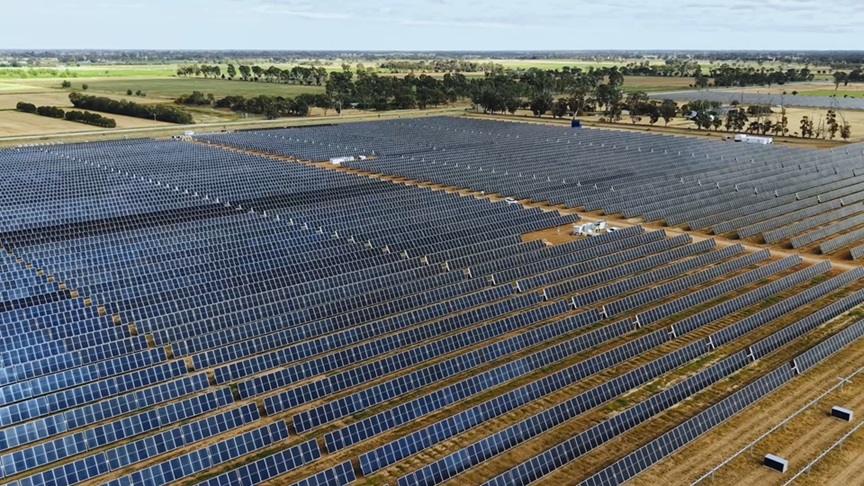
Apple’s recent announcements regarding its ambitious renewable energy expansion in Australia and broader carbon neutrality goals by 2030 are more than just corporate ESG headlines; they represent a tangible, long-term signal for the oil and gas (O&G) investment landscape. As a global tech giant, Apple’s strategic pivot to decarbonize its entire product lifecycle, from manufacturing to customer use, underscores a structural shift in energy demand that O&G investors cannot afford to overlook. While immediate market volatility often dominates headlines, these corporate commitments illustrate the persistent, growing pressure on fossil fuel consumption from an increasingly diverse set of actors.
Apple’s Decarbonization Drive: A Structural Demand Signal
Apple’s commitment to achieving carbon neutrality across its entire business, supply chain, and product life cycle by 2030 is particularly impactful given its scale. A significant portion of its carbon footprint—29%—stems from the electricity used by customers to power their devices. To address this, Apple aims to match all electricity used to charge its products with 100% clean energy within five years. The new Lancaster solar project in Victoria, developed in partnership with European Energy and expected to generate power next year, is a concrete step towards this goal. Furthermore, Apple projects contributing over 1 million megawatt-hours of new clean electricity annually in Australia by 2030 through multiple planned projects. This directly translates to a reduction in demand for fossil fuel-derived electricity in the grids where Apple’s products are charged. Beyond direct energy sourcing, the company’s Restore Fund, launched in 2021 and expanded in 2023 with a $200 million fund managed by Climate Asset Management, invests in nature-based carbon removal projects across six continents, further solidifying its comprehensive approach to mitigating climate impact. These initiatives, supported by investments from suppliers like TSMC and Murata, signal a clear trajectory towards reduced reliance on carbon-intensive energy sources, creating a long-term headwind for O&G demand in the power sector.
Current Market Volatility Amidst Long-Term Shifts
While Apple’s long-term decarbonization strategy unfolds, the immediate oil market presents a stark reminder of ongoing volatility and macroeconomic pressures. As of today, Brent Crude trades at $90.38 per barrel, marking a significant 9.07% decline within the day, with WTI Crude mirroring this trend at $82.59, down 9.41%. This substantial dip is part of a broader trend, with Brent having fallen from $112.78 just three weeks ago on March 30, representing a nearly 20% correction. Gasoline prices have also seen a notable decline, currently standing at $2.93, down 5.18% today. This immediate market softness suggests underlying concerns about global economic growth, potential oversupply, or shifting demand patterns, perhaps exacerbated by recent geopolitical developments or inventory builds. For O&G investors, this highlights the dual challenge: navigating short-term price fluctuations driven by traditional supply-demand dynamics while simultaneously positioning for the secular shift away from fossil fuels, as exemplified by corporate giants like Apple.
Upcoming Catalysts and Investor Outlook for 2026
The immediate future holds several critical events that will shape crude price trajectories, offering tactical opportunities amidst strategic shifts. Investors are keenly watching the upcoming OPEC+ Joint Ministerial Monitoring Committee (JMMC) Meeting on April 19, followed by the full OPEC+ Ministerial Meeting on April 20. A prevalent question among our readers is, “What are OPEC+ current production quotas?” and more broadly, “What do you predict the price of oil per barrel will be by end of 2026?” The outcomes of these meetings, particularly any decisions on production levels, will significantly influence global supply balances and, consequently, crude prices for the remainder of the year and into 2026. Beyond OPEC+, weekly data points such as the API Crude Inventory on April 21 and 28, and the EIA Weekly Petroleum Status Report on April 22 and 29, will provide crucial insights into U.S. supply and demand. Furthermore, the Baker Hughes Rig Count on April 24 and May 1 will offer a pulse on drilling activity and future production capacity. These near-term events, while seemingly disconnected from Apple’s green initiatives, represent the short-term market drivers that O&G investors must balance against the long-term structural shifts in energy demand that Apple’s actions clearly signal.
Strategic Implications for O&G Investment
Apple’s aggressive pursuit of carbon neutrality, particularly its focus on matching customer energy use with renewables, underscores a powerful trend of “demand destruction” at the margins for fossil fuels. While a single company’s actions may not move the needle on global O&G demand overnight, the cumulative effect of major corporations adopting similar strategies creates a formidable long-term headwind. This isn’t just about direct energy consumption; it reflects a broader societal and corporate push towards electrification and decarbonization that will increasingly impact various sectors, from transportation to industrial processes. For O&G investors, this necessitates a critical re-evaluation of portfolio resilience. Companies heavily reliant on traditional fossil fuel exploration and production may face increasing pressure. Conversely, O&G firms diversifying into renewable energy, carbon capture technologies, or focusing on feedstocks for advanced materials that support the green economy could see enhanced long-term value. The question “How well do you think Repsol will end in April 2026” implicitly asks about a company’s ability to navigate both immediate market conditions and the broader energy transition. Those O&G entities with clear, actionable strategies to adapt to a lower-carbon future are ultimately best positioned for sustainable returns in a rapidly evolving energy landscape.


