The European energy landscape is undergoing a profound transformation, driven by an urgent need for decarbonization and enhanced grid stability. In a significant move highlighting this shift, pension fund manager APG has committed €300 million, equivalent to approximately US$350 million, in growth capital to Return, a leading European energy storage provider. This substantial investment, made on behalf of its client ABP, is earmarked for the aggressive scaling of Return’s battery energy storage platform across the continent. For oil and gas investors, this transaction serves as a potent signal regarding the evolving allocation of capital within the broader energy sector, emphasizing the growing importance of infrastructure that supports intermittent renewable sources while ensuring robust energy security.
De-risking the Grid: The Indispensable Role of Energy Storage
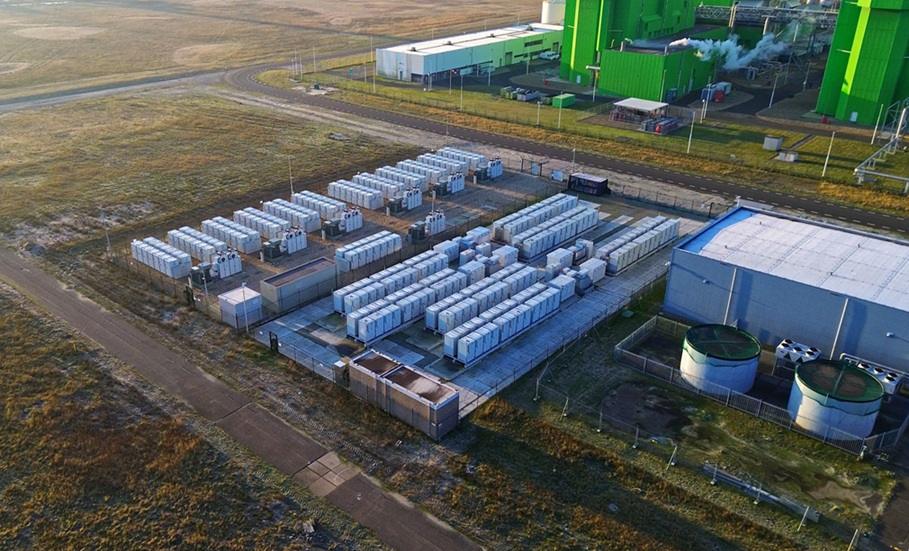
The rationale behind APG’s investment underscores a fundamental truth about the clean energy transition: intermittent renewable sources like wind and solar, while critical for decarbonization, necessitate robust energy storage solutions to ensure round-the-clock energy availability and grid stability. Return, founded in Amsterdam, specializes in building, owning, and operating large-scale battery energy storage systems (BESS) that connect sites across multiple countries. This integrated platform not only eases grid congestion by providing real-time insight into energy availability and demand but also fortifies the overall energy infrastructure. With 70 MW of operational capacity already in the Netherlands and a further 450 MW under construction across the Netherlands, Germany, Belgium, and Spain, the company is rapidly expanding its footprint. This capital injection is crucial for Return to accelerate the conversion of its substantial development pipeline into operational projects, with an ambitious target of developing a pan-European storage network of around 5 GW by 2030. This scale is vital as demand on the grid grows from areas like transport electrification and the energy-intensive needs of AI computing.
Navigating Volatility: Market Prices and Strategic Diversification
While long-term capital flows into energy transition assets like battery storage are robust, the traditional oil and gas markets continue to exhibit significant volatility. As of today, Brent crude trades at $90.38, reflecting a sharp 9.07% decline within the day, with its price range oscillating between $86.08 and $98.97. Similarly, WTI crude is at $82.59, down 9.41% today. This recent downturn contrasts sharply with prices seen just weeks ago; Brent has fallen from $112.78 on March 30th to its current level, representing a nearly 20% drop. Gasoline prices have also followed suit, currently at $2.93 per gallon, down 5.18% today. This immediate market snapshot highlights the inherent risks and rapid shifts within the upstream and refining sectors. For institutional investors like APG, diversifying into stable, long-term infrastructure plays such as energy storage offers a hedge against the unpredictable swings of commodity markets, providing predictable returns less directly correlated to daily crude price fluctuations. It’s a strategic move to secure assets that are foundational to the future energy system, regardless of short-term oil price movements.
Investor Focus: De-risking Future Energy Portfolios
A recurring theme among investors, as evidenced by proprietary reader intent data, revolves around predicting future oil prices and understanding where smart capital is being deployed to mitigate risk. While questions like “what do you predict the price of oil per barrel will be by end of 2026?” highlight a continued focus on conventional energy, the APG investment signals a clear trend towards de-risking energy portfolios through strategic allocation to energy transition infrastructure. Pension funds, with their long-term liabilities, are particularly attuned to investments that offer stable, predictable cash flows and contribute to a sustainable future. Return’s business model, which involves leasing the capacity of its large-scale battery systems to energy companies and traders rather than trading energy itself, provides such a de-risked revenue stream. This approach, combined with the company’s “virtual battery” concept that allows energy companies to access a network of projects, creates a resilient and scalable platform for growth, insulating investors somewhat from direct commodity price exposure and the operational complexities of energy trading. This focus on infrastructure as a service aligns perfectly with institutional mandates seeking long-duration, inflation-hedged assets.
Upcoming Catalysts and Future Outlook for Energy Storage
The momentum behind grid-scale battery storage is set to accelerate, influenced by both project execution and broader market dynamics. While the upcoming OPEC+ Joint Ministerial Monitoring Committee (JMMC) and Ministerial Meetings on April 19th and 20th will undoubtedly shape near-term crude market sentiment, their outcomes also indirectly underscore the imperative for energy independence and diversified energy sources in Europe. A continued tight oil market or geopolitical instability, potentially influenced by OPEC+ decisions, would only heighten the strategic value of robust domestic energy infrastructure, including storage. Similarly, weekly data releases such as the API Crude Inventory (April 21st, 28th) and the EIA Weekly Petroleum Status Report (April 22nd, 29th) offer insights into conventional supply and demand, yet the underlying trend of electrification continues unabated. For Return, the critical forward-looking catalyst will be its ability to swiftly convert its ambitious development pipeline into operational projects, moving towards its 5 GW target by 2030. Success in these deployments, combined with supportive European policy frameworks aimed at enhancing grid resilience and integrating more renewables, will be key indicators for future investment in this burgeoning sector. Investors should monitor not only Return’s project milestones but also broader regulatory developments that streamline permitting and incentivize BESS deployment across Europe.


