Anzana’s Strategic Pivot: Powering East Africa with Hydropower Investment
In a significant move signaling diversification within the broader energy sector, Anzana Electric Group has inked a provisional accord to acquire a stake of up to 10 percent in the ambitious Ruzizi III Regional Hydropower Project. This critical infrastructure initiative is poised to deliver essential electricity to Burundi, the Democratic Republic of the Congo (DRC), and Rwanda, highlighting a growing trend of strategic capital deployment into Africa’s burgeoning energy landscape.
The agreement for the 206-megawatt Ruzizi III facility was a prominent feature among commitments exceeding $2.5 billion forged between African and American partners. These substantial deals were unveiled during the United States-Africa Business Summit held in Luanda, Angola, underscoring Washington’s intensifying focus on fostering economic ties and energy development across the continent, a narrative that resonates deeply with global energy investors.
Unpacking the Ruzizi III Project: Scale and Impact
The Ruzizi III project, with an estimated cost of $760 million, is strategically located on the Ruzizi River, which forms a natural boundary between the DRC in Central Africa and Rwanda in Eastern Africa. Structured as a public-private partnership, the development sees Ruzizi III Holding Power Co. Ltd. (RHPCL), a special-purpose vehicle registered in Rwanda, acting as the private sector lead. RHPCL operates under a build-own-operate-transfer (BOOT) framework with the project company, Ruzizi III Energy Limited.
The anticipated impact of this venture is transformative. RHPCL projects that the hydropower plant will provide power to approximately 30 million individuals across the three neighboring nations. This region currently grapples with profound energy poverty; a joint statement from RHPCL and Anzana highlighted that 54 percent of the population lives below the poverty line, with average electricity access hovering at a mere 24 percent. The Ruzizi III facility is expected to nearly double Burundi’s existing power generation capacity, augment Rwanda’s by 30 percent, and supply crucial baseload and dispatchable power to the eastern DRC. Such an influx of reliable energy is a catalyst for economic growth, strengthens regional integration, and bolsters energy security in one of Africa’s most underserved areas, offering compelling long-term value propositions for infrastructure-focused investors.
Anzana’s Strategic Rationale and Regional Commitment
Anzana Electric Group, already an active investor in hydropower and grid distribution initiatives across East, Central, and Southern Africa, views this investment as a logical extension of its regional strategy. The tentative deal sets the stage for a binding partnership agreement, which both Anzana and RHPCL are committed to finalizing by September. This forthcoming agreement will delineate governance rights, define investment commitments, and map out the trajectory for future collaborative efforts, providing clarity for all stakeholders and potential further capital injections.
Brian Kelly, Anzana’s chief executive, articulated the broader vision behind this partnership, stating, “Through this collaboration, we are not just energizing homes, communities, and industries; we are actively contributing to regional integration, fortifying energy security and stability, and paving the way for expanded U.S. investment and trade in Africa’s evolving energy future.” This statement underscores the multifaceted benefits of such projects, extending beyond kilowatt-hours to encompass geopolitical stability and economic development, key considerations for discerning investors evaluating emerging markets.
A Broader Landscape of US Investment in African Energy
Anzana’s deal is not an isolated incident but rather indicative of a broader surge in American capital flowing into Africa’s diverse energy sector. The Luanda summit showcased several other significant commitments that reflect a varied approach to energy infrastructure development, offering a mosaic of opportunities for oil and gas investors looking to diversify their portfolios into renewable and transitional energy assets.
For instance, U.S. energy investor Hydro-Link formalized an agreement with the Angolan government to construct a $1.5 billion private transmission line. This monumental 1,150-kilometer (approximately 715 miles) corridor is designed to transport up to 1.2 gigawatts of power from Angolan hydropower facilities, including the Luaca plant, to critical mineral mining operations in the Kolwezi region of the DRC. This project exemplifies the strategic intersection of energy infrastructure and the burgeoning demand for minerals vital to the global energy transition, presenting unique investment angles.
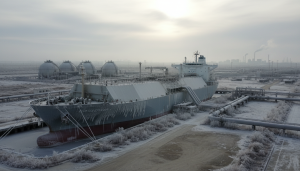
In another notable development, CEC Africa Sierra Leone Ltd. signed a memorandum of understanding (MOU) with AG&P to develop West Africa’s inaugural terminal for the importation of U.S. liquefied natural gas (LNG). This project, backed by the U.S. International Development Finance Corp., is slated to supply energy for the 108-megawatt Nant Power Project in Sierra Leone, alongside catering to residential and industrial consumers within the country. The focus on LNG infrastructure underscores the role of natural gas as a critical transition fuel, particularly in regions seeking to balance immediate energy needs with longer-term decarbonization goals, a trend closely watched by traditional oil and gas investors.
Investment Implications and Future Outlook
For investors accustomed to the dynamics of the oil and gas markets, these developments in Africa’s energy sector offer compelling opportunities for diversification and growth. Anzana’s strategic investment in the Ruzizi III hydropower project, alongside other U.S.-backed initiatives in transmission and LNG, signals a robust and evolving energy landscape on the continent. These projects represent long-term infrastructure plays that address fundamental energy deficits while contributing to sustainable development goals.
The emphasis on regional integration, energy security, and leveraging both renewable sources like hydropower and transitional fuels like LNG demonstrates a sophisticated approach to meeting Africa’s escalating energy demands. As global energy markets continue to evolve, smart capital is increasingly flowing into these high-impact, high-growth opportunities, positioning Africa as a pivotal frontier for the next wave of global energy investment. Investors tracking the broader energy ecosystem should take note of these strategic shifts, as they represent not only significant capital commitments but also foundational steps toward building a more robust and diversified global energy future.