Amazon’s $20 Billion AI Power Play Reshapes Energy Investment Landscape
Global technology behemoth Amazon Web Services (AWS) is embarking on an unprecedented $20 billion capital expenditure program, signaling a profound shift in the energy demands of the artificial intelligence sector. This colossal investment targets the development of two advanced data center campuses in Pennsylvania, with a strategic focus on direct integration with nuclear power generation. This initiative represents one of the United States’ most significant private sector commitments to nuclear-backed energy infrastructure to date, setting a new precedent for how hyperscale computing will secure its future power needs.
The ambitious expansion plans project the deployment of multiple data centers over the next decade. Crucially, these facilities will draw their massive power requirements from emission-free nuclear generation. This move underscores a growing trend among tech giants to secure stable, high-capacity, and environmentally responsible energy sources to fuel the exponential growth of AI and cloud computing.
Pennsylvania: A New Hub for Nuclear-Powered AI Infrastructure
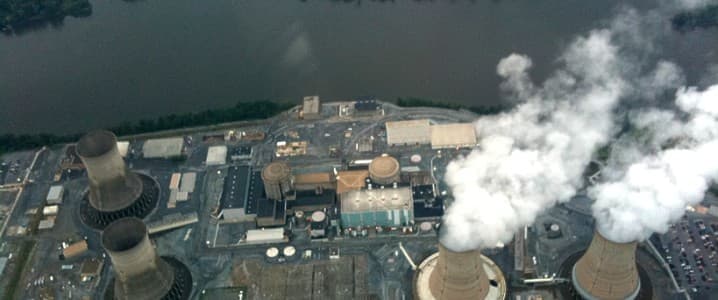
The cornerstone of this development is a proposed site in Salem Township, strategically located adjacent to the 2.5-gigawatt (GW) Susquehanna Steam Electric Station. This location leverages an existing engineering framework, designed with a substantial 960-megawatt (MW) campus capacity. Amazon has forged a critical partnership with Talen Energy, an entity that has evolved from a traditional power utility into a nuclear innovation leader. Talen Energy will supply the cloud giant with electricity directly from its Susquehanna nuclear power station, situated in Luzerne County.
This collaboration builds upon prior efforts by Talen, which previously established Cumulus Data, an independent nuclear arm focused on developing a 475 MW data center campus directly adjacent to the power plant. This pre-existing, high-capacity infrastructure will now form an integral part of Amazon’s expansive AI computing network. While the project is currently undergoing review by the Federal Energy Regulatory Commission (FERC), with initial supply capacity limited to 300 MW due to grid reliability considerations, AWS demonstrates clear intent to proceed, prioritizing robust, continuous power delivery characteristic of renewables but without typical grid congestion.
Baseload Nuclear: The Strategic Imperative for AI
Industry analysts interpret Amazon’s strategic pivot towards nuclear power as a potential catalyst for the resurgence of baseload nuclear generation as a vital energy asset within the U.S. data economy. The insatiable and continuous power demands of AI computing necessitate an energy source that offers unwavering stability, an attribute where nuclear power excels. Pennsylvania Governor Josh Shapiro has lauded this initiative as the most substantial private sector investment in the state’s history, projecting the creation of over 1,250 union jobs in the immediate construction phase.
Governor Shapiro emphasized the economic revitalisation this investment brings: “Pennsylvania is back in the competition, and I am proud to announce that with Amazon’s commitment of at least $20 billion to establish state-of-the-art data center campuses across our Commonwealth, we have secured the largest private sector capital infusion in Pennsylvania’s history.” This statement highlights the significant economic multipliers anticipated from such a large-scale project, including long-term operational employment and enhanced tax revenues.
ESG and the Future of Corporate Energy Procurement
From a broader energy market perspective, Amazon’s substantial commitment aligns with a burgeoning trend of private sector clean energy procurement. This movement aims to redefine the energy consumption narrative surrounding AI, presenting it as an endeavor fully compatible with environmental, social, and governance (ESG) principles. By directly sourcing from nuclear power, tech titans like Amazon seek to mitigate the carbon footprint associated with their energy-intensive operations, presenting a compelling case for “green AI.”
This paradigm shift underscores a fundamental challenge and opportunity for the entire energy sector, including traditional oil and gas. As global energy demand continues to climb, driven significantly by digitalization and AI, securing reliable baseload power becomes paramount. While nuclear power offers a carbon-free solution, the sheer scale of future energy needs suggests a diversified approach will be necessary, potentially creating new market dynamics and investment opportunities across all energy verticals.
Implications for Energy Investors
For investors monitoring the energy landscape, Amazon’s $20 billion nuclear commitment offers several key takeaways. Firstly, it quantifies the immense and growing energy demand from advanced computing, a trend that will impact electricity grids and power generation portfolios globally. Secondly, it highlights the strategic value of baseload power generation, particularly nuclear, in meeting this demand reliably and sustainably. This could signal renewed interest and investment into nuclear power infrastructure, potentially influencing valuations of utilities with significant nuclear assets.
Finally, this development places further pressure on all energy producers to innovate and adapt. The pursuit of “green” energy solutions by major corporations is not merely a public relations exercise; it is a fundamental business strategy. Investors in the oil and gas sector should closely watch how this evolving energy matrix influences long-term demand patterns, infrastructure development, and the competitive landscape for energy supply. The race to power AI is fundamentally reshaping the future of energy investment.