The Broadening Scope of ESG: Amazon Protests as a Bellwether for Energy Investors
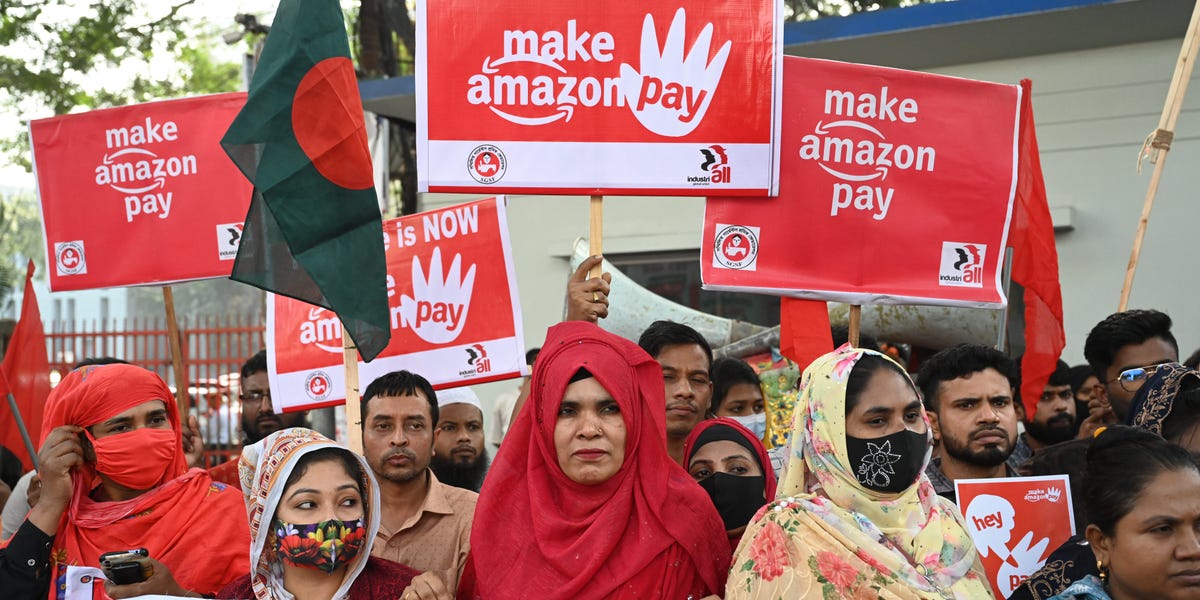
The recent coordinated global protests by Amazon workers, spanning over 30 countries and involving a wide array of grievances from warehouse conditions to AI ethics, serve as a potent reminder that Environmental, Social, and Governance (ESG) risks are rapidly expanding beyond traditional environmental concerns. For investors in the oil and gas sector, these events, while seemingly distant from energy production, highlight a crucial evolution in market dynamics: social and governance factors, including labor practices and the ethical deployment of artificial intelligence, are increasingly critical determinants of long-term value and operational stability. Astute energy investors must now consider how these emerging societal pressures, amplified by global movements and technological shifts, could impact their portfolios, influencing everything from regulatory frameworks to public perception and capital allocation.
Social and Governance Imperatives: A New Dimension of Risk
The “Make Amazon Pay” campaign, orchestrated by influential organizations like UNI Global Union and Progressive International, signifies a mature and globally coordinated push for greater corporate accountability. The specific demands — fair wages, safe working conditions, protection from extreme heat, and concerns over Amazon’s AI operations and climate impact — resonate far beyond the e-commerce giant. This comprehensive challenge to a major corporation’s social license to operate underscores a growing investor expectation for transparent and ethical business practices across all sectors. For the oil and gas industry, which has historically faced intense scrutiny over its environmental footprint, this broadening of ESG focus means that labor relations, supply chain integrity, and even the ethical use of advanced technologies within operations or new ventures are now squarely in the spotlight. Companies with robust internal governance and proactive social policies will likely command a premium, while those perceived as lagging risk significant reputational and financial repercussions.
Market Volatility and the ESG Overlay
Current market dynamics illustrate the complex interplay of geopolitical events, supply-demand fundamentals, and increasingly, an underlying sensitivity to broader ESG narratives. As of today, Brent Crude trades at $90.25, marking a notable -5.48% decline, with its day range spanning $93.87 to $95.69. Similarly, WTI Crude stands at $86.87, down -0.63%, fluctuating between $85.5 and $87.47. This recent dip follows a significant 14-day trend where Brent fell from $118.35 on March 31 to $94.86 on April 20, a stark -$23.49 or -19.8% reduction. While these price movements are predominantly driven by traditional factors, the market’s overall sentiment and risk appetite are undeniably shaped by a macro environment increasingly attentive to corporate responsibility. Gasoline prices, holding steady at $3.04 today, likewise reflect a market that, while focused on immediate supply, cannot ignore the long-term implications of sustainable practices. Systemic failures in social or governance aspects, as highlighted by large-scale protests against major corporations, can ripple through investor confidence, creating an additional layer of uncertainty that can exacerbate market volatility even in the energy sector.
Navigating Future Events with an ESG Lens
The coming weeks present a series of critical energy-specific events that, when viewed through an ESG lens, offer deeper insights for investors. On April 21, the OPEC+ JMMC Meeting will set the tone for global supply, directly impacting the profitability and investment capacity of energy firms. Decisions made here will inevitably influence companies’ ability to meet emissions targets or invest in cleaner technologies. The EIA Weekly Petroleum Status Reports on April 22 and April 29, alongside the Baker Hughes Rig Counts on April 24 and May 1, will provide crucial data on U.S. production and inventory. While these are fundamental data points, investors should also consider how operational efficiency and safety records, integral to ESG performance, contribute to these figures. The EIA Short-Term Energy Outlook on May 2 will offer projections that should be weighed against the industry’s evolving commitment to decarbonization and ethical labor practices. As the Amazon protests demonstrate, the social license to operate is not static; it is a dynamic factor that can increasingly influence regulatory environments and public pressure, potentially impacting future drilling permits, project approvals, and capital expenditure decisions within the energy sector.
Investor Focus: Beyond the Barrel Price
Our proprietary reader intent data reveals a consistent and understandable preoccupation with price movements, with investors frequently asking questions like “is WTI going up or down?” or “what do you predict the price of oil per barrel will be by end of 2026?” These inquiries underscore the immediate financial concerns driving investment decisions. However, sophisticated investors are also delving deeper, seeking insights into company-specific performance, as reflected in questions such as “How well do you think Repsol will end in April 2026?” This indicates a growing recognition that long-term value creation hinges on more than just commodity prices. The Amazon protests serve as a powerful case study for why ESG factors, including labor relations, human capital management, and the ethical governance of AI, are becoming indispensable components of a comprehensive investment thesis. While the daily fluctuations of WTI at $86.87 are important, the strategic investor understands that companies that proactively manage these evolving social and governance risks are better positioned for sustained growth and resilience, ultimately mitigating against potential future liabilities and attracting a broader pool of capital. Ignoring these dimensions is no longer a viable strategy for those aiming for robust, sustainable returns in the energy market.


