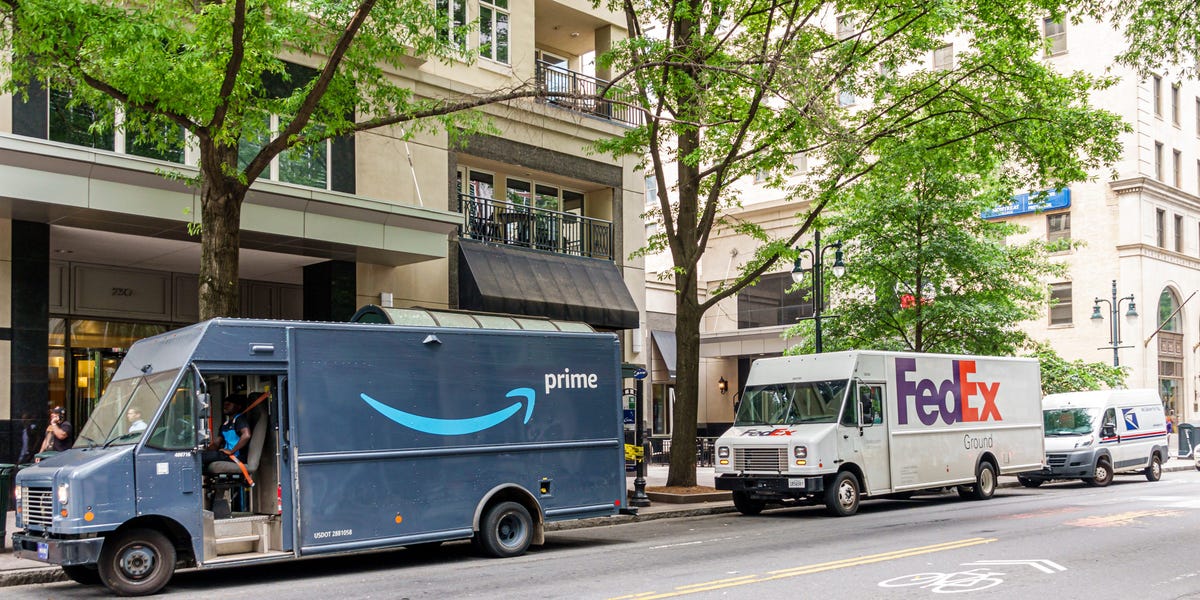
E-commerce Giant’s Logistics Shift Signals Robust Fuel Demand Ahead
The global energy market is closely monitoring a significant strategic pivot within the e-commerce sector that promises to bolster demand for refined petroleum products. Amazon, the world’s largest online retailer, has forged a renewed, multi-year partnership with logistics behemoth FedEx, a move anticipated to create “cost favorability” for the retail giant while simultaneously underpinning a sustained, robust demand trajectory for diesel and jet fuel.
This critical alliance, reportedly inked in late February, comes after a period where Amazon had largely scaled back its reliance on FedEx. The internal documents reveal that securing FedEx’s extensive capacity is Amazon’s primary strategy for addressing its burgeoning delivery volume and associated logistical bottlenecks. For investors tracking the energy complex, this isn’t merely a corporate logistics story; it’s a tangible indicator of an expanding transportation footprint that translates directly into increased consumption of liquid fuels.
Amazon’s Capacity Play and Cost Efficiencies
The specifics of the deal indicate that FedEx will manage “some parts” of Amazon’s package deliveries, specifically focusing on “residential delivery of select large packages.” This strategic segmentation allows Amazon to leverage FedEx’s established global network and expertise, particularly beneficial for items that are logistically more challenging or require specialized handling. The reported “cost favorability” Amazon gains over alternative carriers like UPS suggests a concerted effort by the retailer to optimize its vast shipping expenditures. Such efficiencies are crucial for maintaining profitability in the high-volume, low-margin world of e-commerce, and any savings are likely to be reinvested into expanding delivery capabilities, further stimulating fuel consumption.
An Amazon spokesperson confirmed the agreement, positioning FedEx as one of several third-party partners alongside existing relationships with UPS and the USPS. This integrated approach allows Amazon to dynamically balance its capacity needs, ensuring prompt and efficient customer service. This collaborative model, rather than exclusive reliance on a single carrier or Amazon’s own rapidly expanding fleet, highlights the sheer scale of the company’s operational demands and the necessity of leveraging external networks to meet them.
FedEx’s Strategic Gains and System Yields
From FedEx’s perspective, this renewed partnership represents a significant win. The company’s spokesperson articulated a long-term strategic alignment, revealing that discussions for this multi-year agreement had been ongoing for over a year. FedEx, a global leader in logistics, emphasized its capacity and expertise to serve a vast array of e-commerce retailers. Critically, the company anticipates that this new deal will be “net positive” for its “average system yields.” For energy investors, this metric is particularly insightful. “System yields” measure the efficiency and profitability of a shipping network, indicating how effectively FedEx converts its operational costs (including fuel) into revenue. A “net positive” impact implies greater utilization of its assets—trucks, planes, sorting facilities—which inherently means more miles traveled and, consequently, higher fuel burn.
This positive outlook from FedEx underscores the confidence that increased volume from a client of Amazon’s magnitude will be accretive to their bottom line, even after accounting for the reported “cost favorability” extended to Amazon. It signals a robust commitment of FedEx’s ground and air fleet, directly translating into sustained demand for diesel and jet fuel across their vast operational footprint.
Direct Implications for Oil and Gas Investors: Fueling the Logistics Engine
The most profound impact of this Amazon-FedEx alliance for oil and gas investors lies in its direct contribution to global fuel demand. E-commerce, driven by titans like Amazon, has fundamentally reshaped consumer behavior, with a perpetual expectation of rapid delivery. This necessitates an ever-growing logistics infrastructure, heavily reliant on petroleum products.
Each package delivered, whether by Amazon’s internal network or through partners like FedEx, consumes fuel. Ground transportation, the backbone of last-mile delivery and inter-city freight, depends almost entirely on diesel. FedEx’s extensive fleet of delivery vans, semi-trucks, and regional haulers will see increased utilization, directly boosting demand for diesel fuel. Similarly, for expedited shipping and long-distance transfers, air cargo relies on jet fuel. FedEx operates one of the world’s largest cargo airlines, and increased volume from Amazon will translate into more flight hours and higher jet fuel consumption.
For investors in the upstream sector, sustained and growing demand for refined products provides a fundamental underpinning for crude oil prices. As refiners process more crude to meet the needs of the transportation sector, it supports the overall demand picture for oil exploration and production companies. Midstream operators, responsible for transporting crude to refineries and refined products to distribution hubs, also benefit from this increased activity, seeing greater throughput volumes across pipelines and storage facilities.
Long-Term E-commerce Trends and Energy Demand
This partnership is not an isolated event but rather a reflection of broader, enduring trends in e-commerce growth. The continued expansion of online retail globally suggests that the logistical demands will only intensify. As Amazon and its peers continue to innovate in delivery speed and service areas, the reliance on efficient, fuel-powered transportation networks will remain paramount.
Energy investors should view this alliance as a clear signal that the structural demand for diesel and jet fuel, driven by the relentless march of e-commerce, is robust. While discussions about electrification and alternative fuels for transportation are ongoing, the sheer scale and immediate needs of global logistics networks ensure that fossil fuels will continue to play a dominant role for the foreseeable future. Companies involved in refining, fuel distribution, and even those providing financing for the energy sector will find their investment theses reinforced by such developments.
Conclusion: A Clear Indicator for Energy Markets
The renewed partnership between Amazon and FedEx is more than just a corporate agreement; it’s a significant indicator of future fuel demand trends. By leveraging FedEx’s vast network to manage its growing package volume, Amazon is directly contributing to increased consumption of diesel and jet fuel. For investors in the oil and gas sector, this signals a durable demand floor for refined products, bolstering the outlook for crude oil prices, refining margins, and the profitability of the entire energy supply chain. As e-commerce continues its global expansion, the symbiotic relationship between logistics and energy consumption will remain a critical factor in market analysis, making such strategic alliances a key watchpoint for astute energy investors.