Alberta Wildfires Ignite Canadian Oil Supply Concerns and Market Volatility
Canada’s vital oil-producing region, Alberta, experienced a significant downturn in crude output during May, with production levels plummeting to a two-year low. This sharp decline, primarily driven by widespread wildfires and planned maintenance across key oil sands operations, has sent ripples through global energy markets, prompting investors to reassess supply stability from one of the world’s most critical heavy oil sources.
Provincial data reveals that Alberta’s crude oil production averaged just 3.61 million barrels per day (bpd) in May. This figure represents a substantial reduction of 397,000 bpd compared to April’s output, marking the lowest monthly average recorded since May 2021. The impact was particularly pronounced in the oil sands sector, where production volumes fell by an staggering 384,000 bpd, reaching a four-year low. This immediate and dramatic disruption underscores the vulnerability of even the most robust energy infrastructure to natural phenomena.
Operational Nightmares: Wildfires Force Major Shutdowns
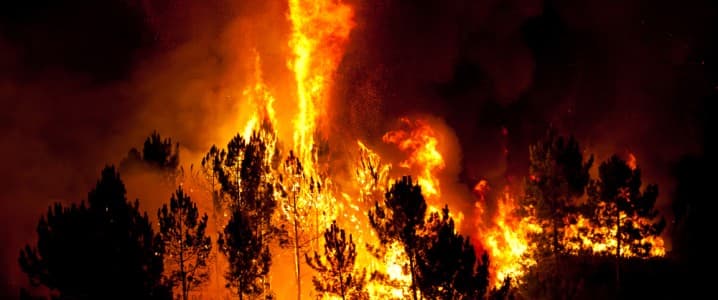
The early 2023 wildfire season presented Alberta with one of its most severe environmental challenges in recent memory. Industry sources confirmed in early June that over half of the province’s typical oil production capacity was forced offline as infernos swept through critical operational zones. This environmental crisis necessitated the evacuation of personnel and the shutdown of facilities in key production hubs, including Fort McMurray, a region historically familiar with such devastating events, notably the catastrophic wildfires of 2016.
A consortium of seven prominent oil producers either significantly curtailed or entirely halted their operations for several days between late May and early June. Major players in the Canadian energy landscape, including Cenovus Energy, Canadian Natural Resources, and MEG Energy, were among those compelled to cease production and evacuate workers from their northeastern Alberta sites. The relentless spread of the wildfires created an “operational nightmare” for these companies, threatening not only immediate output but also posing a risk to vital infrastructure that underpins Canada’s energy export capabilities.
Market analysts quickly highlighted the gravity of the situation. The timing of this supply disruption, coinciding with a period of tightening global crude inventories, injected significant bullish pressure into energy markets. Experts noted that the market might be underestimating the inherent “structural fragility” of Alberta’s wildfire preparedness and its potential for recurring impacts on supply.
Heavy Crude Strengthens: The WCS-WTI Differential Narrows
The direct consequence of reduced Canadian production was an observable strengthening in the price of heavy crude relative to the U.S. benchmark, West Texas Intermediate (WTI) Crude. Western Canadian Select (WCS), the primary benchmark for Canada’s heavy crude delivered at Hardisty, Alberta, saw its price discount to WTI narrow considerably. By the end of June, this differential had shrunk to less than $10 per barrel, a stark contrast to the average $15 per barrel discount observed over the preceding five years.
This narrowing spread is a critical indicator for investors in Canadian oil and gas. A tighter differential means Canadian producers receive a higher price for their heavy crude compared to the WTI benchmark, directly improving their revenue and profitability. While beneficial for producers in the short term, this price movement also reflects the market’s heightened concern over the reliability of Canadian supply, particularly of the heavier grades of crude that are often in high demand by refiners.
Investor Outlook: Assessing Risks and Resilience in Canadian Energy
For investors focused on the oil and gas sector, these events in Alberta serve as a powerful reminder of the complex interplay between environmental factors, operational risks, and global market dynamics. The incident underscores the importance of evaluating not just geopolitical risks but also localized environmental threats when assessing the long-term viability and stability of energy investments.
Canadian oil sands operators continue to invest in mitigation strategies, including enhanced wildfire preparedness and infrastructure resilience. However, the scale and frequency of recent environmental challenges suggest that these events may become a more regular feature of the operating landscape. Investors should closely monitor companies’ capital allocation towards these resilience efforts and their capacity to manage future disruptions without sustained production losses.
The immediate impact on production and the subsequent strengthening of heavy crude prices offer a snapshot of how quickly supply shocks can reverberate through global energy markets. As the world navigates its energy transition, the stability of traditional oil supply hubs like Alberta remains crucial. Understanding the inherent risks, from operational complexities to environmental vulnerabilities, is paramount for making informed investment decisions in the ever-evolving oil and gas sector.