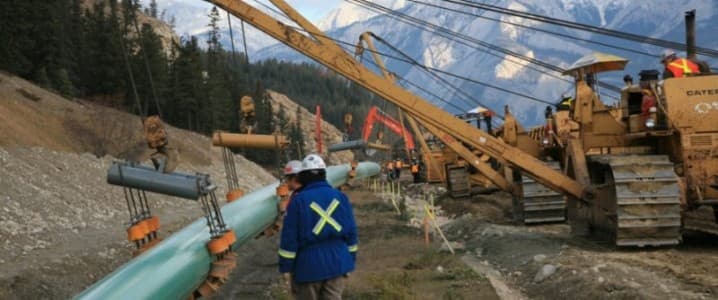
Alberta’s renewed push for a West Coast oil pipeline represents a significant development for Canadian energy investors, signaling a concerted effort to unlock new export avenues amidst evolving global markets. Premier Danielle Smith’s recent discussions with Prime Minister Mark Carney in Ottawa underscore a potential alignment between provincial resource development goals and the federal government’s ambition to position Canada as an “energy superpower.” This proposed pipeline, with a capacity of up to 1 million barrels daily destined for burgeoning Asian markets, could fundamentally reshape Canada’s crude export landscape. However, the investment thesis for such a long-cycle project must be viewed through the lens of current market volatility, regulatory hurdles, and critical stakeholder engagement.
Strategic Alignment for National Energy Ambitions
The proposal for a new oil pipeline, extending from Alberta’s prolific oilfields to the British Columbia coast, is a strategic move designed to diversify Canada’s energy export destinations beyond the traditional U.S. market. With a targeted capacity of 1 million barrels per day, this project would provide substantial new infrastructure for Canadian crude, directly addressing the long-standing challenge of market access. Premier Smith’s engagement with Prime Minister Carney highlighted energy opportunities and the shared vision of Canada as an energy superpower, suggesting a rare moment of federal-provincial synergy on a major energy initiative. Carney’s recent launch of the Federal Major Projects Office, designed to accelerate the development of strategic national projects, provides a clear pathway for Alberta’s ambitious proposal. The province is committing C$14 million to support crucial early planning work, including cost estimates, indigenous engagement, and the development of a credible proposal, signaling serious intent to pursue “national significance” status. This federal office has already fast-tracked projects like Phase 2 of the LNG Canada export facility, offering a tangible precedent for potential acceleration.
Navigating Market Volatility and Investor Sentiment
While the long-term strategic benefits of a new pipeline are clear, investors must critically assess this opportunity against the backdrop of significant short-term market fluctuations. As of today, Brent Crude trades at $90.38 per barrel, marking a sharp 9.07% decline within the day, with its range fluctuating between $86.08 and $98.97. Similarly, WTI Crude has seen a 9.41% drop, settling at $82.59, having traded between $78.97 and $90.34. This immediate downturn follows a broader trend; Brent has fallen by nearly 20% in just the last 14 days, from $112.78 to its current level. This pronounced volatility directly impacts investor confidence in capital-intensive, multi-year infrastructure projects. OilMarketCap.com readers are actively seeking insights into future price trajectories, with common questions including “what do you predict the price of oil per barrel will be by end of 2026?” The success of a pipeline project with a multi-year development timeline is intrinsically linked to sustained, robust demand and price stability far beyond current trading windows. Investors will be weighing the long-term export potential to Asia against the immediate market’s demonstrated susceptibility to geopolitical shifts and supply-demand imbalances, demanding a clear and convincing economic case for the project’s enduring viability.
Indigenous Participation and Regulatory Pathway
A critical component of Alberta’s pipeline strategy is the upfront commitment to Indigenous participation and engagement. The province plans to collaborate with major pipeline companies for technical advice and will initiate engagement with both Alberta and British Columbia Indigenous communities from the outset. This proactive approach aims to build genuine partnerships and secure social license, a lesson learned from past pipeline challenges. By integrating Indigenous communities into the project’s development, the province seeks to foster shared ownership and benefits, which are paramount for successful project execution in Canada. The formal application to the Federal Major Projects Office as a “project of national significance” is a strategic choice, designed to streamline regulatory processes and emphasize the broader economic and geopolitical advantages for Canada. This pathway requires the province to make a compelling argument for the pipeline’s national interest, covering environmental, economic, and social considerations, alongside detailed pre-front-end engineering and design work to define the pipeline’s route, size, and cost.
Forward-Looking Catalysts and Market Impact
Looking ahead, the investment landscape for projects like Alberta’s proposed pipeline will be shaped by a confluence of regulatory progress and global market dynamics. While the pipeline’s approval process unfolds, key calendar events will continue to influence the broader energy market sentiment. This Sunday, April 19th, marks a crucial OPEC+ Ministerial Meeting, where decisions regarding production quotas will directly impact global crude supply and, consequently, price stability. Investors are keenly asking about “OPEC+ current production quotas” as these decisions have immediate ramifications for market balance and the long-term demand outlook that underpins new infrastructure. Beyond OPEC+, the weekly API and EIA inventory reports, along with the Baker Hughes Rig Count, will offer continuous insights into North American supply, demand, and drilling activity. While these events don’t directly govern the pipeline’s regulatory timeline, a stable and predictable oil price environment, potentially bolstered by OPEC+ actions and sustained demand signals, would significantly strengthen the investment case and facilitate capital allocation for such an ambitious undertaking. The pipeline’s long-term success hinges on Canada’s ability to capitalize on growing Asian demand, a vision that requires both political will and a supportive global energy market.


