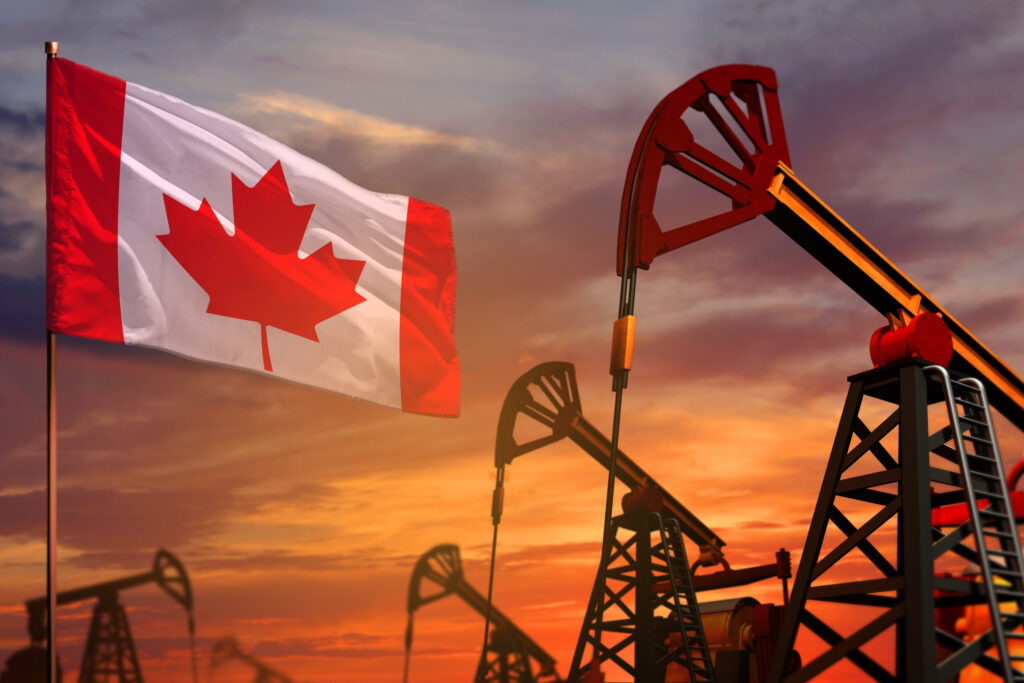
The Canadian oil and gas sector finds itself at a critical juncture, grappling with escalating policy uncertainty as Alberta’s long-simmering grievances against the federal government threaten to boil over into a potential secession referendum. This internal strife creates a complex risk premium for investors, overshadowing the province’s vast resource potential and challenging the notion of a united Canadian energy strategy. With Premier Danielle Smith acknowledging the democratic process for a citizen-led referendum on separation by 2026, and Prime Minister Mark Carney’s administration only recently pivoting towards a commitment to fast-track major projects, the path forward for Canadian energy investment is anything but clear. Our analysis delves into the economic and political currents shaping this landscape, offering critical insights for navigating the evolving investment climate.
Alberta’s Secession Calculus and the Investment Freeze
At the heart of Alberta’s discontent is a fundamental disagreement over resource development and environmental policy. For years, the province has vehemently opposed federal legislation regarding emissions from oil and gas production, viewing it as an effective cap on output rather than a genuine environmental measure. This friction is compounded by Alberta’s persistent struggle for diversified market access, a critical issue given that approximately 90% of Canada’s oil exports currently flow into the United States. Premier Smith has articulated a clear need for guaranteed corridor and port access to tidewater off the Pacific, Arctic, and Atlantic coasts, alongside the approval of a new oil pipeline to the B.C. Northwest coast and the repeal of the Tanker Ban. The province is actively seeking private backers for a new pipeline capable of shipping approximately 1 million barrels per day (bpd), underscoring the urgency of its export diversification ambitions.
The potential for a citizen-led referendum on separation by 2026 introduces an unprecedented level of political risk. While Premier Smith maintains she does not personally support separation, her government’s commitment to respect the democratic process if sufficient signatures are gathered means the question could appear on the ballot. For energy investors, this looming political uncertainty translates directly into a higher cost of capital and deferred investment decisions. Capital naturally flows to jurisdictions with stability and predictable regulatory frameworks. The prospect of a major producing region potentially altering its constitutional relationship with the federal government creates an environment where long-term commitments become significantly more challenging to justify.
Market Volatility Amplifies Canadian Energy’s Policy Risk
The domestic policy challenges in Canada are unfolding against a backdrop of significant global market volatility, further complicating the investment outlook. As of today, Brent Crude is trading at $90.38, reflecting a substantial 9.07% drop within the day’s range of $86.08 to $98.97. Similarly, WTI Crude has fallen to $82.59, down 9.41% from its daily high, fluctuating between $78.97 and $90.34. This intraday movement follows a broader trend; Brent crude has declined by $20.91, or 18.5%, over the past 14 days, falling from $112.78 on March 30th to $91.87 yesterday. Such sharp declines, coupled with ongoing uncertainty, prompt investors to question the long-term price trajectory, with a common query from our readers this week being, “what do you predict the price of oil per barrel will be by end of 2026?”
This global price environment exacerbates the “Canadian discount” that has historically plagued Alberta’s oil due to limited export capacity. When global prices are high and stable, the discount is more palatable; however, in a volatile market characterized by steep price declines, the lack of diversified market access means Canadian producers bear a disproportionately higher burden. Investors are actively seeking clarity on operational environments, and the current political friction in Canada adds an additional layer of risk not present in more stable jurisdictions. The question of how specific companies, such as “Repsol,” might fare in such a fluctuating environment underscores the direct impact of these macro and political factors on individual equity performance. Without resolution on pipeline access and regulatory consistency, Canadian energy assets will continue to trade at a discount, regardless of the underlying commodity price.
Federal Promises and the Path to Diversification
In a notable shift, Prime Minister Mark Carney’s federal government has begun to acknowledge the critical need for Canada to diversify its oil exports beyond its heavy reliance on the U.S. market. During a recent meeting with oil and gas executives in Alberta, Carney pledged to work towards fast-tracking major projects to establish Canada as an “energy superpower.” He emphasized the importance of “building one united Canadian economy” and “getting big things built and major infrastructure projects off the ground, in Alberta and across Canada.” This newfound federal commitment, while welcomed, must now contend with the entrenched provincial demands articulated by Premier Smith, which include not only pipeline access but also the return of industrial emissions regulation to provincial authority. The federal government’s realization that diversification is a “smart move” comes at a time when its relationship with the U.S. under President Trump is also strained, adding another dimension to Canada’s export strategy.
The success of these federal pledges hinges on their practical implementation and ability to bridge the policy gap with Alberta. While the rhetoric is positive, the actual approval and construction of major infrastructure projects, particularly pipelines, have historically been fraught with delays and political opposition in Canada. Investors will be closely watching for tangible progress on this front. The challenge for the federal government is to deliver on its promise of fast-tracking projects while simultaneously addressing Alberta’s demands for greater autonomy over its resources and environmental regulations, all before the 2026 provincial referendum potentially adds another layer of complexity to Canadian unity.
Navigating Upcoming Catalysts Amidst Domestic Uncertainty
Looking ahead, the investment landscape for Canadian energy will be shaped by a confluence of global and domestic events. Globally, the upcoming OPEC+ Joint Ministerial Monitoring Committee (JMMC) meeting on April 18th, followed by the Full Ministerial meeting on April 19th, will be crucial. Our readers are keenly asking about “OPEC+ current production quotas,” as these decisions directly influence global supply and, consequently, the baseline price of crude. Any shifts in OPEC+ policy could either alleviate or intensify pressure on Canadian producers already contending with domestic policy headwinds. Following these, the API Weekly Crude Inventory reports on April 21st and 28th, along with the EIA Weekly Petroleum Status Reports on April 22nd and 29th, will provide vital insights into U.S. demand and inventory levels – a critical barometer given Canada’s primary export market.
Domestically, the Baker Hughes Rig Count reports on April 24th and May 1st will offer a snapshot of drilling activity across North America, including Western Canada. These reports, while providing a pulse on short-term production trends, do not fully capture the long-term investment decisions being impacted by Alberta’s policy uncertainty. The ultimate forward-looking catalyst remains the potential 2026 provincial referendum. Until then, investors must weigh the potential for a more cooperative federal-provincial relationship, leading to enhanced market access and a more stable regulatory environment, against the very real risk of deepening political division. The federal government’s commitment to fast-track projects offers a glimmer of hope, but execution against Alberta’s long-standing demands for control over its resources will be the true test, determining the future flow of capital into Canada’s vast energy sector.