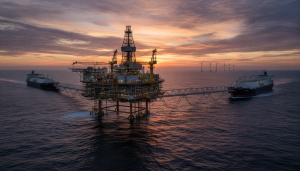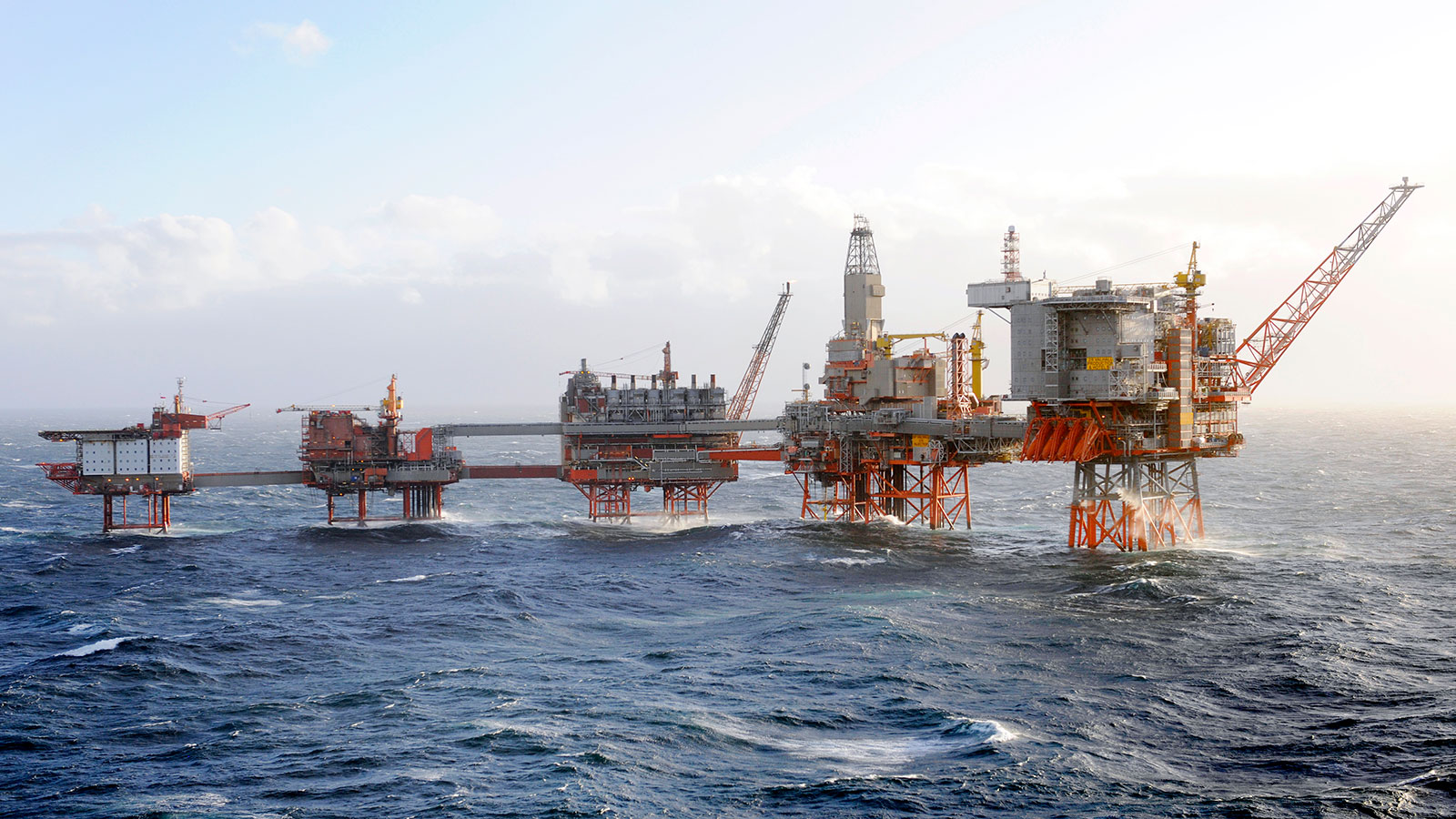
Aker BP’s recent milestone in the North Sea, executing the oil and gas industry’s first fully remote solids management operation, signals a transformative shift for offshore E&P companies. In collaboration with FourPhase, this initiative successfully managed coiled tubing cleanout of wells with chalk bridges, demonstrating significantly improved efficiency and enhanced safety by drastically reducing offshore personnel. For investors, this isn’t just a technical achievement; it’s a blueprint for mitigating operational risks, optimizing costs, and future-proofing assets in an increasingly volatile energy market. This pioneering effort sets a new standard, demanding a closer look at how digital integration and remote capabilities will shape investment opportunities across the sector.
The Imperative for Efficiency in a Volatile Market
The successful two-month program conducted by Aker BP and FourPhase underscores a critical industry trend: the relentless pursuit of operational efficiency. By managing the complex solids returns topside with FourPhase’s DualFlow desander system, and overseeing the entire operation from Aker BP’s Gnist center, the project reduced offshore headcount to a mere four operators. The expectation for future campaigns to require as few as one operator per shift translates directly into substantial cost savings on logistics, accommodation, and support services. This focus on streamlining operations holds particular weight in the current market climate. As of today, Brent Crude trades at $90.38 per barrel, experiencing a sharp 9.07% decline within the day, while WTI Crude stands at $82.59, down 9.41%. This significant daily volatility follows a two-week period where Brent plummeted from $112.78 on March 30th to $91.87 on April 17th, representing an 18.5% drop. Such price swings make every dollar saved in operational expenditure crucial for maintaining profitability and investor confidence. Companies that can demonstrate tangible reductions in their cost base through innovative technologies like remote solids management will undoubtedly stand out in this challenging environment.
Strategic Advantage Through Digital Transformation
Beyond immediate cost savings, Aker BP’s move into fully remote operations represents a significant strategic advantage rooted in digital transformation. The ability to manage multiple interventions simultaneously with a minimal offshore footprint not only enhances efficiency but also drastically reduces personnel exposure to hazardous offshore environments, leading to an inherently safer operation. This innovation aligns with a broader industry push towards integrating advanced analytics, real-time data, and automation to optimize production and maintenance cycles. For investors, this shift offers a compelling narrative: companies embracing such technologies are not just cutting costs; they are building more resilient, adaptable, and environmentally responsible operations. The reduced environmental footprint associated with fewer logistical movements also positions these companies favorably in a world increasingly focused on ESG metrics. Aker BP’s proactive stance, building out its Gnist center to support digital operations, demonstrates a long-term commitment to leveraging technology for competitive advantage, setting a benchmark for peers operating in mature basins like the North Sea and beyond.
Navigating Future Headwinds and Opportunities
The pace of adoption for remote operations technology will be significantly influenced by upcoming market dynamics. Investors are keenly watching for signals that could dictate future oil prices and, consequently, the economic viability of new investments. Key upcoming events on our calendar include the OPEC+ Joint Ministerial Monitoring Committee (JMMC) meeting on April 18th, followed by the Full Ministerial OPEC+ Meeting on April 19th. Any decisions regarding production quotas from these meetings will directly impact global supply and price stability. Further insights will emerge from the API Weekly Crude Inventory reports on April 21st and 28th, and the EIA Weekly Petroleum Status Reports on April 22nd and 29th, which provide crucial data on U.S. demand and supply balances. Additionally, the Baker Hughes Rig Count on April 24th and May 1st will indicate drilling activity trends. Should these events point towards sustained price volatility or downward pressure, the economic argument for technologies that deliver operational savings, like Aker BP’s remote management system, becomes even stronger. Companies that have already invested in these capabilities will be better positioned to weather market fluctuations, offering a more stable outlook to investors.
Addressing Investor Concerns: Performance, Predictability, and the Future of Oil
Our proprietary reader intent data reveals a consistent theme among investors: a strong desire for predictability and insight into future oil prices and company performance. Questions like “what do you predict the price of oil per barrel will be by end of 2026?” and specific inquiries about individual company trajectories, such as “How well do you think Repsol will end in April 2026?”, highlight this focus. Aker BP’s pioneering work in remote operations directly addresses these concerns by enhancing operational predictability. By reducing reliance on offshore personnel and complex logistics, companies can achieve more consistent project delivery and lower operational expenditure, thereby insulating their bottom line from some of the volatility inherent in commodity prices. This makes companies adopting such innovations more attractive to investors seeking stable returns. The interest in advanced analytics and data sources, evident in questions about “EnerGPT” and its underlying APIs, further underscores that investors are looking for data-driven insights into how technology will drive performance. The ability to leverage real-time data for remote decision-making, as demonstrated by Aker BP, is precisely the kind of technological edge that will differentiate successful E&P companies and offer a clearer path to sustainable profitability in the long run.