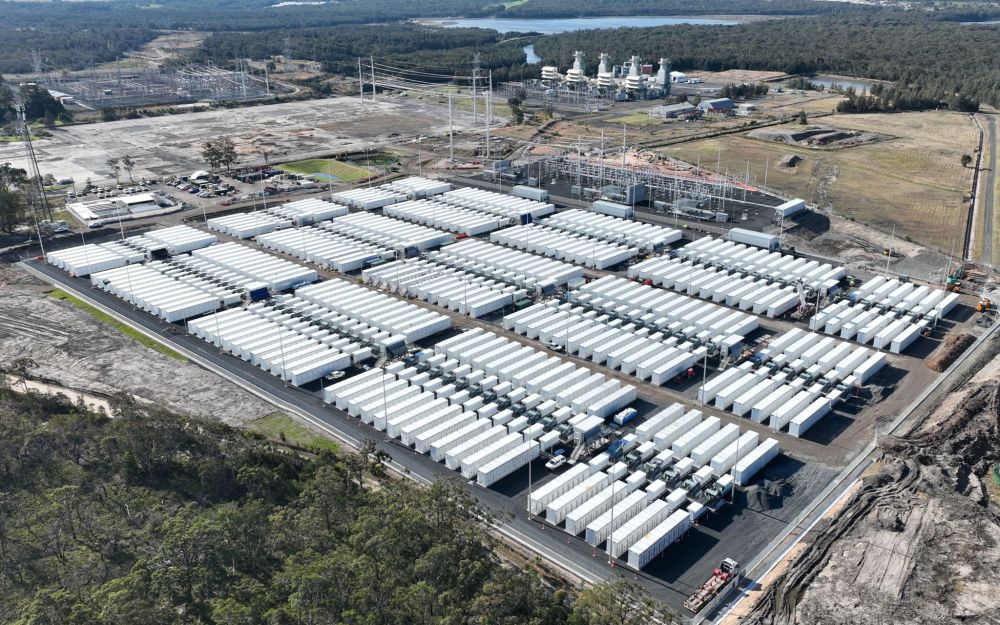
The energy investment landscape is continuously evolving, marked by significant capital flows into technologies underpinning the global energy transition. A notable development comes from Akaysha Energy, which has secured a landmark A$300 million multi-currency corporate debt facility. This financing, backed by a syndicate of major global and domestic financial institutions including BNP Paribas, Deutsche Bank, ING, Sumitomo Mitsui Banking Corporation, and Westpac, is poised to dramatically accelerate the deployment of large-scale battery energy storage systems (BESS) across Australia and international markets. What makes this transaction particularly compelling for investors is not just its scale, but its innovative structure – a first-of-its-kind borrowing base loan for the Australian renewables sector, signaling a maturing financial approach to green infrastructure.
De-Risking Renewable Investment with a Pioneering Finance Structure
At the core of Akaysha’s strategic advantage is the adoption of a borrowing base loan structure, a mechanism more commonly found in the US oil and gas sector or mature renewables markets. This innovative three-year revolving loan and Letter of Credit facility, denominated in Australian dollars, euros, and US dollars, fundamentally links the available loan capacity to the underlying value of Akaysha’s operational and development-stage assets. For investors, this structure represents a significant de-risking of capital deployment in renewables. As Akaysha’s portfolio of BESS projects grows and matures, so too does its access to financing, providing a scalable and flexible funding pathway that traditional project finance often struggles to match. This “landmarking” approach, as described by Akaysha’s leadership, is a crucial step towards standardizing and scaling up financial support for the energy transition, offering a replicable model that other developers will undoubtedly seek to emulate across global markets.
Battery Storage: A Stable Anchor Amidst Energy Market Volatility
The strategic importance of Akaysha’s BESS expansion is magnified by the current turbulence in global energy markets. As of today, Brent crude trades at $90.38, reflecting a significant 9.07% decline within the day, while WTI crude sits at $82.59, down 9.41%. This intraday volatility follows a broader trend; Brent has shed over $20, or 18.5%, from its position of $112.78 just two weeks ago. Such sharp price swings underscore the inherent unpredictability and geopolitical sensitivities of traditional hydrocarbon markets. Against this backdrop, investments in stable, grid-supporting infrastructure like BESS present a compelling counter-narrative. Our reader intent data shows that investors are keenly asking, “what do you predict the price of oil per barrel will be by end of 2026?” While future oil prices remain subject to numerous variables, the demand for BESS is driven by the immutable need for grid stability, renewable integration, and energy security – factors that are largely insulated from short-term crude price fluctuations. This makes BESS projects an attractive diversification play, offering more predictable revenue streams and growth trajectories compared to the often-cyclical nature of oil and gas exploration and production.
Global Expansion and Future Catalysts for BESS Deployment
Akaysha Energy is not merely focused on its domestic Australian market; the company is actively advancing multiple BESS projects across the United States, Japan, and Germany. This global footprint, building on the successful operational delivery of Stage 1 of the Waratah Super Battery – now recognized as the world’s most powerful BESS – positions Akaysha as a significant cross-market player in the rapidly expanding energy storage segment. The International Energy Agency projects that global battery storage capacity will need to multiply more than sixfold this decade to effectively integrate variable renewables and ensure robust grid stability. This staggering growth forecast, coupled with ongoing geopolitical considerations around energy supply, will continue to drive substantial investment. While upcoming events like the OPEC+ JMMC meeting on April 18th and the full Ministerial meeting on April 19th will directly influence crude oil production quotas and, consequently, global oil prices, they also indirectly reinforce the strategic imperative for energy independence and diversified power sources. Similarly, the consistent release of API and EIA Weekly Crude Inventory reports on April 21st, 22nd, 28th, and 29th will provide a continuous pulse on demand and supply dynamics, further highlighting the volatility that BESS solutions aim to mitigate for electricity grids.
Investor Outlook: Capitalizing on the Energy Transition’s Infrastructure Backbone
For sophisticated investors, Akaysha’s A$300 million facility represents more than just a capital injection; it signifies a maturation of finance models for the energy transition. The demonstrated confidence from a syndicate of leading banks in a “first-of-its-kind” borrowing base structure in Australia underscores a broader market acceptance of renewables as a primary investment thesis. This type of scalable, flexible financing is critical for meeting the ambitious targets for battery storage deployment globally. While our readers frequently inquire about “OPEC+ current production quotas” and the immediate outlook for hydrocarbon prices, this Akaysha deal highlights a distinct and growing investment pathway. It allows capital to flow into the essential infrastructure of a decarbonized energy system, offering exposure to long-term growth trends regardless of short-term commodity price swings. The ability to finance extensive portfolios of BESS projects, from development through to operation, provides a compelling opportunity to invest in the critical backbone of future energy grids, offering a stable and strategic play in the ongoing global energy evolution.


