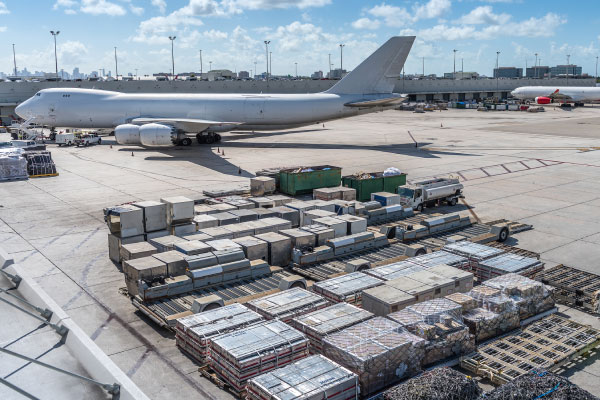
Global supply chains, the intricate arteries of commerce, are undergoing profound shifts, and their pulse offers critical insights for oil and gas investors. While often viewed through the lens of geopolitics or economic cycles, the granular trends within sectors like air cargo reveal underlying currents that will shape future energy demand, logistics costs, and regional consumption patterns. At OilMarketCap, our proprietary data pipelines signal that the forces reshaping air cargo — from escalating tariffs to technological leaps — are not just logistical headaches; they are fundamental drivers impacting everything from jet fuel demand to the strategic positioning of refining assets. Understanding these dynamics is paramount for investors looking to position their portfolios for the next decade.
Geopolitical Frictions Reshape Global Sourcing and Fuel Demand
The persistent back-and-forth over U.S.-China tariffs continues to inject significant uncertainty into global trade, directly influencing supply chain strategies and, by extension, energy demand. This geopolitical friction has already manifested in tangible ways, with a reported 17% increase in ocean freight rates on Pacific lanes during recent tariff reprieves. Such a substantial hike in shipping costs compels forwarders and shippers to reconsider sourcing models. The removal of the de minimis exemption further exacerbates this, adding compliance burdens and costs that are prompting a strategic shift away from traditional manufacturing hubs. We are observing a significant trend where companies are increasingly opting for U.S. warehouse models or diversifying sourcing away from China.
For oil and gas investors, this re-architecting of supply chains has several implications. A shift towards more localized production or warehousing in the U.S. could marginally alter regional fuel demand profiles, potentially increasing trucking and domestic logistics fuel consumption while impacting long-haul international shipping. More critically, for investors tracking the refining sector, questions around Chinese manufacturing output become paramount. Our reader intent data highlights a keen interest in “How are Chinese tea-pot refineries running this quarter?” The answer is inextricably linked to China’s export strength and its role in global manufacturing. Persistent tariff pressure and reshoring trends could temper demand for industrial fuels and feedstocks in China, influencing refinery utilization rates and product exports, which in turn impacts global crude balances.
Infrastructure Bottlenecks and the Future of Jet Fuel Growth
Despite the current uncertainties, the long-term outlook for air cargo points to robust growth, with projections of a 4% annual increase over the next two decades. This trajectory, if realized, presents a significant tailwind for jet fuel demand. However, this growth narrative is complicated by critical infrastructure deficits. Major U.S. airports, for instance, often rely on cargo facilities built decades ago, ill-equipped for the scale and speed of today’s freight demands. Compounding this challenge are severe staffing shortages within the Federal Aviation Administration (FAA), with some air traffic control towers operating with just three controllers when fourteen are needed. These bottlenecks are not mere operational inconveniences; they represent tangible constraints on air cargo capacity and efficiency.
From an investment perspective, these infrastructure challenges create both risks and opportunities. Persistent delays and inefficiencies can cap the realized growth in air cargo volumes, potentially dampening the corresponding demand for jet fuel. However, the recognition of these issues is also catalyzing significant investment. Modernizing airport cargo infrastructure and addressing FAA staffing levels will require substantial capital injection, creating opportunities for companies involved in construction, logistics technology, and potentially even energy infrastructure supporting these hubs. Investors should monitor government policy and private sector initiatives aimed at upgrading these critical nodes, as successful modernization will unlock the full potential of air cargo growth and its associated fuel demand.
Technology Adoption Drives Efficiency Amidst Market Volatility
The air cargo sector, historically slower to embrace digital transformation, is now aggressively adopting new technologies. Forwarders of all sizes are prioritizing investments in artificial intelligence (AI), automation, and robust cybersecurity measures. This rapid technological catch-up is not just about staying competitive; it’s a strategic imperative to navigate the complexities and uncertainties of the current market, from managing fluctuating freight rates to optimizing complex supply chains. While the industry acknowledges it is “making up for lost time,” the speed of adoption is undeniable, driven by the need for greater efficiency and transparency.
For energy investors, this technological pivot in logistics carries nuanced implications. Increased automation and AI-driven optimization could lead to more efficient cargo loading, routing, and overall operations, potentially reducing fuel burn per ton-mile over time. However, the deployment of these advanced systems also requires significant energy, from powering new automated warehouses to supporting vast data centers for AI processing. The net effect on overall energy demand is a complex equation, but the trend clearly points towards a more sophisticated, data-driven logistics ecosystem. Companies positioned to offer energy-efficient solutions for these evolving technological demands could see significant growth, even as the core fuel consumption dynamics adjust.
Navigating the Near-Term: Market Signals and Upcoming Events
The prevailing sentiment in the air cargo market, though anticipating peak season volumes to outperform the previous year, remains overshadowed by uncertainty regarding consumer sentiment and broader geopolitical risks. This mirrors the caution we see in the broader energy markets. As of today, Brent Crude trades at $96.08, up 1.36% on the day, after dipping into a range of $91-$96.89. WTI Crude shows a similar uptick, priced at $92.70, a 1.56% gain within a daily range of $86.96-$93.30. However, this daily bounce should be viewed in context; Brent has seen a notable decline of nearly 8.8%, or $9 per barrel, over the past fourteen days, falling from $102.22 on March 25th to $93.22 on April 14th.
This recent volatility in crude prices underscores the importance of upcoming energy events for shaping investor sentiment and our “base-case Brent price forecast for next quarter,” a question frequently asked by our readers. The next fourteen days are packed with critical catalysts. The Baker Hughes Rig Count reports on April 17th and 24th will offer insights into North American supply dynamics. More significantly, the OPEC+ Joint Ministerial Monitoring Committee (JMMC) meets on April 18th, followed by the full OPEC+ Ministerial Meeting on April 20th. These meetings will be closely watched for any signals regarding production policy, which could decisively impact crude supply amidst demand signals emanating from evolving global trade patterns. Furthermore, the API and EIA Weekly Crude Inventory reports on April 21st/22nd and April 28th/29th will provide crucial snapshots of U.S. supply-demand balances. Investors should pay close attention to how these supply-side developments interact with the demand implications stemming from the restructured global supply chains and the overall health of the air cargo sector as a bellwether for global economic activity.