The Enduring Case for Energy Amidst AI’s Physical World Limitations
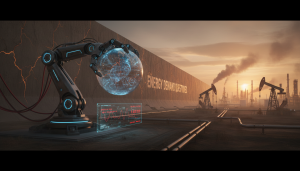
In a world captivated by the relentless march of artificial intelligence, it’s easy for investors to become swept up in the hype surrounding large language models (LLMs) and their projected transformative power across all industries. However, a more nuanced perspective, offered by one of AI’s most distinguished architects, Meta’s chief AI scientist Yann LeCun, suggests that current AI capabilities fall short of true intelligence, particularly concerning interactions with the physical world. This expert assessment, shared at the AI Action Summit in Paris earlier this year during a discussion with IBM’s AI leader Anthony Annunziata, provides crucial insights for energy investors, underscoring the enduring value and necessity of tangible assets and robust infrastructure in the oil and gas sector.
LeCun outlined four fundamental characteristics defining intelligent behavior, common to all advanced animals and certainly humans: a profound understanding of the physical environment, persistent memory, the capacity for complex reasoning, and the ability to plan intricate, hierarchical actions. His sobering conclusion? Current AI paradigms, including the much-heralded LLMs, have yet to achieve this critical threshold. Bridging this gap, he argues, necessitates a fundamental re-evaluation of how these systems are developed and trained.
Beyond the “Hacks”: The Quest for True Physical World Intelligence
The race among tech giants to dominate the AI landscape has led to a proliferation of what LeCun describes as “hacks” – bolted-on capabilities designed to mimic intelligence rather than embody it. For instance, to imbue AI with an understanding of the physical world, developers often integrate a separate vision system. Memory functions might be addressed through methods like Retrieval Augmented Generation (RAG), a technique pioneered at Meta that enhances LLM outputs by drawing on external knowledge bases, or simply by expanding model size. While these approaches offer incremental improvements, they remain superficial additions rather than integral, foundational intelligence.
These temporary fixes highlight a deeper systemic challenge. True intelligence, according to LeCun, requires a shift towards “world-based models.” These are AI systems designed to learn from real-life scenarios, exhibiting higher levels of cognition than pattern-based AI. He elaborated on their function: given a perceived state of the world at a specific moment, an action is imagined, and the world model then predicts the subsequent state resulting from that action. The inherent difficulty lies in the infinite and unpredictable ways the world can evolve. Training for such complexity demands a profound capacity for abstraction, filtering out irrelevant details to focus on core principles.
Meta is actively exploring this frontier with initiatives like V-JEPA, a non-generative model unveiled in February. V-JEPA learns by anticipating missing or obscured segments within video streams. Crucially, it doesn’t predict at the granular pixel level; instead, it trains a system to operate on an abstract representation of the video. This allows it to make predictions within that abstract framework, effectively discarding the myriad unpredictable details. This concept mirrors the foundational hierarchy in chemistry: particles form atoms, atoms form molecules, and molecules form materials. Each ascending layer sheds irrelevant information from the layers below, simplifying complex realities into manageable, predictable abstractions.
Investment Implications for Oil & Gas: A Grounded Perspective
For investors navigating the dynamic energy sector, LeCun’s insights carry significant weight. If even cutting-edge AI struggles with fundamental physical world understanding, memory, reasoning, and planning, its immediate disruptive potential for highly complex, physically intensive industries like oil and gas might be overstated. The sector deals with immense geological uncertainties, intricate engineering challenges, vast supply chains, and volatile commodity markets – domains where current AI’s limitations become particularly pronounced.
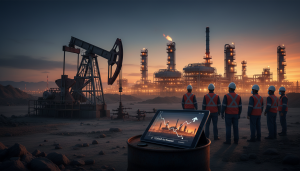
Consider the operational realities: optimizing drilling operations, managing vast pipeline networks, predicting equipment failures in harsh environments, or orchestrating global logistics for crude and refined products. These tasks demand an intuitive grasp of physics, material science, real-time spatial reasoning, and dynamic planning that goes far beyond pattern recognition or text generation. While AI can certainly enhance specific processes through data analysis and predictive maintenance, it is not yet poised to fundamentally redesign the core physical infrastructure or significantly alter the fundamental economics of hydrocarbon extraction and distribution on a grand scale.
This perspective reinforces the investment thesis for tangible energy assets. The intrinsic value of oil and gas reserves, processing facilities, and distribution networks remains largely insulated from the immediate, transformative impacts of AI that might reshape purely digital industries. Demand for energy, driven by global population growth, industrialization, and evolving geopolitical landscapes, continues to be a powerful force. While the energy transition is underway, the path is complex, and the role of hydrocarbons will remain critical for decades to come, providing a stable foundation for investment.
Capital Allocation in a Shifting Landscape
Savvy investors recognize that capital allocation should align with fundamental realities, not just technological aspirations. The current limitations of AI in physical domains suggest that while innovation is constant, the timeline for AI to become a truly dominant force in re-engineering global energy supply chains or enabling radically cheaper, entirely new energy sources might be longer than some futurists project. This reinforces the case for disciplined investment in established energy companies with proven reserves, robust cash flows, and strategic assets.
The energy sector, therefore, continues to offer compelling opportunities for those seeking exposure to essential commodities and resilient infrastructure. As AI evolves towards more sophisticated world-based models, its integration into energy operations will undoubtedly deepen. However, for the foreseeable future, the physical world will continue to demand physical solutions, ensuring that the oil and gas industry remains a vital component of the global economy and an attractive proposition for judicious investors. The reality of AI’s current state, far from undermining the energy sector, actually solidifies its enduring investment appeal by highlighting the unique and irreplaceable value of tangible assets and human ingenuity in navigating the complexities of our physical world.