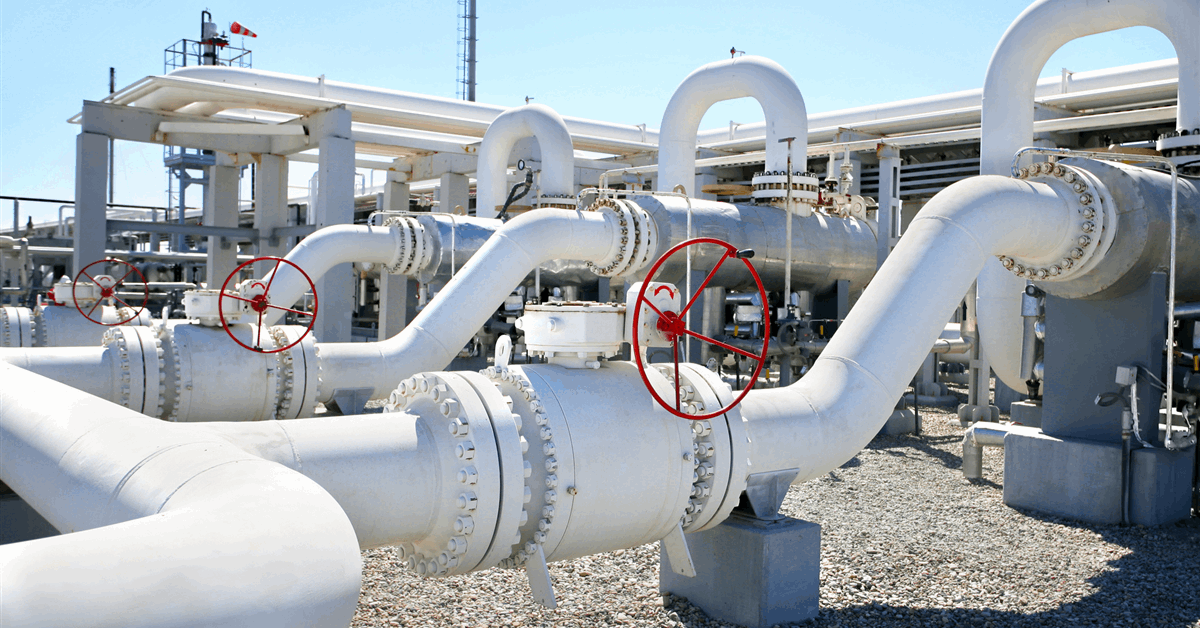
A $500 Million Catalyst for Nigeria’s Gas Future
Nigeria’s ambition to transform its natural gas sector has received a significant boost with the recent Memorandum of Understanding between the Midstream and Downstream Gas Infrastructure Fund (MDGIF) and the African Export-Import Bank (Afreximbank). This landmark agreement earmarks up to $500 million over four years for expanding and modernizing Nigeria’s critical gas infrastructure. The partnership represents a strategic convergence of capital and expertise, with Afreximbank providing direct financing and credit risk guarantees, while MDGIF contributes equity, ensuring robust capital structures for eligible projects. This initiative is poised to accelerate the development of pipelines and processing facilities, directly supporting Nigeria’s Petroleum Industry Act objectives to enhance domestic gas consumption and reduce environmental impacts like gas flaring. For investors keenly watching the African energy landscape, this collaboration signals a clearer pathway for tangible growth in a sector ripe for development.
Strategic Investment in Midstream and Downstream Growth
The core of this half-billion-dollar commitment lies in bolstering Nigeria’s midstream and downstream gas operations. MDGIF, established specifically for this purpose, will channel equity contributions into projects that attract private investment, aligning perfectly with Afreximbank’s mandate to foster intra-African trade and development. This joint approach creates a pipeline of bankable projects, underpinned by feasibility studies and risk-sharing mechanisms that de-risk opportunities for potential private sector participants. Beyond capital injection, the partnership also includes a structured program aimed at enhancing MDGIF’s institutional capabilities in project structuring and risk management, a critical step towards sustainable infrastructure development. With Nigeria’s natural gas production already seeing significant growth, reaching 7.59 billion standard cubic feet a day (Bscfd) in July – an 8.58 percent increase from the previous year’s daily average – this investment comes at an opportune moment to capitalize on existing momentum and further scale output for both domestic power generation and industrial consumption, which recently saw gas supply to power plants hit a three-month high.
Navigating Broader Market Currents and Investor Sentiment
The energy market remains a dynamic landscape, and investors are continuously assessing where capital can generate the most stable returns amidst fluctuating conditions. As of today, Brent crude trades at $98.38, reflecting a -1.02% dip, with WTI crude following a similar trend at $90.05, down -1.23%. This recent softening in crude prices extends a broader trend, with Brent having declined by approximately $14, or 12.4%, over the past two weeks alone, moving from $112.57 to $98.57. Such volatility in the crude market often prompts investors to seek out opportunities with different risk profiles and growth drivers. Our reader intent data reveals that a significant portion of investor queries this week center on the current Brent crude price and the underlying models driving these figures, underscoring a deep focus on market stability and predictive insights. Against this backdrop, the $500 million Nigerian gas infrastructure investment offers a compelling alternative or diversification strategy. It represents a long-term play on domestic energy security, industrialization, and regional energy supply, potentially offering more predictable cash flows compared to the often-turbulent global crude markets. This strategic focus on gas could insulate investors from some of the immediate geopolitical and supply-side pressures impacting oil prices, making it an attractive proposition for those prioritizing sustainable growth over short-term commodity swings.
Upcoming Catalysts and Forward-Looking Analysis
Looking ahead, the next two weeks are packed with events that could shape broader energy market sentiment, indirectly influencing investment appetite for projects like the one in Nigeria. Investors are particularly focused on the upcoming OPEC+ meetings. The Joint Ministerial Monitoring Committee (JMMC) is scheduled for April 18th, followed by the Full Ministerial Meeting on April 20th. These gatherings are crucial for understanding potential adjustments to global crude oil production quotas, which directly impact supply dynamics and price stability. Our reader data confirms a strong interest in current OPEC+ production quotas, highlighting their importance to market participants. Any decisions made could either exacerbate existing price volatility or introduce a period of greater stability. While these meetings directly address crude oil, their outcomes often create a ripple effect across the entire energy complex. A stable or upward-trending crude market might free up capital for gas ventures, whereas sustained weakness could make all energy-related investments face tougher scrutiny. Furthermore, the regular Baker Hughes Rig Count reports (April 17th and April 24th) and the API/EIA weekly inventory data (starting April 21st) will provide granular insights into North American production activity and storage levels, offering further clues about the industry’s health. For the Nigerian gas initiative, these broader market signals will help define the environment in which the initial capital deployment and project structuring will take place, making the timing of this funding particularly relevant as the global energy sector recalibrates.
Addressing Investor Focus: Stability Amidst Volatility
Our proprietary reader intent data reveals that investors are not only tracking market prices but are also deeply concerned with understanding the underlying data sources and the rationale for engaging with sophisticated analytical tools. Questions like “What data sources does EnerGPT use?” and “Why should I use EnerGPT?” underscore a demand for transparency, reliability, and actionable insights. This same demand for clarity extends to investment opportunities. The Afreximbank-MDGIF partnership directly addresses this need by creating a “pipeline of bankable projects” supported by robust preparation and risk-sharing mechanisms. For investors, this translates into a more structured and less speculative entry point into Nigeria’s gas sector, contrasting with the often opaque or high-risk nature of certain emerging market plays. In an environment where global energy demand remains robust but supply chains are complex, investments in foundational infrastructure like gas pipelines and processing facilities represent a long-term commitment to economic development and energy security. This strategy aligns with the broader investor desire for resilient assets that contribute to sustainable development, reduce flaring, and power industries, creating jobs and improving livelihoods – tangible benefits that resonate deeply with a forward-looking investment thesis.


