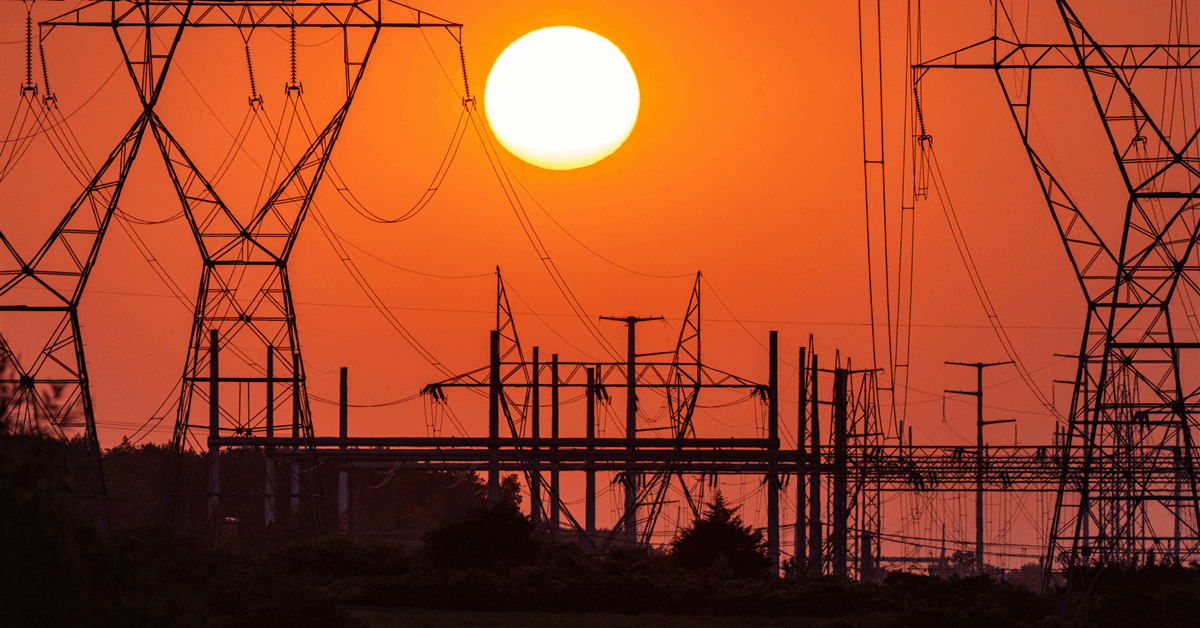
The United States Department of Energy’s (DOE) recent commitment of a $1.6 billion loan guarantee to American Electric Power Co Inc (AEP) marks a pivotal moment for critical U.S. grid infrastructure. This substantial financing package is earmarked for the modernization of nearly 5,000 miles of transmission lines across five key states: Indiana, Michigan, Ohio, Oklahoma, and West Virginia. For energy investors, this isn’t just a routine upgrade; it’s a direct response to an unprecedented surge in electricity demand, primarily driven by the rapid expansion of data centers, artificial intelligence infrastructure, and advanced manufacturing facilities. This analysis will delve into the strategic implications of this investment, contextualizing it within a shifting landscape of government funding, volatile market dynamics, and the critical upcoming events shaping the global energy outlook.
De-risking Grid Modernization for Generational Load Growth
AEP’s ambitious plan to replace existing transmission lines with new, higher-capacity infrastructure is a testament to the evolving demands on the U.S. power grid. The company anticipates an additional 24 gigawatts of electricity demand by the end of the decade, a figure that underscores the scale of industrial and technological expansion underway. The $1.6 billion loan guarantee, secured under the DOE’s Energy Dominance Financing (EDF) Program, is designed to significantly de-risk these essential upgrades. Importantly, AEP projects these projects will save customers $275 million in financing costs over the loan’s lifetime, demonstrating a clear focus on economic viability and consumer benefit. The initial phase will see approximately 100 miles of transmission lines upgraded in Ohio and Oklahoma, setting a precedent for the broader deployment. This investment signals a proactive approach to ensuring grid resilience and capacity, a non-negotiable for sectors like AI and manufacturing that cannot tolerate power disruptions.
A Shifting DOE Landscape: Fiscal Prudence and Strategic Investment
This substantial AEP loan arrives amidst a notable recalibration within the DOE’s funding strategy. Just days prior, the Department announced the termination of nearly 350 financial awards spanning over 200 projects, resulting in a staggering savings of approximately $7.56 billion for American taxpayers. This decisive action, championed under Energy Secretary Chris Wright’s guidance, aimed to halt projects that “did not adequately advance the nation’s energy needs, were not economically viable and would not provide a positive return on investment of taxpayer dollars.” For investors, this signals a crucial shift: government backing is becoming more selective and rigorously scrutinized. The AEP loan, therefore, stands out not just for its size, but as an exemplar of the type of infrastructure investment that meets the DOE’s renewed criteria for strategic importance, economic viability, and clear public benefit. This heightened fiscal prudence will undoubtedly influence how investors evaluate future government-backed energy projects across various sectors, from clean energy demonstrations to manufacturing supply chains.
Navigating Volatility: Market Dynamics and Investor Concerns
While the AEP investment focuses on long-term grid stability, the broader energy market continues to exhibit significant volatility. As of today, Brent crude trades at $90.38 per barrel, marking a substantial decline of 9.07% within the day, with its range fluctuating between $86.08 and $98.97. Similarly, WTI crude is priced at $82.59, down 9.41%, having traded between $78.97 and $90.34. This immediate downturn follows a broader trend, with Brent having shed $22.40, or 19.9%, from $112.78 just two weeks ago. This rapid price correction underscores the inherent unpredictability of global oil markets, driven by a complex interplay of supply, demand, and geopolitical factors. Our proprietary reader intent data reveals a keen interest in these dynamics, with investors frequently asking, “what do you predict the price of oil per barrel will be by end of 2026?” and inquiring about “OPEC+ current production quotas.” While AEP’s grid upgrades don’t directly impact crude oil prices, they signal robust long-term electricity demand. This has indirect but significant implications for natural gas (a primary fuel for power generation) and overall industrial activity, which remains a key driver for broader energy consumption.
Forward Outlook: Key Events Shaping the Energy Landscape
Looking ahead, the next two weeks are packed with critical events that will undoubtedly shape the near-term energy market narrative. Investors should closely monitor the OPEC+ Joint Ministerial Monitoring Committee (JMMC) Meeting on April 19th, immediately followed by the full OPEC+ Ministerial Meeting on April 20th. These gatherings are crucial for assessing the bloc’s commitment to current production quotas and any potential adjustments that could further influence global crude supply, especially in light of the recent price depreciation. Beyond OPEC+, the weekly rhythm of energy data continues with the API Weekly Crude Inventory reports on April 21st and 28th, providing early insights into U.S. crude stock levels. These will be followed by the official EIA Weekly Petroleum Status Reports on April 22nd and 29th, offering a comprehensive view of petroleum inventories and demand. Finally, the Baker Hughes Rig Count on April 24th and May 1st will shed light on U.S. drilling activity, an important indicator for future domestic production. While these events primarily focus on the upstream oil and gas sector, the AEP loan underscores a deeper, structural transformation in energy demand. The ongoing need for reliable and expanded grid infrastructure, driven by high-tech industries, will continue to reinforce the long-term investment case for diverse energy sources and the companies that facilitate their delivery.


