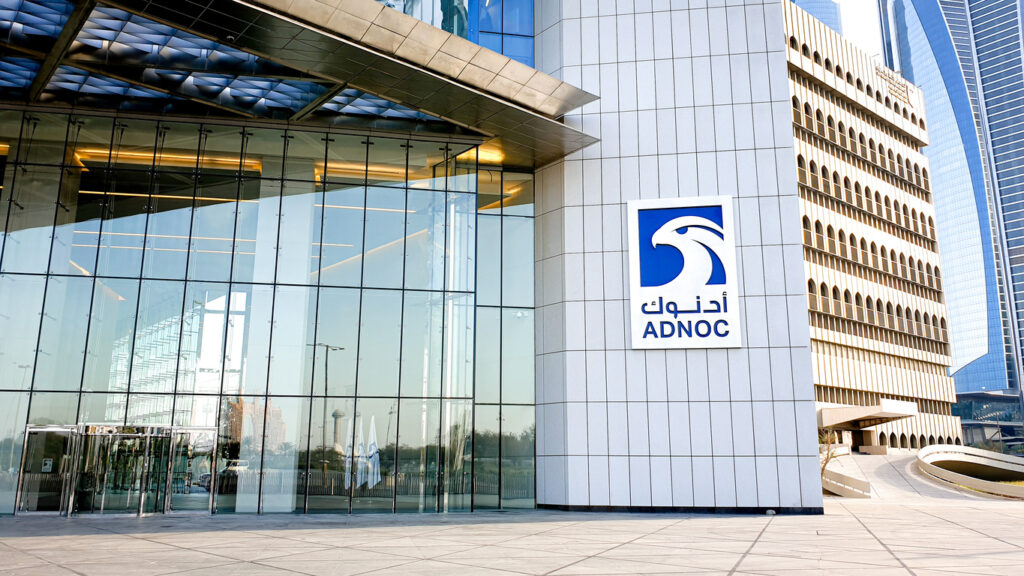
The global energy sector continues its dynamic recalibration, with major M&A activity underscoring strategic shifts. A prime example is the non-binding takeover proposal from an Abu Dhabi National Oil Company (ADNOC)-led consortium for Australian energy giant Santos. This $18.7 billion offer, which Santos’s leadership is inclined to accept, has now entered a critical six-week due diligence phase, setting the stage for one of the largest cash transactions in Australia’s recent history. For investors, this move signals robust competition for high-quality, long-life assets, particularly in the pivotal LNG space, against a backdrop of evolving global supply-demand fundamentals and persistent market volatility.
Evaluating the $18.7 Billion Proposition and Santos’s Strategic Assets
The consortium, spearheaded by ADNOC subsidiary XRG and including Abu Dhabi Development Holding Company and Carlyle, has put forward a non-binding indicative proposal to acquire 100% of Santos’s issued shares for US$5.76 (A$8.89) per share in cash. This valuation of $18.7 billion underscores the significant premium placed on Santos’s diverse and strategically important portfolio. Santos operates two large-scale LNG facilities in Australia: Darwin LNG and Gladstone LNG. Furthermore, the company holds a majority stake in the PNG LNG project in Papua New Guinea, a cornerstone asset recognized for its exceptionally low operating costs globally, a key factor in its attractiveness. Beyond these established revenue generators, Santos recently secured approval for a $2.3 billion onshore coal seam gas project, designed to bolster local market supply. The exclusive six-week due diligence period granted to the consortium is a crucial window for a detailed examination of these assets, their operational efficiencies, and their long-term value proposition, especially given the current competitive landscape for integrated energy portfolios.
Market Dynamics and Investor Sentiment During Due Diligence
The timing of such a substantial M&A play occurs amidst a fluid crude market. As of today, Brent crude trades at $95.58, showing a modest daily gain of 0.83%, while WTI crude sits at $91.75, up 0.51%. However, a look at the broader trend reveals significant shifts; Brent has softened from $102.22 on March 25th to $93.22 on April 14th, marking an almost 9% decline over two weeks. This recent volatility in crude prices inevitably influences the backdrop against which a multi-billion-dollar deal is evaluated. Investors are keenly asking about future price trajectories, with many seeking a base-case Brent price forecast for the next quarter and consensus 2026 Brent forecasts. This uncertainty means ADNOC’s consortium will be assessing Santos’s long-term value not just on its intrinsic merits but also on its resilience to potential fluctuations in global energy prices over the coming years. A deal of this magnitude often signals confidence in the long-term outlook for hydrocarbons, even as short-term market movements inject a degree of caution into financial models.
Strategic Rationale and Navigating Regulatory Hurdles
From ADNOC’s perspective, a successful acquisition of Santos would significantly expand its global footprint, particularly in the high-demand Asian LNG market. This strategic move aligns with a broader trend among national oil companies to diversify and secure long-term energy supply chains, especially for natural gas, which is seen as a crucial transition fuel. Our reader data indicates strong investor interest in what’s driving Asian LNG spot prices, highlighting the strategic significance of Santos’s export-oriented LNG assets. However, the path to completion is not without obstacles. Santos controls critical energy infrastructure within Australia, a factor that could invite intense scrutiny from Australian regulators. The potential for a foreign entity to take over such vital national assets could present a challenge, irrespective of the commercial merits. The confidentiality agreement between the parties allows for robust information exchange, but regulatory approvals will ultimately dictate whether the consortium’s vision for a consolidated global LNG player comes to fruition.
Forward Outlook: Key Catalysts During the Six-Week Window
The next six weeks will be pivotal for the ADNOC-Santos deal. While the consortium conducts its due diligence, the broader energy market will continue to evolve, presenting both opportunities and potential headwinds. Investors should pay close attention to several upcoming events that could influence market sentiment and, by extension, the deal’s trajectory. Key among these are the OPEC+ Joint Ministerial Monitoring Committee (JMMC) meeting on April 18th, followed by the full OPEC+ Ministerial Meeting on April 20th. Any decisions regarding production levels could significantly impact crude prices and, consequently, the perceived value of an upstream and LNG-heavy portfolio like Santos’s. Furthermore, the weekly API and EIA crude inventory reports, scheduled for April 21st/22nd and April 28th/29th, will provide continuous updates on supply-demand balances in the critical U.S. market. The ongoing Baker Hughes Rig Count reports on April 17th and 24th will offer insights into upstream activity levels. As the due diligence clock ticks, these market catalysts will shape the environment in which ADNOC makes its final binding offer, underscoring the dynamic interplay between M&A strategy and the ever-shifting energy landscape.