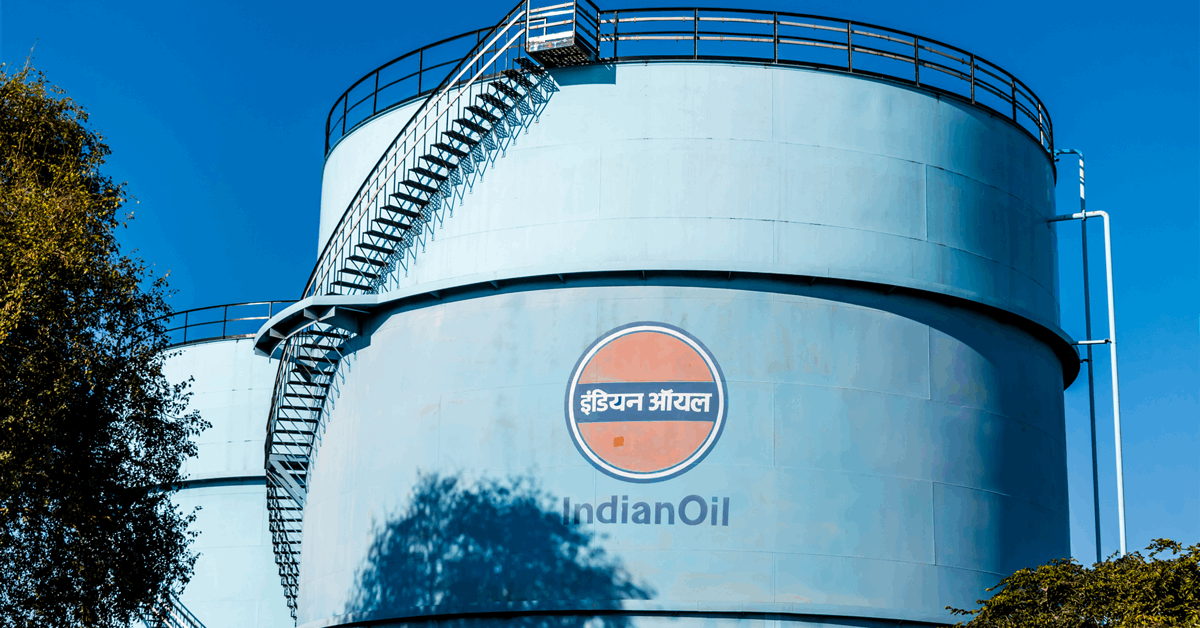
Abu Dhabi National Oil Co. (ADNOC) is strategically bolstering its position in the global liquefied natural gas (LNG) market, recently solidifying a significant long-term supply agreement with Indian Oil Corp. Ltd. This latest deal, committing one million metric tons per annum (MMtpa) from the future Ruwais LNG project, underscores ADNOC’s aggressive expansion strategy and highlights the increasing importance of predictable, long-term energy contracts in a volatile global landscape. For investors, these agreements represent a crucial de-risking of future cash flows and a clear signal of robust demand for cleaner-burning natural gas, particularly from fast-growing economies like India.
ADNOC’s LNG Offensive: Securing Future Revenue Streams
ADNOC’s commitment to expanding its LNG footprint is undeniable, with the Ruwais LNG project at the core of this ambition. Set to commence production in 2028, this facility will more than double ADNOC’s current liquefaction capacity, reaching 9.6 MMtpa. The recent Indian Oil agreement is critical as it further cements the project’s viability; over eight MMtpa of its total capacity has now been committed to international customers through long-term sale and purchase agreements. This high level of pre-commitment is a strong indicator of both the project’s financial robustness and the sustained global appetite for ADNOC’s “lower-carbon LNG,” a key selling point in an increasingly environmentally conscious market.
The deal with Indian Oil is not an isolated event but rather a deepening of an existing strategic partnership. It follows a prior 14-year contract, signed earlier this year, for up to 1.2 MMtpa from ADNOC’s existing Das Island facility, with deliveries commencing in 2026. By 2029, Indian Oil is projected to become ADNOC’s largest LNG customer, with a total offtake of 2.2 MMtpa. This strategic alignment provides ADNOC with stable, long-term revenue streams, essential for funding capital-intensive projects like Ruwais, while insulating a portion of its future earnings from the day-to-day fluctuations of commodity markets. Beyond Indian Oil, ADNOC has inked six export agreements this year alone, including major deals with Japanese utilities JERA and Osaka Gas, and Germany’s SEFE, diversifying its customer base and solidifying its role as a major global LNG supplier.
India’s Insatiable Demand and Bilateral Energy Security
India stands out as a critical growth market for LNG, driven by its rapidly expanding economy, industrialization, and efforts to transition away from more carbon-intensive fuels. ADNOC’s strategy directly addresses India’s escalating energy needs and its imperative for enhanced energy security. The flexibility embedded in the new agreement, allowing LNG cargoes to be delivered to any port across India, further strengthens the reliability of supply for the subcontinent. This comprehensive approach aligns perfectly with the UAE and India’s Comprehensive Economic Partnership Agreement (CEPA), signed in 2022, which continues to foster deeper bilateral trade and energy cooperation.
The pattern of ADNOC securing long-term deals with Indian state-owned entities extends beyond Indian Oil. Last year, ADNOC Gas PLC and Hindustan Petroleum Corp. Ltd. (HPCL) announced a heads of agreement for 500,000 metric tons per year from Das Island over ten years. Similarly, ADNOC inked a 10-year agreement to supply 500,000 metric tons per year of LNG to GAIL India Ltd. These cumulative agreements highlight a deliberate strategy by both nations: India secures a diversified and reliable energy supply from a trusted partner, while ADNOC locks in substantial, long-term demand for its expanding production capacity. This symbiotic relationship is a model for energy partnerships in the 21st century.
Navigating Market Volatility with Long-Term Contracts
In a global energy market characterized by significant price swings, long-term agreements like those ADNOC is securing offer a crucial layer of stability. As of today, the crude market is experiencing considerable turbulence. Brent crude trades at $90.38 per barrel, marking a sharp 9.07% decline within the day, having ranged between $86.08 and $98.97. Similarly, WTI crude has fallen 9.41% to $82.59, with its daily range spanning $78.97 to $90.34. This intra-day volatility follows a broader downtrend for Brent, which has shed over $20 per barrel in the past two weeks, falling from $112.78 on March 30th to $91.87 yesterday. Such rapid price movements underscore the inherent risks in crude oil spot markets.
Against this backdrop, ADNOC’s strategy to lock in substantial portions of its future LNG production capacity through long-term, fixed-volume contracts becomes even more compelling for investors. While the specific pricing mechanisms of these private agreements are not disclosed, they typically provide a degree of insulation from the extreme volatility seen in spot crude markets. This predictability in revenue streams is highly valued by investors seeking stable returns from energy infrastructure projects, especially when compared to upstream oil producers whose revenues are directly exposed to the daily swings of Brent and WTI. For ADNOC, this strategy is about de-risking its multi-billion-dollar investments in liquefaction capacity and securing a resilient financial foundation regardless of short-term market sentiment.
Investor Focus: OPEC+ Decisions and Future Market Dynamics
Our proprietary intent data reveals that investors are keenly focused on understanding future crude oil prices and the ongoing role of OPEC+. Questions like “What do you predict the price of oil per barrel will be by end of 2026?” and “What are OPEC+ current production quotas?” are top of mind. While predicting exact price points is challenging, particularly given today’s dramatic market movements, upcoming events will provide critical insights into supply-side dynamics. This weekend, April 18-19, marks the OPEC+ Joint Ministerial Monitoring Committee (JMMC) and the Full Ministerial Meeting. The outcomes of these meetings, specifically any adjustments to current production quotas, will be pivotal in shaping crude market sentiment and price trajectories for the remainder of 2026.
Further short-term market signals will come from the API Weekly Crude Inventory report on April 21st and the EIA Weekly Petroleum Status Report on April 22nd, which will offer crucial data on demand and supply imbalances in the immediate term. The Baker Hughes Rig Count on April 24th will provide a look into upstream activity. For ADNOC, however, its aggressive LNG strategy provides a measure of insulation from these short-term crude market catalysts. By securing long-term contracts, ADNOC is betting on a sustained global demand for natural gas, a trend that is less susceptible to the immediate policy shifts of OPEC+ or weekly inventory fluctuations. Investors looking at ADNOC are investing in the long-term structural shift towards natural gas and the stability that fixed-volume, multi-decade agreements offer, rather than the daily gambles of the crude spot market.


