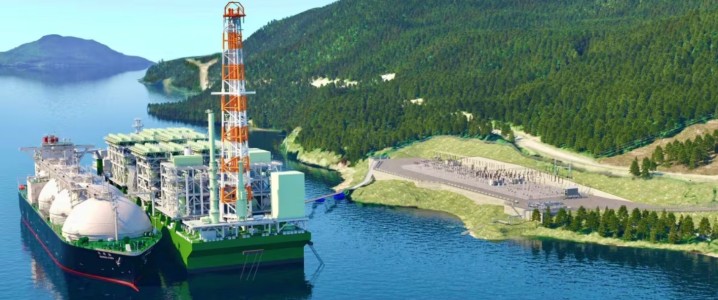
The global liquefied natural gas (LNG) market stands at a critical juncture, facing a debate that could redefine its future for investors. While many analysts warn of an impending oversupply as a massive wave of new projects comes online, ADNOC Gas CEO Fatema Al Nuaimi presents a counter-intuitive yet compelling thesis: this surge in supply won’t crash the market; it will fundamentally create new, structural demand. Al Nuaimi argues that the resulting lower prices will unlock access for price-sensitive markets, establishing a sticky demand base that, once established, will be difficult to reverse. This bold perspective challenges conventional wisdom and compels energy investors to scrutinize whether the next decade for LNG will be characterized by a bruising glut or a foundational expansion.
The LNG Market’s Fork in the Road: Glut or Foundational Growth?
The core of the LNG investment thesis hinges on whether the massive capital expenditure currently flowing into new export facilities will yield sustainable returns or trigger a prolonged period of suppressed prices. ADNOC Gas, a major player in the global energy landscape, firmly believes in the latter, advocating that falling LNG prices will spur a structural demand surge. As Al Nuaimi articulated, “When price-sensitive markets tap into the LNG market, they don’t go back.” This vision sees the global buildout, from Qatar’s North Field expansion to ADNOC’s own Ruwais project, which will more than double its export capacity, not as a speculative bubble but as a necessary foundation for future energy security and economic growth.
This optimistic outlook is supported by projections from the International Energy Agency (IEA), which anticipates record gas demand by 2026, primarily driven by burgeoning economies in Asia, Africa, and the Middle East. The proliferation of new import terminals, from Vietnam to Kenya, underscores this demand growth, suggesting that once these facilities are operational, the demand they serve becomes largely permanent. However, this view is not universal. TotalEnergies CEO Patrick Pouyanné has voiced concerns about the rapid pace of development in the United States, specifically citing projects like NextDecade’s Rio Grande and Venture Global’s Plaquemines as examples of an overheated race to build. Even with such warnings, construction continues, though not without its challenges, as seen with Louisiana’s Commonwealth LNG pushing its start date to 2031 due to regulatory delays. Yet, the strategic moves by majors like Exxon and Chevron to expand their LNG trading desks suggest a long-term commitment, potentially aiming to capitalize on the eventual market dynamics, whether it be a glut or a new demand landscape.
Navigating Current Market Volatility Amidst Long-Term LNG Ambitions
While the long-term outlook for LNG is debated, the broader energy market provides an immediate context for investor sentiment. As of today, the crude oil market is experiencing significant downward pressure. Brent crude is currently trading at $90.38 per barrel, marking a substantial 9.07% decline within the day, having traded within a range of $86.08 to $98.97. Similarly, WTI crude has seen a steep drop of 9.41%, settling at $82.59, with its daily range spanning $78.97 to $90.34. This recent volatility follows a notable trend: Brent crude has shed nearly 20% of its value over the past 14 days alone, falling from $112.78 on March 30th to its current level. Gasoline prices have also softened, now at $2.93, down 5.18% today.
This broader market softening introduces an interesting dynamic for LNG investors. While natural gas prices operate on their own supply-demand fundamentals, the overall health and direction of the crude market often influence capital allocation and investor confidence across the energy sector. A sustained period of lower crude prices, potentially signaling weaker global economic growth, could theoretically dampen overall energy demand. However, it could also make natural gas, particularly if its prices become more competitive due to increased supply, an even more attractive energy source for industrial, power generation, and residential consumption. For investors evaluating LNG, understanding this interplay between crude volatility and the unique drivers of gas demand is crucial. The ADNOC Gas thesis, in this context, suggests that even with crude price headwinds, the structural shift towards gas in new markets could be resilient.
Investor Queries and the Future of Gas Investments
Our proprietary data on investor inquiries reveals a keen focus on navigating market uncertainties and identifying value. A common question among our readers is, “What do you predict the price of oil per barrel will be by end of 2026?” This highlights the pervasive concern about future commodity prices, which, while directly impacting crude producers, indirectly shapes the investment landscape for all energy segments, including LNG. The long-term nature of LNG infrastructure projects, with many facilities coming online by 2030, suggests a fundamental belief in sustained energy demand beyond short-term price fluctuations, yet the immediate outlook always weighs on investor decisions.
Another frequently asked question, “How well do you think Repsol will end in April 2026,” points to investor interest in diversified, integrated energy companies. Such firms, often with significant exposure across upstream, downstream, and gas value chains, are directly impacted by the very market dynamics ADNOC Gas describes. Their performance reflects the ability to adapt to shifting energy balances, including the growth of the LNG market. Furthermore, inquiries about “What are OPEC+ current production quotas?” underscore the importance investors place on supply-side management, particularly from key players. Decisions by OPEC+ can significantly influence crude prices, and while not directly dictating gas prices, they can affect the relative attractiveness of different energy sources. If OPEC+ actions lead to higher crude prices, for example, it might make competitively priced LNG even more appealing, potentially accelerating the demand growth envisioned by ADNOC Gas.
Key Catalysts on the Horizon for Energy Investors
Looking ahead, the energy market calendar presents several key events that could influence investor sentiment and market direction, indirectly impacting the LNG investment thesis. The upcoming OPEC+ Joint Ministerial Monitoring Committee (JMMC) Meeting on April 19th, followed by the full OPEC+ Ministerial Meeting on April 20th, will be under intense scrutiny. Given the recent substantial decline in crude prices, investors will be keenly watching for any signals regarding production policy. A decision to deepen or extend production cuts could provide support to crude prices, while maintaining the status quo or signaling future increases might prolong the current bearish trend. These decisions, while focused on crude, create a ripple effect across the broader energy complex, affecting the perceived risk and return of all energy investments.
Beyond OPEC+, weekly data releases will offer granular insights into market fundamentals. The API Weekly Crude Inventory reports on April 21st and April 28th, along with the EIA Weekly Petroleum Status Reports on April 22nd and April 29th, provide crucial data points on U.S. supply, demand, and inventory levels. These reports often trigger immediate market reactions and help shape short-term trading strategies. Additionally, the Baker Hughes Rig Count on April 24th and May 1st will offer an indication of future production activity, particularly within the U.S. shale plays. While LNG projects are long-term commitments, these near-term catalysts contribute to the overall investment climate, influencing capital flows and risk appetite. For the LNG sector, a stable or strengthening crude market, potentially driven by OPEC+ action or robust demand signals, could provide a more favorable backdrop for continued investment in the “glut creates demand” narrative.


