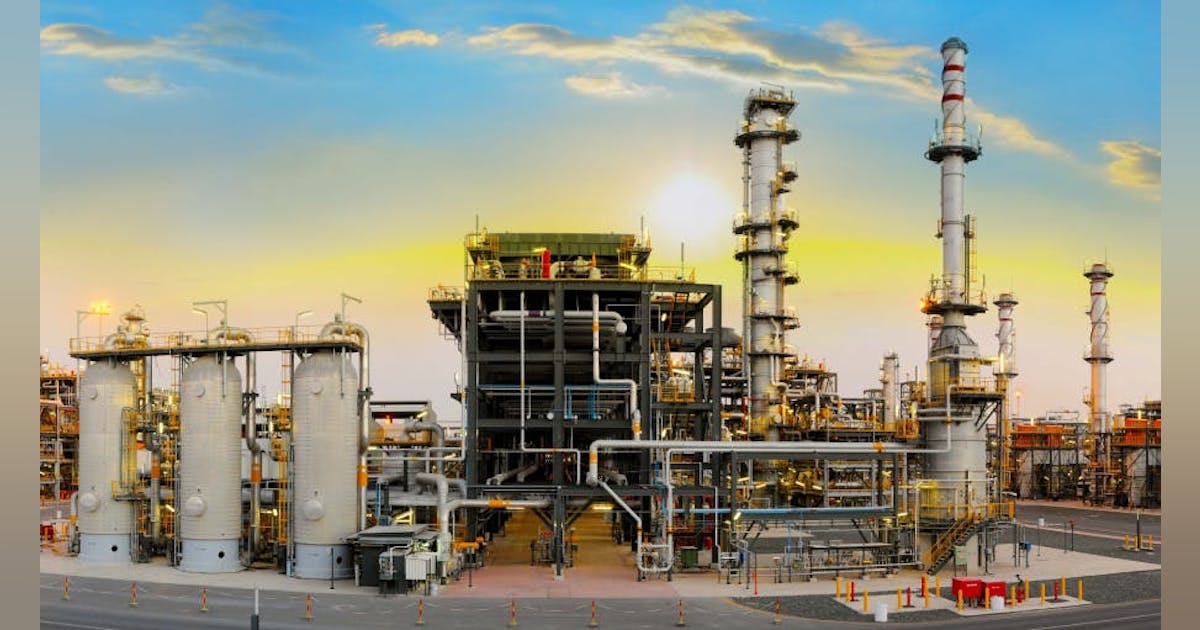
ADNOC Gas Plc has ignited a significant strategic move, committing a substantial $5 billion Final Investment Decision (FID) for the first phase of its Rich Gas Development (RGD) Project. This massive capital allocation signals a clear intent to dramatically expand gas processing capabilities across four key complexes in the UAE: Asab, Buhasa, Habshan, and the offshore Das Island liquefaction plant. With engineering, procurement, and construction management (EPCm) contracts already awarded, this initiative is poised to bolster liquid gas exports, enhance the UAE’s energy self-sufficiency, and provide vital feedstock for the nation’s burgeoning petrochemical industry. For investors navigating complex energy markets, this development from a major global player offers compelling insights into long-term strategic positioning within the natural gas sector.
Navigating Volatility: A Long-Term Gas Bet Amidst Crude Swings
This substantial $5 billion investment by ADNOC Gas comes at a fascinating juncture for the broader energy markets. As of today, Brent crude trades at $90.38 per barrel, reflecting a sharp 9.07% decline from its opening, with a day range stretching from $86.08 to $98.97. Similarly, WTI crude is down 9.41% at $82.59, and even gasoline prices have dipped 5.18% to $2.93. Looking back, Brent has seen a significant downward trend over the past two weeks, falling from $112.78 on March 30th to $91.87 yesterday, representing an 18.5% drop. This recent volatility in crude prices underscores the inherent risks in a purely oil-centric investment thesis.
Against this backdrop of short-term crude price fluctuations, ADNOC Gas’s multi-billion-dollar commitment to gas expansion stands out as a powerful declaration of confidence in natural gas fundamentals. While oil and gas prices often move in tandem, gas markets, particularly for LNG, frequently operate on different supply-demand dynamics driven by long-term contracts, infrastructure development, and regional energy security needs. This strategic pivot towards enhanced gas processing and export capacity suggests a deliberate move to diversify revenue streams and build resilience against the more mercurial swings of the crude market, offering a more stable growth profile for long-term investors.
Strategic Expansion and Upcoming Market Catalysts
The ADNOC Gas expansion, particularly the focus on increasing throughput and efficiency across its complexes, has profound implications for future global gas supply. The project includes significant upgrades and new infrastructure, such as two new gas dehydration and compression trains, each with a capacity of 420 MMscfd, at the Das Island liquefaction plant. This facility already boasts a substantial liquefaction capacity of 6 million tonnes/year, and these additions will further cement its role as a key global LNG exporter.
Looking ahead, the timing of such a large-scale investment is particularly relevant given upcoming energy market catalysts. While the immediate focus of the OPEC+ Joint Ministerial Monitoring Committee (JMMC) meeting tomorrow, April 18th, and the subsequent Full Ministerial Meeting on April 19th, will be on crude production quotas, their collective stance on market stability inevitably influences the broader energy complex. Furthermore, the weekly API and EIA crude inventory reports on April 21st and 22nd, respectively, will provide critical short-term supply and demand signals. However, the multi-year timeline for ADNOC Gas’s project, with the Habshan work alone due for completion by the end of 2027, highlights a long-term conviction that transcends these immediate data points. This long-term supply addition, especially for LNG, will be a crucial factor in meeting burgeoning global gas demand, particularly as Europe continues its efforts to diversify energy sources. The subsequent Baker Hughes Rig Counts on April 24th and May 1st will offer snapshots of drilling activity, but these pale in comparison to the strategic weight of a $5 billion FID on new processing infrastructure.
Addressing Investor Concerns: Growth Beyond Crude Cycles
Our proprietary reader intent data reveals a clear focus among investors on future price stability and company performance. Questions like “What do you predict the price of oil per barrel will be by end of 2026?” and inquiries into specific company outlooks underscore a desire for clarity in a volatile market. ADNOC Gas’s $5 billion investment directly addresses these underlying concerns by signaling a robust, forward-looking growth strategy that extends beyond the immediate vagaries of crude oil prices. This expansion is not merely about increasing capacity; it’s about strategically positioning the company for sustained growth in a world increasingly reliant on natural gas as a transition fuel and a reliable energy source.
For investors seeking opportunities in the energy sector, this move by ADNOC Gas presents a compelling case for diversified exposure. By significantly enhancing its gas processing and export capabilities, the company is building a hedge against potential long-term crude demand plateaus or increased volatility. This creates a stronger investment narrative focused on the stable, growing demand for natural gas, both domestically within the UAE for industrial feedstock and internationally through liquid gas exports. It demonstrates a commitment to capital discipline and strategic investment that can underpin stronger company performance irrespective of some of the more challenging forecasts for crude in the coming years.
Unpacking the $5 Billion Investment: Scope, Scale, and Strategic Imperatives
The sheer scale and strategic distribution of this $5 billion investment warrant a closer look. The first phase of the Rich Gas Development Project is divided into three tranches, each targeting critical infrastructure upgrades and expansions. The largest chunk, $2.8 billion, has been awarded to John Wood Group PLC for the Habshan complex, with completion slated for the end of 2027. Wood’s scope includes delivering upgrades, debottlenecking solutions for existing gas processing plants and pipelines, and installing new infrastructure, all while ensuring the complex remains fully operational to sustain gas supply. This continuous operation during a major overhaul is a testament to the project’s complexity and strategic importance.
The remaining $2.2 billion is distributed across the other vital assets. A $1.2 billion contract has gone to a consortium of Petrofac and Kent Plc for the Das Island liquefaction plant, focusing on expanding gas production infrastructure. Petrofac will provide crucial EPCM services, overseeing the construction of a new inlet facility and the two 420 MMscfd gas dehydration and compression trains mentioned earlier, along with associated infrastructure. An additional $1.1 billion has been allocated to the same consortium for enhancements at the Asab and Buhasa complexes. These targeted investments are designed to not only boost production capacity but also improve operational efficiency, increase liquid gas exports, and secure a robust supply of feedstock for the UAE’s petrochemical industry. Furthermore, ADNOC Gas has indicated plans for two more phases of the RGD project at Habshan and Ruwais, signaling a long-term, multi-faceted strategy for gas sector dominance.