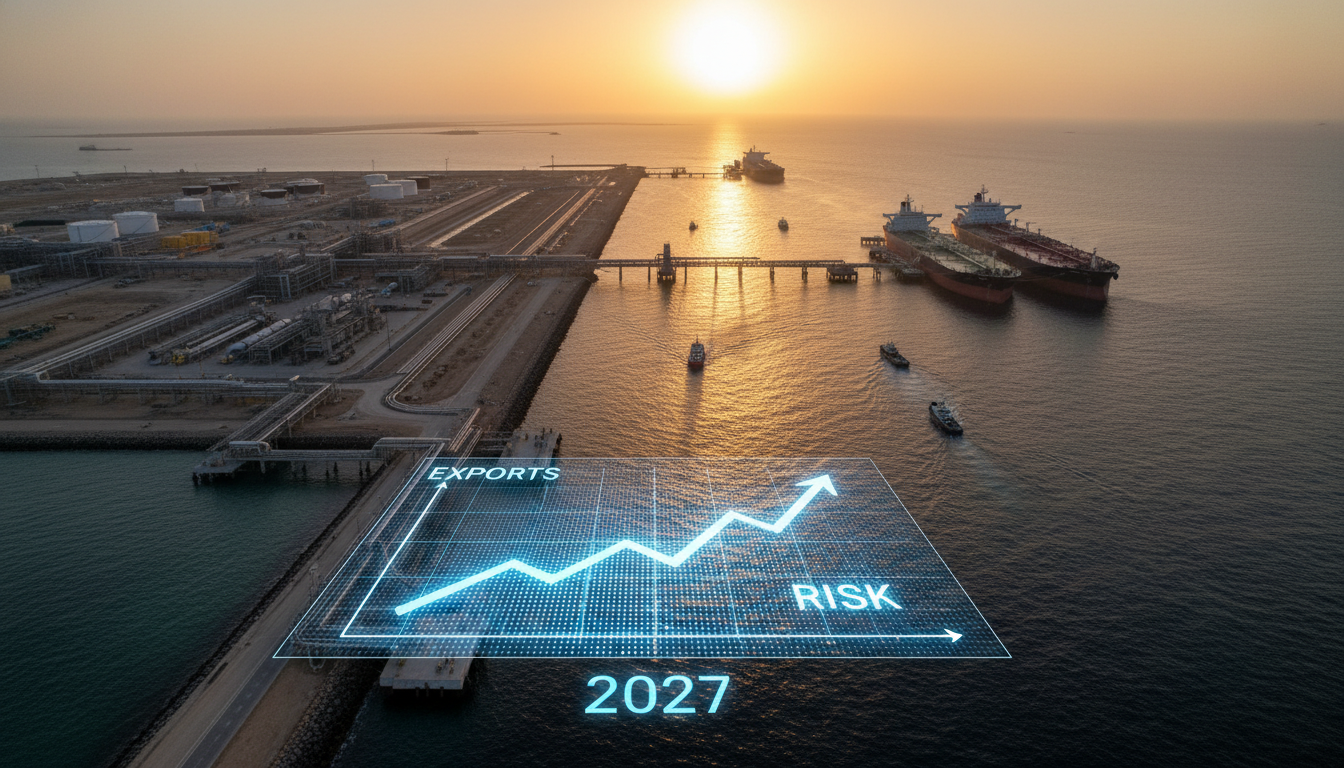
Abu Dhabi’s national oil company, ADNOC, is set to significantly bolster the United Arab Emirates’ strategic importance in the global energy landscape with plans for a new pipeline. Slated for operation in 2027, this ambitious infrastructure project is designed to double the UAE’s crude oil export capacity through the critical port of Fujairah, situated safely outside the Strait of Hormuz. This development signals a profound shift in the Emirates’ energy strategy, aiming to enhance supply security and maximize its independent oil output for a demanding global market.
ADNOC’s Strategic Capacity Expansion: The West-East 1 Pipeline
The new initiative, dubbed the West-East 1 Pipeline, represents a cornerstone of ADNOC’s long-term vision. This project is on track to become operational next year, specifically enabling the UAE to dramatically increase its crude oil flow via Fujairah. By channeling exports through this key eastern emirate, ADNOC effectively circumvents the geopolitical vulnerabilities associated with the Strait of Hormuz, offering increased reliability for international buyers. The Abu Dhabi Media Office confirmed these plans, highlighting the strategic imperative to meet burgeoning global energy requirements.
This critical infrastructure expansion received high-level oversight. Sheikh Khaled bin Mohamed bin Zayed Al Nahyan, the Crown Prince of Abu Dhabi, chaired a meeting of ADNOC’s Board of Directors’ Executive Committee, where updates on the West-East Pipeline project were thoroughly reviewed. Such direct involvement from the highest echelons of leadership underscores the national significance and strategic priority accorded to this initiative, signaling robust support for its timely execution and long-term success.
UAE’s Independent Path: Post-OPEC Strategy Unveiled
The timing of this pipeline project is particularly impactful, aligning perfectly with the United Arab Emirates’ recently adopted independent energy policy. Effective May 1, the UAE formally concluded its nearly six-decade membership with OPEC, signaling a decisive move to pursue its national interests unencumbered by cartel production quotas. This strategic departure follows years of contention with fellow OPEC members over output allocations and the optimal utilization of its growing production capacity.
For years, the UAE has diligently worked towards an ambitious goal of expanding its crude oil production capacity to 5 million barrels per day (bpd) by 2027. Throughout its OPEC membership, the Emirates consistently advocated for the right to leverage more of its expanding spare capacity within the framework of OPEC and OPEC+ agreements. Alongside Saudi Arabia, the UAE stood out as one of the few regional and global producers possessing significant spare production capacity, a strategic asset that became even more pronounced with the onset of recent Middle East conflicts.
Now, with its newfound autonomy from OPEC and OPEC+ restrictions, the UAE is demonstrably accelerating investments in new oil and gas projects. This shift empowers the nation to fully monetize its anticipated production growth and solidify its position as a reliable, quota-free energy supplier on the world stage, directly influencing global oil and gas investment dynamics.
Navigating Geopolitical Chokepoints: Enhancing Energy Security
The current geopolitical landscape, marked by persistent uncertainty surrounding the Strait of Hormuz, has significantly amplified the urgency and strategic value of ADNOC’s pipeline expansion. The Strait, a narrow maritime chokepoint, remains a focal point of regional tensions, creating considerable apprehension regarding the free and unconditional passage of oil tankers. This volatile environment underscores the necessity for alternative export routes to maintain stability in global energy markets.
By investing in enhanced export infrastructure through Fujairah, the UAE is proactively mitigating transit risks and bolstering energy security for its international customers. The West-East 1 Pipeline is a direct response to the imperative of bypassing this critical maritime bottleneck, allowing the UAE to monetize its projected production growth irrespective of potential disruptions in the Strait. This move significantly de-risks crude oil transportation for buyers, offering a more secure and predictable supply chain from one of the world’s most vital energy-producing regions.
Investor Focus: Implications for Global Energy Markets
For investors monitoring the global oil and gas sector, ADNOC’s expansion plans carry substantial implications. The doubling of export capacity through Fujairah, coupled with the UAE’s departure from OPEC, positions the country as an increasingly stable and independent force in the energy market. This translates into potentially more predictable supply flows, reduced exposure to geopolitical transit risks for oil shipments, and a clearer trajectory for the UAE’s production growth targets.
Investors can anticipate the UAE to become an even more aggressive competitor in the global oil market, aiming to capture market share through increased output and enhanced supply reliability. This strategic shift could influence crude pricing dynamics, potentially putting downward pressure on prices in scenarios where global supply is constrained, as the UAE stands ready to fill gaps without cartel limitations. Furthermore, this robust investment in infrastructure underscores a long-term commitment to oil production and exports, signaling confidence in the future demand for hydrocarbons. For those seeking long-term stability and growth in oil and gas investments, the UAE’s independent and capacity-focused strategy offers compelling prospects for consideration.