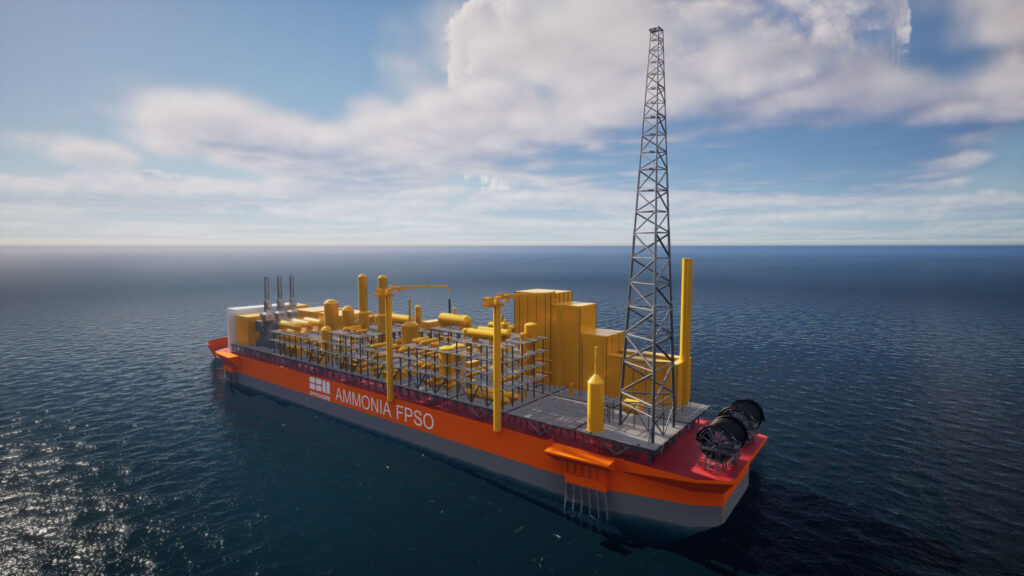
SBM Offshore has secured a pivotal Approval in Principle (AIP) from ABS for its innovative Blue Ammonia Floating Production Storage and Offloading (FPSO) concept, marking a significant stride in the energy transition landscape. This endorsement is more than a technical validation; it represents a de-risking event for a cutting-edge solution designed to transform offshore natural gas into low-carbon ammonia, complete with integrated carbon capture and storage (CCS) technology. For investors tracking the evolving energy sector, this development signals a tangible step towards diversifying energy portfolios and unlocking new value in the burgeoning blue economy, positioning SBM Offshore at the forefront of decarbonized offshore energy infrastructure.
The Blue Ammonia FPSO: A Strategic Pivot for Offshore Energy
The core of SBM Offshore’s latest innovation lies in its ability to convert offshore natural gas into ammonia, a versatile compound increasingly recognized as a crucial alternative fuel and hydrogen carrier. What distinguishes this FPSO concept is the seamless integration of carbon capture and storage, ensuring that the ammonia produced is “blue,” significantly reducing its carbon footprint. This addresses a critical challenge in scaling sustainable ammonia production. The resulting blue ammonia is destined for diverse applications, including power generation, decarbonizing the maritime transportation sector, and supplying the broader industrial ammonia market. ABS’s stamp of approval, following rigorous reviews against class and statutory requirements, provides essential credibility and de-risks the concept’s technical viability. For investors, this signifies a progression from concept to a pre-engineered, certifiable solution, lowering future development hurdles and accelerating market entry. This move is central to SBM Offshore’s “TRUE. BLUE. TRANSITION” strategy, leveraging their deep expertise in ocean infrastructure to deliver low-carbon solutions.
Navigating Volatility: Blue Ammonia’s Appeal Amidst Shifting Crude Dynamics
In a market characterized by pronounced volatility, investments in stable, long-term energy transition plays gain increasing appeal. As of today, Brent crude trades at $90.38 per barrel, reflecting a sharp 9.07% decline from its previous close, while WTI crude sits at $82.59, down 9.41% within the day. This immediate downturn follows a broader bearish trend, with Brent shedding $20.91, or 18.5%, since March 30th, moving from $112.78 to $91.87 just yesterday. Such fluctuations naturally lead investors to question the future trajectory of traditional hydrocarbons; indeed, our proprietary data indicates a strong investor interest in forecasting oil prices by the end of 2026. This environment underscores the strategic importance of diversifying into assets like blue ammonia. While conventional crude markets grapple with supply-demand imbalances and geopolitical pressures, blue ammonia offers a pathway to energy security and decarbonization, somewhat insulated from short-term crude price swings. The stability offered by a certified, low-carbon fuel solution becomes a compelling proposition for those seeking to mitigate risk and capture value in the evolving energy mix.
SBM Offshore’s Strategic Positioning and Investment Horizons
This AIP positions SBM Offshore not merely as an innovator, but as a potential leader in the offshore energy transition. By expanding beyond its traditional focus on oil and gas FPSOs, the company is actively diversifying its revenue streams and market opportunities into what it terms the “blue economy.” Olivier Icyk, SBM Offshore’s Chief Business Officer, rightly identifies this as a “pivotal moment” that delivers sustainable value. Investors should view this as a strategic move to future-proof the company’s business model against declining demand for conventional hydrocarbons and increasing regulatory pressure for decarbonization. The ability to integrate CCS directly into an offshore production unit for ammonia represents a significant technological leap, addressing a major hurdle in scaling low-carbon energy sources. Furthermore, ABS Senior Vice President Miguel Hernandez’s emphasis on their insight into ammonia safety challenges and extensive FPSO expertise highlights the collaborative effort in de-risking this complex project, enhancing investor confidence in its eventual deployment and operational safety. This move aligns with SBM Offshore’s ambitious goal of achieving net-zero emissions by 2050, demonstrating a clear commitment to sustainable growth.
Upcoming Catalysts and the Future of Offshore Decarbonization
Looking ahead, the momentum behind alternative fuels like ammonia is undeniable, with its applications ranging from energy storage to shipping decarbonization. For investors, understanding the broader market context and key upcoming events is crucial. As we approach April 18th and 19th, the OPEC+ Joint Ministerial Monitoring Committee (JMMC) and Full Ministerial meetings loom large. Our reader intent data shows significant interest in OPEC+ production quotas, and decisions from these meetings could significantly impact global crude and natural gas prices. While the Blue Ammonia FPSO focuses on gas conversion, the general sentiment and price stability in the broader energy market, influenced by OPEC+ actions, will affect the overall investment climate and the economic viability of new energy projects. Furthermore, regular updates such as the API and EIA Weekly Crude Inventory reports (April 21st, 22nd, 28th, 29th) and the Baker Hughes Rig Count (April 24th, May 1st) will provide further insights into supply, demand, and upstream activity. These indicators, while not directly impacting the Blue Ammonia FPSO’s technical readiness, will shape the competitive landscape and investor appetite for long-term energy infrastructure plays. SBM Offshore’s move strategically hedges against the unpredictable nature of traditional hydrocarbon markets, offering a pathway to long-term growth driven by global decarbonization mandates rather than short-term commodity price swings. The AIP for their Blue Ammonia FPSO is not just a technical achievement; it’s a strong signal to the market about the tangible progress and investment opportunities emerging in the offshore energy transition.


