Close Menu
  • Home
  • Market News
    • Crude Oil Prices
    • Brent vs WTI
    • Futures & Trading
    • OPEC Announcements
  • Company & Corporate
    • Mergers & Acquisitions
    • Earnings Reports
    • Executive Moves
    • ESG & Sustainability
  • Geopolitical & Global
    • Middle East
    • North America
    • Europe & Russia
    • Asia & China
    • Latin America
  • Supply & Disruption
    • Pipeline Disruptions
    • Refinery Outages
    • Weather Events (hurricanes, floods)
    • Labor Strikes & Protest Movements
  • Policy & Regulation
    • U.S. Energy Policy
    • EU Carbon Targets
    • Emissions Regulations
    • International Trade & Sanctions
  • Tech
    • Energy Transition
    • Hydrogen & LNG
    • Carbon Capture
    • Battery / Storage Tech
  • ESG
    • Climate Commitments
    • Greenwashing News
    • Net-Zero Tracking
    • Institutional Divestments
  • Financial
    • Interest Rates Impact on Oil
    • Inflation + Demand
    • Oil & Stock Correlation
    • Investor Sentiment

Subscribe to Updates

Subscribe to our newsletter and never miss our latest news

Subscribe my Newsletter for New Posts & tips Let's stay updated!

What's Hot

WTI Oil prices jump on fears Iran attack will lead disruption

March 1, 2026

OPEC+ Approves Modest Output Hike as Iran War Jolts Oil Markets

March 1, 2026

Oil tankers attacked near Strait of Hormuz as Iran conflict disrupts shipping

March 1, 2026
Facebook X (Twitter) Instagram Threads
Oil Market Cap – Global Oil & Energy News, Data & Analysis
  • Home
  • Market News
    • Crude Oil Prices
    • Brent vs WTI
    • Futures & Trading
    • OPEC Announcements
  • Company & Corporate
    • Mergers & Acquisitions
    • Earnings Reports
    • Executive Moves
    • ESG & Sustainability
  • Geopolitical & Global
    • Middle East
    • North America
    • Europe & Russia
    • Asia & China
    • Latin America
  • Supply & Disruption
    • Pipeline Disruptions
    • Refinery Outages
    • Weather Events (hurricanes, floods)
    • Labor Strikes & Protest Movements
  • Policy & Regulation
    • U.S. Energy Policy
    • EU Carbon Targets
    • Emissions Regulations
    • International Trade & Sanctions
  • Tech
    • Energy Transition
    • Hydrogen & LNG
    • Carbon Capture
    • Battery / Storage Tech
  • ESG
    • Climate Commitments
    • Greenwashing News
    • Net-Zero Tracking
    • Institutional Divestments
  • Financial
    • Interest Rates Impact on Oil
    • Inflation + Demand
    • Oil & Stock Correlation
    • Investor Sentiment
Oil Market Cap – Global Oil & Energy News, Data & Analysis
Home » US energy companies seek exemption from Trump plan to move LNG on US-built ships – Oil & Gas 360
Interest Rates Impact on Oil

US energy companies seek exemption from Trump plan to move LNG on US-built ships – Oil & Gas 360

omc_adminBy omc_adminMay 8, 2025No Comments4 Mins Read
Share
Facebook Twitter Pinterest Threads Bluesky Copy Link


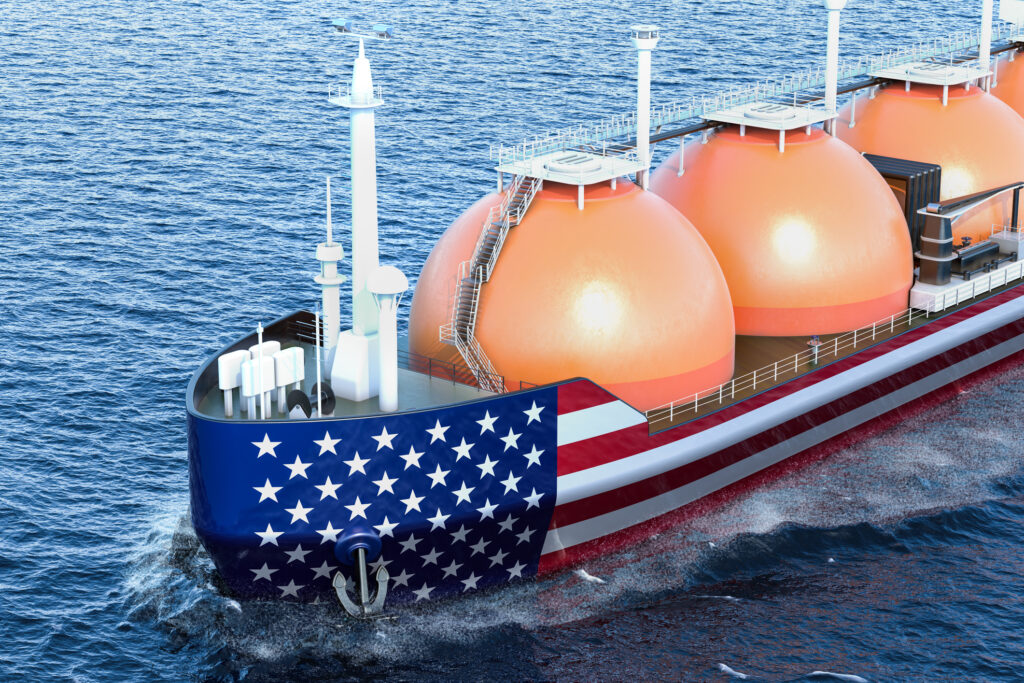
(Investing) – LOS ANGELES/WASHINGTON – U.S. energy groups are asking President Donald Trump’s administration to exempt liquefied  tankers from a new rule that will require producers to move an increasing percentage of their exports on U.S.-built vessels as part of a broader push to revive domestic shipbuilding.

US energy companies seek exemption from Trump plan to move LNG on US-built ships- oil and gas 360

The U.S. is the world’s No. 1 LNG exporter at $34 billion annually and the Trump administration has been a supporter of the industry in his push for energy dominance.

In a move that shocked the industry, the U.S. Trade Representative (USTR) announced April 17 that LNG producers would have to transport 1% of their exports on U.S.-built ships starting in April 2029. That percentage would escalate to 15% in April 2047 and beyond.

That could put the U.S. LNG industry at a disadvantage to its peers around the world because there aren’t enough U.S.-built ships to meet the requirement, the American Petroleum Institute (API) said in an April 23 letter to U.S. Energy Secretary Chris Wright and National Energy Dominance Council Chair Doug Burgum seen by Reuters. Burgum is also U.S. Interior Secretary.

It “risks counteracting the significant progress the Trump Administration has made towards reducing uncertainty and unleashing U.S. LNG,” API CEO Mike Sommers wrote in that letter. API counts as members some of the world’s largest energy companies, such as Exxon Mobil (NYSE:), Chevron (NYSE:) and Cheniere Energy (NYSE:).

Individual exporters that do not comply could lose their export licenses, even though the percentages apply to the overall industry and to ships that exporters do not own or control, industry groups warned.

“They have little control over their ability to comply with USTR’s new requirements but ultimately face the consequences of not doing so,” Sommers said in the letter.

“We will continue working with USTR and the Department of Energy in support of feasible and durable policies that benefit consumers and advance American energy dominance,” Aaron Padilla, API’s vice president of corporate policy, told Reuters in a statement late on Tuesday.

Representatives from the USTR and White House press office did not immediately respond to requests for comment. USTR proposed the rules as part of a larger effort to counter China’s growing commercial and military dominance on the high seas.

There are now 792 LNG carriers in operation globally, according to shipping consultancy AXSMarine.

LNG ships from South Korea and Japan dominate that group with 703 combined. China, which aims to become a LNG tanker powerhouse, built 58. Five come from U.S. shipyards – though those 1970s-era American made vessels are laid up and not currently in use, AXSMarine said.

South Korea remains the dominant builder with 232 LNG carriers currently on order. China, while still behind, is rapidly expanding its footprint with 101 LNG carriers on order, AXSMarine said.

U.S. shipyards cannot turn out vessels fast enough to meet the USTR deadline, the Center for LNG told Reuters in a statement.

“There are no such vessels in existence today, and building them would take decades, making compliance impossible for the industry,” Charlie Riedl, executive director at the Center for LNG, said in a statement on Wednesday.

The USTR requirement for 1% of LNG exports to be transported on U.S.-built vessels would require as many as five American-built ships by the end of the decade, which is not feasible, API CEO Sommers said in the letter.

That’s because it would take as long as five years to build one LNG carrier at either of the two U.S. shipyards with docks long enough to build such a ship, Sommers said.

“We urge the Administration to exempt  and refined product imports and exports – consistent with this Administration’s approach to exempt these same products from baseline and reciprocal tariffs,” Sommers wrote.

Vehicle carrier operators also hope to win relief from new rules that would levy hefty U.S. port fees on all of their foreign-built vessels. USTR also announced those unexpected rules on April 17. (This story has been corrected to change the start date for the U.S.-built ship requirement from April 2028 to April 2029 in paragraph 3)


Source link

Share. Facebook Twitter Pinterest Bluesky Threads Tumblr Telegram Email
omc_admin
  • Website

Related Posts

What mattered this week in energy – Oil & Gas 360

February 28, 2026

Gulf oil producers open the taps as Iran risk premium builds – Oil & Gas 360

February 28, 2026

Venezuela cancels Halliburton asset sale after U.S. intervention to support oil sector restart – Oil & Gas 360

February 27, 2026
Add A Comment
Leave A Reply Cancel Reply

Top Posts

Federal Reserve cuts key rate for first time this year

September 17, 202513 Views

Inflation or jobs: Federal Reserve officials are divided over competing concerns

August 14, 20259 Views

Oil tanker rates to stay strong into 2026 as sanctions remove ships for hire – Oil & Gas 360

December 16, 20258 Views
Don't Miss

Oil tankers attacked near Strait of Hormuz as Iran conflict disrupts shipping

By omc_adminMarch 1, 2026

(Bloomberg) – Two tankers were attacked near the mouth of the Persian Gulf, increasing the…

OPEC+ to boost oil production 206,000 bpd as Iran conflict threatens supply

March 1, 2026

Oil markets on edge after Trump strike on Iran threatens Hormuz flows

March 1, 2026

How will strikes on Iran affect global energy flows?

February 28, 2026
Top Trending

ESG Today: Week in Review

By omc_adminMarch 1, 2026

Winter getting shorter in 80% of major US cities, new data shows | US weather

By omc_adminFebruary 27, 2026

Trump officials move to kill system that protects US from chemical disasters | US Environmental Protection Agency

By omc_adminFebruary 27, 2026
Most Popular

The 5 Best 65-Inch TVs of 2025

July 3, 202515 Views

AI’s Next Bottleneck Isn’t Just Chips — It’s the Power Grid: Goldman

November 14, 202514 Views

The Layoffs List of 2025: Meta, Microsoft, Block, and More

May 9, 202510 Views
Our Picks

PDVSA, African Energy Chamber sign MoU to boost oil and gas investment

March 1, 2026

Talos Losses Deepen | Rigzone

March 1, 2026

Tankers Halt Near Hormuz After Attacks

February 28, 2026

Subscribe to Updates

Subscribe to our newsletter and never miss our latest news

Subscribe my Newsletter for New Posts & tips Let's stay updated!

Facebook X (Twitter) Instagram Pinterest
  • Home
  • About Us
  • Advertise With Us
  • Contact Us
  • DMCA
  • Privacy Policy
  • Terms & Conditions
© 2026 oilmarketcap. Designed by oilmarketcap.

Type above and press Enter to search. Press Esc to cancel.