Institutional Capital Shifts Focus: Schroders’ $610 Million Wind Investment Signals Broad Energy Reallocation
A leading global investment manager has made a significant commitment to the burgeoning renewable energy sector, deploying a substantial USD$610 million into a mature United Kingdom offshore wind asset. This strategic move by Schroders’ dedicated renewable infrastructure arm, Schroders Greencoat, is not merely a transaction; it represents a powerful indicator for oil and gas investors keenly observing the evolving landscape of global energy capital flows and the accelerating energy transition.
Schroders’ Strategic Play: Securing Stable Returns in Offshore Wind
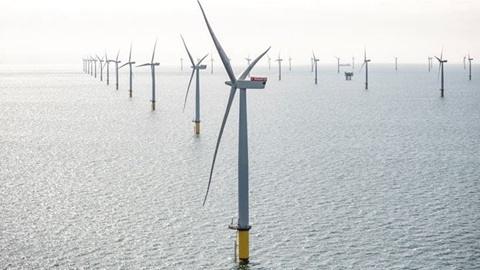
Schroders Greencoat recently finalized the acquisition of a 24.5% equity stake in the West of Duddon Sands wind farm, an operational asset located approximately 14 kilometers off the UK’s west coast. The deal, valued at £456.1 million (approximately USD$610 million), underscores robust investor appetite for established, income-generating clean energy infrastructure. Commissioned in 2014, the facility boasts a substantial 389 MW generation capacity, providing a proven track record of power production.
For Schroders, this investment is a calculated maneuver to secure long-term, stable returns in a market often characterized by volatility. Minal Patel, Global Head of Infrastructure at Schroders Capital, has consistently emphasized the strategic importance of fortifying their position in resilient, income-producing renewable assets. Such acquisitions offer predictable cash flows and a hedge against broader market fluctuations, making them highly attractive to institutional investors seeking reliable performance within their diversified portfolios.
Ørsted’s Capital Recycling Fuels Aggressive Green Growth
On the selling side, Danish energy giant Ørsted orchestrated this divestment as a core component of its strategic “farm-down” program. This well-established initiative systematically involves selling ownership shares in existing, operational assets to unlock capital. The primary objective is to redeploy these funds into new, high-growth development projects, rather than simply retaining mature assets on their balance sheet. This approach allows Ørsted to maintain an aggressive expansion trajectory without over-leveraging or relying solely on external financing for every new venture.
Trond Westlie, Group CFO of Ørsted, has highlighted the critical role of strategic partnerships within their business model, emphasizing that transactions like this with Schroders Greencoat perfectly align with their objectives. This partnership is not new; Schroders Greencoat is an established investor across four other Ørsted offshore wind farms, including prominent projects such as Walney, Burbo Bank Extension, Hornsea 1, and Borkum Riffgrund 1. This ongoing collaboration underscores a mutual understanding and shared vision for value creation, risk diversification, and efficient capital recycling within the renewable energy space.
The scale of Ørsted’s ambition is notable: the company is currently executing a self-funded offshore wind construction program exceeding 8 GW. This monumental effort is poised to nearly double its current installed offshore wind capacity, signifying an aggressive expansion strategy that relies heavily on its proven ability to recycle capital from mature assets into new builds. This model provides a valuable benchmark for capital efficiency and growth strategies within the broader energy landscape, offering insights for traditional energy companies contemplating similar diversification or asset optimization.
Implications for Oil and Gas Investors: A Shifting Investment Paradigm
For investors primarily focused on the oil and gas sector, this significant capital deployment by a major financial institution into mature renewable infrastructure offers critical insights into prevailing capital flow trends. The move by Schroders underscores a broader institutional preference for assets that align with environmental, social, and governance (ESG) criteria, alongside providing stable, long-term returns. This sustained flow of capital into green energy projects creates direct competition for investment funds, potentially influencing the cost of capital and overall investor sentiment towards traditional fossil fuel ventures.
The strategic decisions made by financial powerhouses like Schroders reflect a deeper market conviction in the long-term viability and growth trajectory of renewable energy. While oil and gas remain indispensable for global energy security and will continue to play a vital role for decades, the increasing allocation of substantial funds towards operational renewable projects suggests a fundamental re-evaluation of risk and reward across the energy spectrum. This trend compels oil and gas companies to critically assess their own capital allocation strategies, focusing on efficiency, technological innovation, and, for some, diversification into lower-carbon solutions to remain competitive for institutional investment.
Understanding the financial mechanics and growth models of leading renewable developers like Ørsted, and the investment rationale of asset managers like Schroders, provides a valuable comparative framework. It highlights how capital is being efficiently recycled and deployed to scale up renewable capacity at an unprecedented pace. This challenges traditional energy producers to demonstrate comparable long-term value creation and adapt to a global investment environment increasingly prioritizing sustainability and predictable, inflation-linked returns.
Navigating the Energy Transition: A Clear Signal for Portfolio Strategy
The Schroders investment in West of Duddon Sands is more than an isolated transaction; it’s a potent signal of the ongoing energy transition and the substantial capital reallocation it entails. Institutional investors are not just passively observing; they are actively shaping the future energy mix through their investment decisions. The preference for established, de-risked renewable assets offers a blueprint for how large-scale capital seeks to capitalize on the transition while mitigating development risks.
For those managing portfolios with significant exposure to oil and gas, this development serves as a critical reminder of the evolving investment landscape. It necessitates a proactive approach to understanding the competitive dynamics for capital, the increasing appeal of green assets, and the strategic imperatives for traditional energy companies to innovate and adapt. The smart money is clearly demonstrating its confidence in the long-term prospects of renewable energy, urging all energy investors to consider the implications for their own strategies and future returns.


