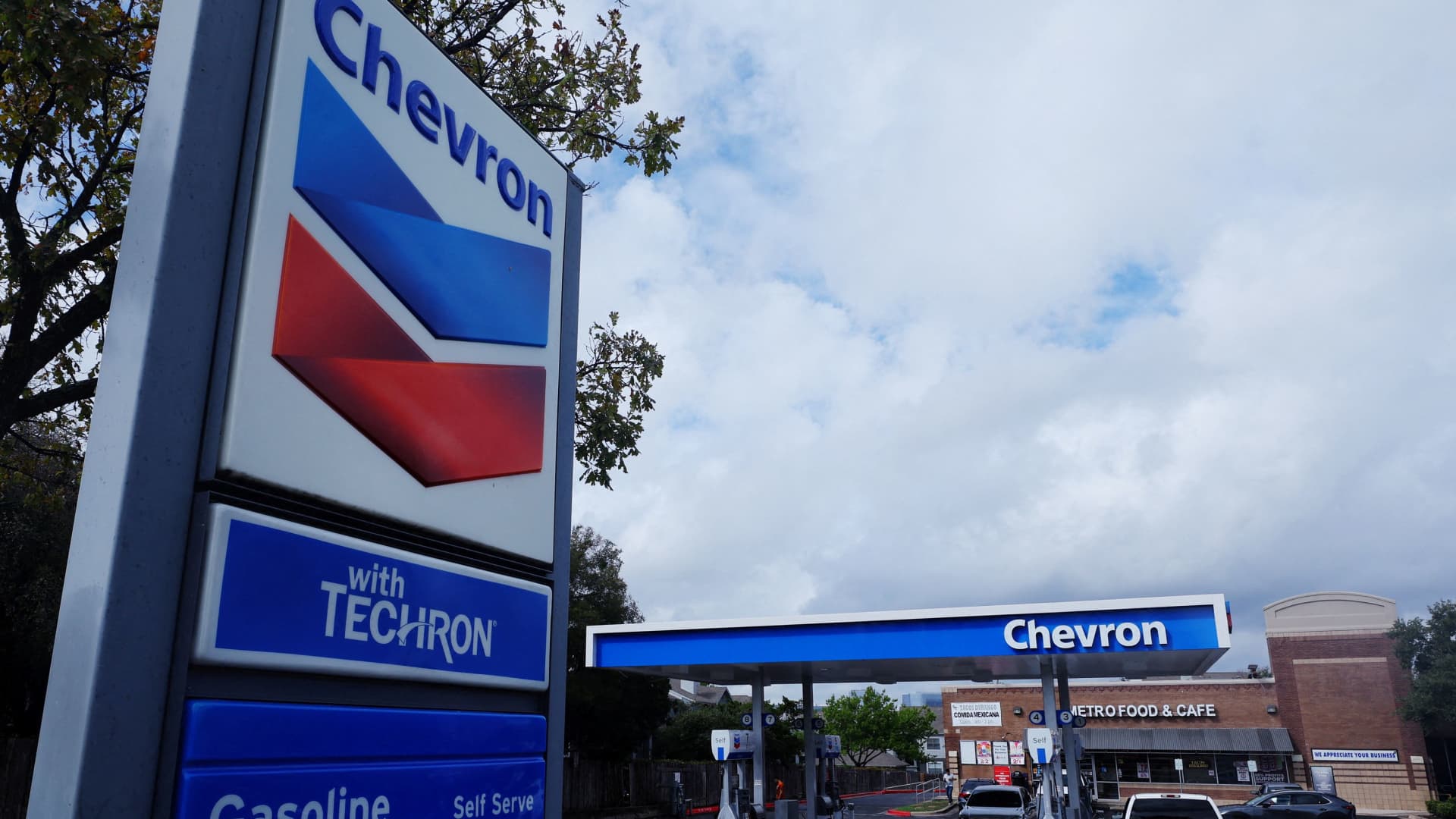
Chevron Adjusts Capital Return Strategy Amidst Shifting Market Tides in Q1 2025
Chevron (CVX) has initiated the second quarter of 2025 with a recalibrated approach to its shareholder capital return program, a move closely watched by investors as the company navigates a challenging commodity price environment. The energy titan announced plans to repurchase between $2.5 billion and $3 billion of its own stock in Q2, a noticeable decrease from the $3.9 billion executed during the first quarter. This strategic pivot underscores a pragmatic response to evolving market dynamics, particularly the significant year-to-date decline of approximately 18% in U.S. crude oil prices.
Following this announcement, Chevron’s shares largely held steady, reflecting investor understanding of the company’s long-term commitment. Crucially, the supermajor reaffirmed its broader full-year share repurchase guidance, maintaining a robust range of $10 billion to $20 billion. This indicates that while the immediate pace of buybacks is being managed, the overarching strategy to return capital to shareholders remains firmly in place, albeit with tactical adjustments for market volatility.
Q1 2025 Financial Performance: Meeting Expectations Amidst Headwinds
Despite the backdrop of softening crude prices, Chevron delivered a first-quarter performance that largely aligned with analyst projections. The company reported adjusted earnings per share (EPS) of $2.18, precisely matching Wall Street’s consensus estimates. This performance highlights Chevron’s operational resilience and cost management capabilities in a tougher operating environment. However, revenue for the quarter came in slightly below expectations, reaching $47.61 billion against an anticipated $48.09 billion. This modest revenue miss can be attributed to the aforementioned decline in commodity prices, which impacts top-line figures even with steady production volumes.
For energy investors, meeting EPS targets is often a stronger indicator of underlying business health and efficiency than revenue, particularly when external price pressures are significant. Chevron’s ability to hit its profit mark in Q1 2025 suggests effective capital allocation and operational discipline, factors critical for navigating the cyclical nature of the oil and gas industry.
Shareholder Returns: A Strategic Adaptation to Market Realities
Chevron’s decision to moderate the rhythm of its share buybacks in the near term is a clear illustration of its adaptable capital allocation framework. This is not merely a reaction to lower crude prices but a proactive measure to preserve financial flexibility and ensure sustainable long-term value creation. By reducing the Q2 buyback target, Chevron can retain more cash, providing a buffer against further market uncertainties or enabling opportunistic investments should conditions improve. This flexibility is a hallmark of strong financial management in the volatile energy sector.
The company’s consistent full-year guidance of $10 billion to $20 billion for share repurchases sends a reassuring message to the market: the long-term commitment to enhancing shareholder value through buybacks remains intact. This range allows Chevron the agility to increase repurchases if oil prices rebound strongly or scale back slightly if headwinds persist, all while staying within a defined framework. Such a balanced approach is vital for maintaining investor confidence, especially for those with a long-term investment horizon in the oil and gas space.
Macroeconomic Factors Shaping the Energy Landscape
The broader macroeconomic environment presents a multifaceted challenge for oil and gas investing, creating a complex interplay of supply and demand dynamics. On the demand side, anticipated tariffs from a potential Donald Trump presidency are expected to exert downward pressure on global economic activity, which invariably translates to reduced energy consumption. Trade barriers and protectionist policies can disrupt supply chains, slow manufacturing, and dampen consumer spending, all of which weigh on crude oil demand forecasts.
Concurrently, the supply side faces its own set of pressures. OPEC+ nations have indicated plans to increase crude oil production, a move designed to stabilize markets but which, in the context of potentially weakening demand, could exacerbate the current oversupply narrative. This dual threat—softening demand due to geopolitical trade policies and rising supply from major producers—creates a potent cocktail for commodity price depreciation. Chevron, like all integrated energy companies, must factor these large-scale macroeconomic forces into its strategic planning and financial forecasting.
Investor Outlook: Navigating Volatility with a Resilient Giant
For investors considering Chevron, the Q1 2025 results and Q2 outlook paint a picture of a company prudently managing its finances and capital returns amidst challenging market conditions. While the reduction in the immediate buyback pace might seem concerning at first glance, it is a rational response to an 18% drop in U.S. crude prices and the looming macroeconomic uncertainties. The fact that Chevron’s shares remained largely stable post-announcement suggests that the market largely understands and perhaps even approves of this cautious yet flexible strategy.
Chevron’s ability to meet its adjusted EPS targets despite revenue slightly missing expectations further solidifies its reputation as a resilient operator. The reaffirmed full-year share repurchase guidance also signals a strong underlying commitment to shareholder value, offering a long-term perspective that can help buffer against short-term market fluctuations. Investors should view Chevron’s current strategy as a testament to its disciplined financial management, positioning the company to weather ongoing market volatility while maintaining its capacity for future growth and consistent shareholder returns.
The interplay of global trade policies, OPEC+ production decisions, and the inherent volatility of commodity markets will continue to define the operating landscape for energy giants like Chevron. However, with its strategic adjustments and robust financial framework, CVX appears well-equipped to navigate these complexities, making it a compelling consideration for those seeking stability and long-term value in the energy sector.