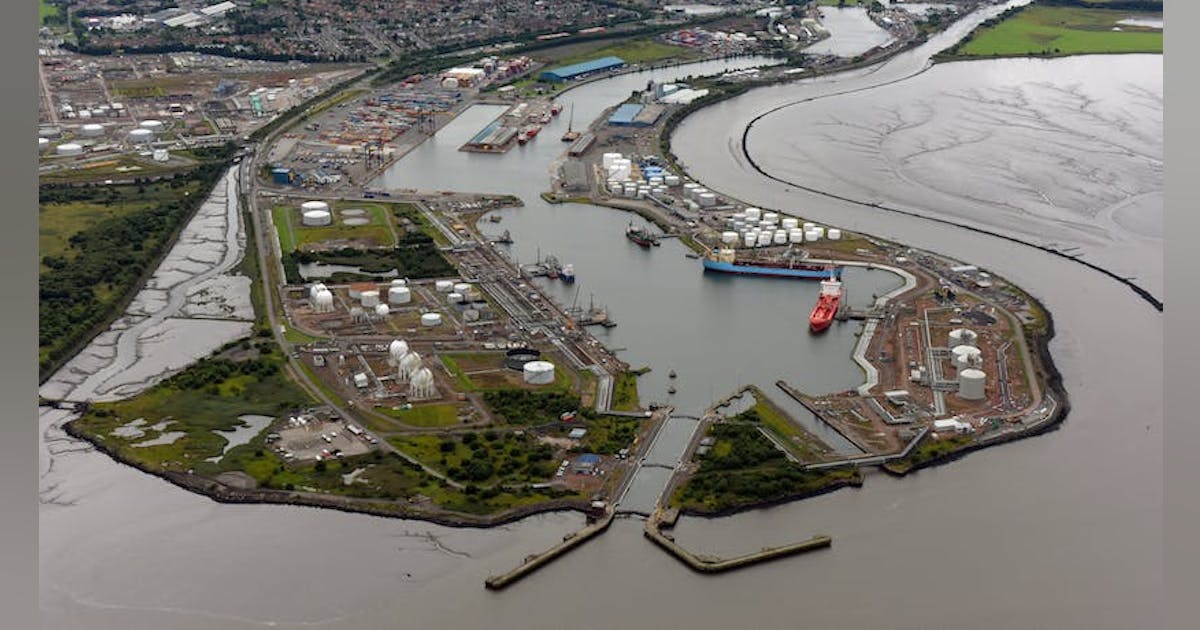
The United Kingdom’s energy sector, and specifically its downstream oil and gas segment, has reached a significant inflection point that demands close attention from investors. Petroineos Refining Ltd. (PRL) has officially ceased traditional crude oil processing operations at its Grangemouth complex, a facility located on Scotland’s Firth of Forth. This critical site, historically capable of processing 150,000 barrels per day (b/d), concluded its conventional refining activities on April 28, thereby eliminating Scotland’s domestic capacity to refine crude oil.
Strategic Reorientation: From Refinery to Import Terminal
This operational shift at Grangemouth is not merely a closure but a strategic re-envisioning of a vital industrial asset. PRL has channeled a substantial £50 million (approximately US$66.4 million) into transforming the Grangemouth site. The investment has been directed towards upgrading the complex into a sophisticated import and distribution terminal. This new infrastructure is specifically engineered to efficiently receive finished fuels by sea, ensuring a robust and consistent supply chain for consumers throughout Scotland.
Iain Hardie, Petroineos’ regional head of legal and external affairs, underscored the significance of this strategic pivot. He confirmed that commencing April 29, the facility would be fully operational as an import hub, responsible for bringing in all necessary transport fuels to satisfy Scottish demand. This transformation exemplifies a broader trend observed across mature energy markets globally: the strategic adaptation of existing industrial infrastructure to align with evolving supply dynamics and shifting energy requirements.
Market Pressures and Energy Transition Drive Fundamental Change
The decision to transition Grangemouth follows an initial announcement by PRL in late 2020, which outlined plans to rationalize capacity before ultimately halting operations by the second quarter of 2025. This definitive move is a direct consequence of a confluence of formidable market pressures. Intense global competition, particularly from more modern and efficient refining complexes in the Middle East, Asia Pacific, and Africa, rendered the Grangemouth refinery increasingly uncompetitive. Originally constructed in 1924, the facility faced the inherent challenges of aging infrastructure in a rapidly evolving global energy landscape.
Furthermore, the accelerating global energy transition played a pivotal role in the site’s economic viability. A diminishing demand for certain fossil-based fuels, driven by the worldwide imperative for decarbonization, significantly impacted the refinery’s profitability. While this challenging period unfortunately resulted in approximately 400 job losses, management commended the professionalism and dedication of the workforce, whose efforts were crucial in maintaining fuel supply security throughout the phased shutdown and decommissioning process.
Corporate Structure and Investor Implications
Petroineos Refining Ltd. operates as a joint venture, with Ineos holding a 50.1% majority stake and PetroChina owning the remaining 49.9%. This corporate structure highlights the strategic interests of two major global energy players. Ineos, a diversified chemicals company, maintains significant operations at the Grangemouth site, focusing on petrochemical production. The transformation of the refining segment allows Ineos to optimize its broader industrial footprint, potentially enhancing the efficiency of its chemical production through a more streamlined and cost-effective supply of feedstocks, even if imported.
For investors, this shift at Grangemouth signals a critical re-evaluation of downstream assets within developed economies. It underscores the challenges faced by older, less efficient refineries in an era of increasing environmental scrutiny and aggressive competition from newer, larger-scale facilities in emerging markets. The move by Petroineos to convert the refinery into an import terminal suggests a pragmatic approach to maintaining market share in fuel distribution while divesting from the capital-intensive and less profitable refining segment.
The Evolving UK Refining Landscape and Fuel Security
The closure of Grangemouth’s crude processing capabilities fundamentally alters the United Kingdom’s domestic refining landscape. Before this decision, the UK possessed four primary refineries: Grangemouth, Stanlow, Fawley, and Humber. With Grangemouth’s refining capacity now offline, the nation’s total operational refining capacity has reduced from approximately 1.2 million b/d to around 1.05 million b/d. This reduction has significant implications for the UK’s fuel self-sufficiency.
The UK’s typical daily demand for refined products stands at roughly 1.5 million b/d. Prior to Grangemouth’s transformation, the nation was already importing a substantial portion of its fuel, with domestic refineries supplying approximately 75% of demand. With the loss of Grangemouth’s output, this self-sufficiency figure is projected to drop to roughly 60-65%. This increased reliance on imported finished fuels elevates the importance of robust international supply chains, secure shipping lanes, and adequate import and storage infrastructure across the UK. Investors should monitor developments in UK energy policy concerning strategic fuel reserves and port infrastructure investments, as these will become even more critical for national energy security.
The move also highlights potential opportunities within the logistics and storage sectors. As the UK transitions to a greater reliance on imported finished products, investments in port facilities, pipeline networks, and storage terminals may see increased demand and strategic importance. Furthermore, the long-term trajectory towards decarbonization suggests that future investments may increasingly pivot towards infrastructure supporting alternative fuels, biofuels, and potentially hydrogen, as the energy transition gains further momentum.
Looking Ahead: Investor Considerations
The Grangemouth transformation is a powerful case study for investors navigating the complexities of the global energy transition. It demonstrates how legacy assets are being re-purposed, reflecting a strategic pivot away from traditional, capital-intensive refining towards more flexible and efficient import and distribution models. For those invested in the oil and gas sector, particularly within downstream operations, this event underscores several key considerations:
- **Asset Valuation:** How are older refining assets globally being valued in light of competitive pressures and environmental regulations?
- **Supply Chain Resilience:** What is the risk profile associated with increased reliance on international fuel imports for nations like the UK?
- **Infrastructure Investment:** Where will capital be directed within the energy sector – towards traditional refining, or increasingly towards import terminals, storage, and new energy infrastructure?
- **Energy Transition Momentum:** This strategic shift reinforces the tangible impact of decarbonization efforts on traditional fossil fuel industries.
The Grangemouth facility, while no longer refining crude, will continue to play a crucial role in Scotland’s fuel supply through its new incarnation as an import and distribution hub. This strategic evolution provides a clear signal about the future direction of the energy landscape in mature markets, emphasizing adaptability, supply chain optimization, and a pragmatic response to both market dynamics and the imperative of energy transition.