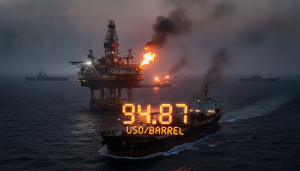
The geopolitical landscape surrounding Iran is intensifying once again, with Tehran issuing stark warnings that any further aggression from the United States or Israel could trigger a conflict extending far beyond the Middle East. This escalation underscores the persistent risks facing global energy markets, particularly concerning Iran’s nuclear ambitions and the critical flow of oil and liquefied natural gas (LNG) through the Strait of Hormuz.
According to statements from Iran’s Islamic Revolutionary Guard Corps (IRGC) on Wednesday, as reported by their semi-official news channels, a repeat of hostilities would lead to “crushing blows in places you do not expect,” fulfilling prior threats of a broader regional conflict. This declaration directly followed comments from U.S. President Trump, who indicated that additional military action remains a distinct possibility if diplomatic efforts fail to secure concessions from Tehran regarding uranium enrichment activities and open access through the Strait of Hormuz.
Strait of Hormuz: A Vital Energy Chokepoint Under Threat
The Strait of Hormuz, an indispensable artery for global energy trade, continues to be severely restricted, maintaining a state of high alert since regional tensions flared earlier this year. This narrow waterway is vital, handling approximately one-fifth of the world’s crude oil and LNG shipments. Iran has explicitly linked the reopening of this commercial shipping lane to the lifting of what it describes as a U.S. naval blockade on its own ports, signaling a firm stance that impacts global energy security.
Recent data from Iranian officials indicates that 26 vessels transited Hormuz within the last day, operating under the coordination of the IRGC Navy. While this represents ongoing traffic, it remains significantly below pre-conflict volumes, highlighting the tangible disruption and increased transit costs faced by shippers and, ultimately, energy consumers. Investors in oil and gas shipping, as well as those with exposure to global commodity markets, must closely monitor these transit figures and the underlying geopolitical calculus.
Tehran’s Hardened Stance and Diplomatic Deadlock
The core disagreements between Washington and Tehran persist. Iran has staunchly refused U.S. demands to relinquish its highly enriched uranium stockpile or to permanently cease its uranium enrichment programs. Conversely, the U.S. continues to press for the unrestricted resumption of commercial shipping through the Strait of Hormuz, a non-negotiable point for global energy market stability.
Iranian Parliament Speaker Mohammad Bagher Ghalibaf recently affirmed that Tehran has leveraged the current ceasefire period to enhance its military readiness and fortify its economic resilience. This strategic repositioning signals Iran’s preparation for potential renewed conflict, rather than a softening of its stance, despite ongoing diplomatic overtures through various regional intermediaries. Such actions by Tehran will undoubtedly keep energy market participants on edge.
U.S. Diplomacy and the Prospect of “Option B”
On the U.S. side, Vice President JD Vance articulated the administration’s belief that Iran still seeks a negotiated settlement, characterizing renewed military action as “option B.” Vance stated on Tuesday that significant progress has been made, noting, “But that’s not what the president wants. And I don’t think it’s what the Iranians want either.” This indicates a continued preference for a diplomatic resolution, though the threat of force remains a leverage point.
President Trump had earlier revealed that key regional allies, including Saudi Arabia, Qatar, and the United Arab Emirates, had urged him to postpone further military action. Their plea for extended diplomatic efforts underscores the regional desire to de-escalate and avert a wider conflict that would undoubtedly destabilize their own economies and energy infrastructure. These regional stakeholders possess significant influence on global oil supply and pricing.
Investor Outlook: Elevated Risk and Market Volatility
For energy investors, the current environment presents an elevated risk profile. The persistent hardening of positions by both sides means the potential for further escalation remains high. Oil markets are acutely sensitive to any disruption involving the Strait of Hormuz or the broader regional crude oil export infrastructure. A sudden closure or increased hostilities could trigger a dramatic spike in crude oil prices, impacting refining margins, transportation costs, and ultimately, global economic growth.
Analysts universally agree that this delicate balance between diplomacy and potential confrontation will continue to fuel market volatility. Companies operating within the Middle East, particularly those involved in oil and gas extraction, processing, or transport, face heightened operational risks. Furthermore, the global LNG market, heavily reliant on secure shipping lanes, would also experience significant price shifts and supply chain disruptions if the Strait of Hormuz remains contested or becomes fully inaccessible.
Prudent energy investors are advised to maintain a close watch on diplomatic developments, shipping advisories, and any shifts in the military postures of the involved parties. The intersection of geopolitical risk and critical energy infrastructure in the Middle East demands constant vigilance, as even minor events can precipitate substantial market movements. The path forward remains uncertain, leaving crude oil, natural gas, and broader commodity markets highly susceptible to the geopolitical currents emanating from Tehran and Washington.