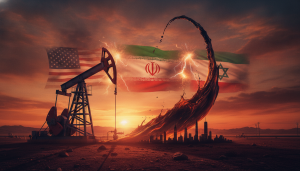
The global oil market currently navigates an unprecedented geopolitical storm, characterized by a massive disruption in Persian Gulf exports. Despite an estimated 10 million barrels per day (bpd) of crude oil supply being removed from the market due to Iran’s blockade of the Strait of Hormuz – a volume representing approximately 10% of total global consumption – benchmark crude prices have remained surprisingly resilient, hovering just above $100 per barrel. This stands in stark contrast to past, smaller supply shocks, such as the one following the 2022 Russian invasion of Ukraine, which saw prices surge significantly higher.
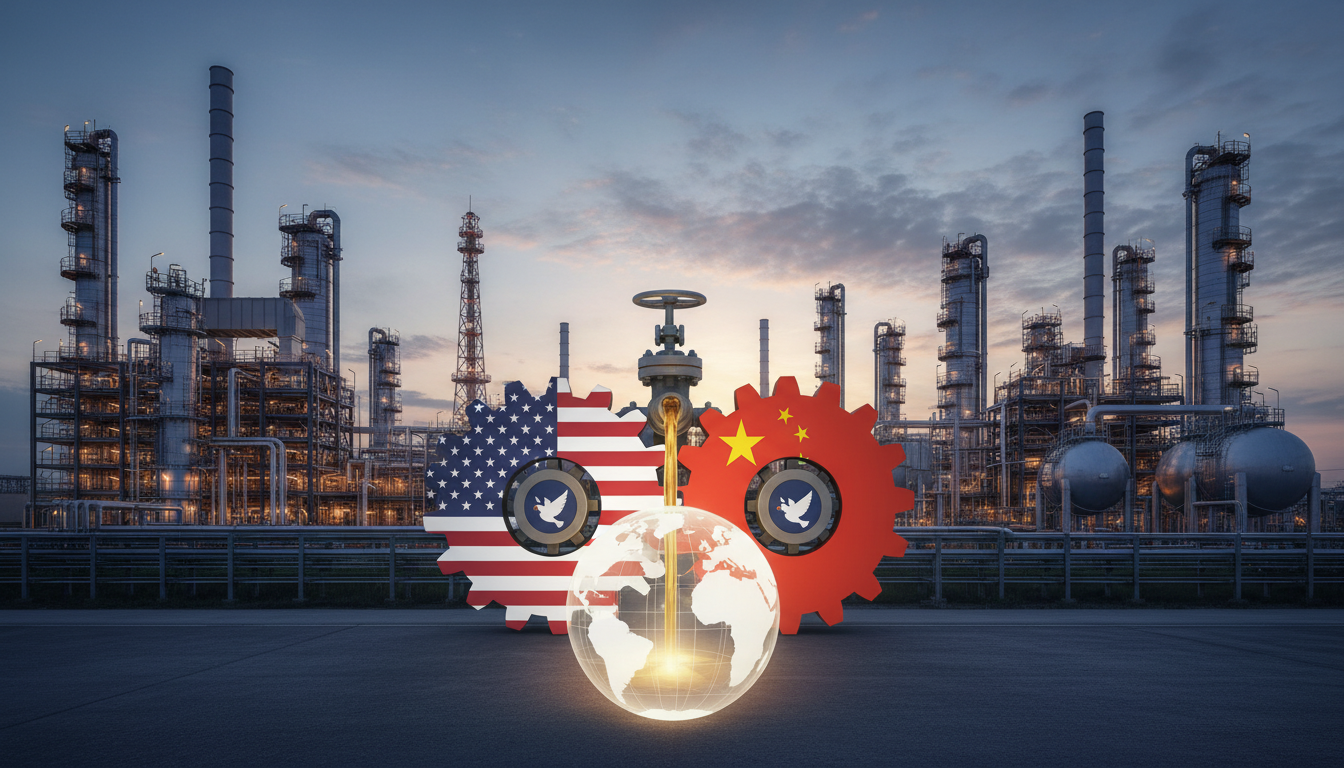
This relative stability, defying expectations of a far greater price spike, can largely be attributed to the coordinated and impactful actions of the world’s two economic giants: the United States and China. As the largest oil producer and a significant exporter, and the world’s foremost oil importer, respectively, these nations wield substantial influence over global energy flows and have deployed their economic might to bridge a considerable portion of the gaping supply chasm.
Strategic Adjustments Mitigate Supply Crisis
Recent data from the International Energy Agency (IEA) illuminates the scale of these pivotal adjustments. Non-Middle Eastern oil producers, predominantly led by the United States, have dramatically increased their crude exports, adding an impressive 3.5 million bpd to the global market since the onset of the Iran conflict. Simultaneously, China has executed a remarkable reduction in its oil imports, slashing them by 3.6 million bpd – a figure roughly equivalent to Japan’s entire daily oil consumption.
Cumulatively, these two strategic shifts account for a staggering 7.1 million bpd, effectively compensating for about 70% of the export volume lost from the Persian Gulf. Further contributing to this global rebalancing act, key Asian economies including Japan, South Korea, and India have collectively pared back their oil imports by an additional 3.6 million bpd. These combined actions have created a crucial buffer, preventing a full-blown energy crisis.
Market analysts have been quick to recognize the profound impact of these maneuvers. Michael Hsueh, an analyst at Deutsche Bank, noted that the U.S. and China are providing “important forms of adjustment” to offset the Persian Gulf’s export disruption. Hsueh contends that without these interventions, international benchmark Brent crude prices would likely have escalated to $120 per barrel or even higher. Martijn Rats, a commodities strategist at Morgan Stanley, echoed this sentiment, calling China’s import reduction “remarkable” and “the single most important component” in explaining why oil prices haven’t surged further.
Diplomacy and Future Energy Trade
Beyond immediate market adjustments, diplomatic efforts are also underway to address the enduring geopolitical challenges. Recent discussions between President Donald Trump and President Xi Jinping in Beijing underscored a shared commitment to ensuring the free flow of energy through the Strait of Hormuz, as conveyed in a White House statement. However, the timeline for the Strait to return to pre-war commercial shipping levels remains uncertain, highlighting the ongoing need for market vigilance and strategic planning.
Looking ahead, U.S. Energy Secretary Chris Wright articulated a vision for a shifting global energy landscape. Speaking from Port Arthur, Texas, Wright emphasized the U.S. commitment to expanding its oil and refined products supply. He further predicted a natural growth in China’s oil imports from the United States, recognizing China’s position as the world’s largest importer. “There’s a natural energy trade there,” Wright affirmed, anticipating an increasing role for American crude in China’s energy matrix.
Inventory Dynamics: A Question of Sustainability
The critical question for investors and market participants now revolves around the sustainability of these compensatory measures, particularly if the Strait of Hormuz remains disrupted for an extended period. Analyst Martijn Rats highlighted the divergent positions of China and the U.S. regarding their strategic inventories.
China commands the world’s largest strategic oil reserve, estimated to hold 1.4 billion barrels. This formidable stockpile provides Beijing with considerable flexibility, allowing it to sustain its reduced import levels for months, potentially even through the remainder of the year, even if its inventories draw down significantly. This robust reserve underpins China’s ability to weather prolonged supply interruptions without immediately jeopardizing its domestic energy security.
The situation in the United States, however, presents a more nuanced picture. While U.S.-led exports have surged, Rats observed that this increase primarily stems from drawing down existing inventories, including the nation’s Strategic Petroleum Reserve (SPR), rather than a substantial boost in new oil production. The U.S. held 413 million barrels in its reserve at the close of last year, the world’s second largest. In response to the initial oil shock, the U.S. agreed in March to deploy 172 million barrels from its strategic reserve.
This reliance on drawdowns raises concerns about the long-term sustainability of the elevated U.S. export levels. Rats cautioned that the capacity of the U.S. to maintain this increased export pace appears to be “under more pressure,” suggesting that while current actions have been vital, the nation’s strategic flexibility might be diminishing over time. Investors must closely monitor these inventory trends and their implications for future global oil supply stability.
Investment Implications
For investors in the oil and gas sector, these dynamics underscore the complex interplay between geopolitical risk, strategic policy decisions, and fundamental supply-demand balances. The ongoing ability of the U.S. and China to collectively absorb an unprecedented supply shock provides a critical floor for market stability. However, the sustainability of these efforts, particularly the U.S.’s reliance on strategic drawdowns, introduces a latent vulnerability. Prudent energy investment strategies will require a keen eye on these inventory levels, geopolitical developments surrounding the Strait of Hormuz, and the evolving trade relationship between the world’s leading energy consumers and producers.