Electrification Gains Traction in Heavy-Duty Construction: A New Frontier for Diesel Demand
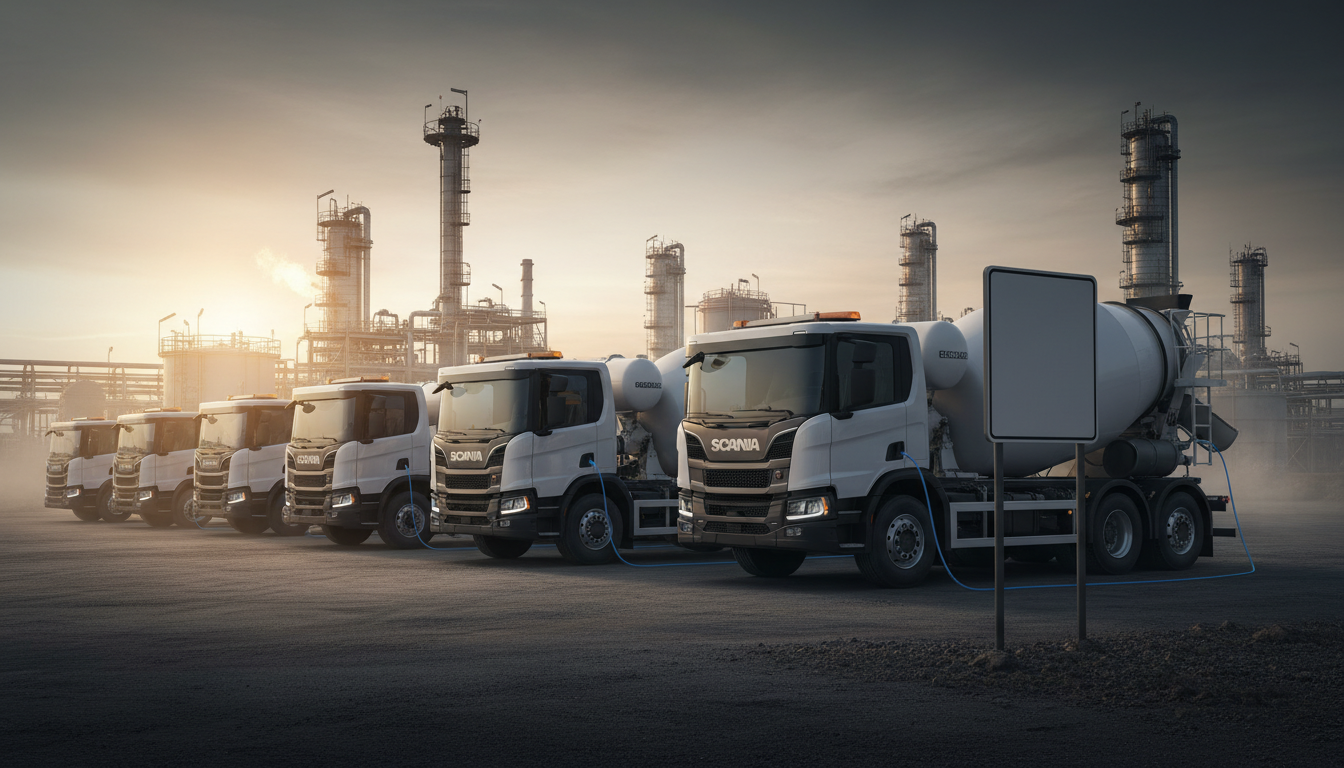
The global energy transition continues to carve out new battlegrounds, and the latest front is proving to be one of the most challenging yet: heavy-duty construction logistics. For decades, the roar of a diesel engine has been synonymous with productivity on construction sites, powering everything from excavators to concrete mixers. However, a significant development spearheaded by Scania, in collaboration with Unicon and Liebherr, signals a profound shift. This isn’t merely an experimental prototype; it’s a strategically designed, fully integrated electric concrete mixer truck poised for scalable deployment, challenging the long-held dominance of fossil fuels in a particularly energy-intensive segment.
For investors monitoring the future of energy demand, this innovation represents more than just a technological curiosity. It highlights the accelerating pace of electrification, even in sectors previously deemed too complex or power-hungry for battery-electric solutions. The ramifications for diesel demand, grid infrastructure, and raw material markets are substantial, urging a closer look at how quickly these transitions can materialize into tangible market shifts.
Integrated Electric Power: Revolutionizing Concrete Transport
Scania, a venerable name in commercial vehicle manufacturing with deep ties to the construction sector, has joined forces with Unicon, a leading Danish ready-mix concrete producer, and Liebherr-Mischtechnik GmbH, a specialist in mixing technology, to introduce a comprehensive electric solution for concrete transport. At the heart of this innovation is a fully electric power take-off (ePTO) system, seamlessly integrated into the electric truck’s architecture. This ePTO directly energizes the concrete mixing drum using the vehicle’s onboard battery system, creating an entirely electric operational chain from propulsion to mixing.
The engineering challenge in electrifying concrete transport is considerable. These vehicles must maintain continuous mixing operations, demand high energy output, and reliably navigate both paved roads and rugged construction environments. Scania emphasizes its holistic development approach, which encompassed the vehicle, its specific application, and overall energy consumption from the project’s inception. This three-year development cycle underscores the complexity and strategic intent behind bringing such a solution to market.
This electric concrete mixer truck is outfitted with a robust 400 kWh battery pack, designed to deliver an operational range of approximately 200 kilometers. This battery configuration was not arbitrary; developers meticulously optimized it through extensive route simulations and energy models to guarantee peak performance and efficiency in demanding daily operations. The message is clear: this is a commercial solution built for strenuous industrial use, not a limited demonstration.
From Pilot to Widespread Adoption: Unicon’s Strategic Vision
Crucially, Unicon views this pioneering electric mixer truck not as a singular pilot project but as the foundational model for broad-scale integration into its daily operations. Christian Elleby, Supply Chain & Procurement Director at Unicon, articulated this strategic intent, stating, “This is not a pilot, it is a solution designed for daily operations and future scale.” This declaration signals a firm commitment to decarbonization within construction logistics and points to a credible trajectory for wider adoption.
The initial deployment of this prototype marks the first step in Unicon’s ambitious electrification strategy. The company has already placed orders for ten additional electric vehicles, slated to commence service in the coming years. Looking further ahead, Unicon aims to significantly expand its electric fleet by 2027, with an ultimate corporate objective of achieving exclusively zero-emission concrete transport services by 2035. These aggressive targets provide a tangible timeline for investors assessing the speed at which traditional fuel demand in heavy transport could erode.
The Shifting Landscape: Competitive Dynamics in Electrified Construction
While Scania’s collaborative effort is notable, the industry is witnessing a broader competitive push towards electrifying heavy-duty construction vehicles. This indicates a burgeoning market and a collective industry recognition of the inevitable shift away from fossil fuels. Other major players are making their own strides, further solidifying the trend:
- Renault Trucks, in partnership with German concrete transport specialist Schwing Stetter, showcased a five-axle Renault E-Tech C electric mixer at Bauma 2025. This vehicle boasts a fully electric mixer and is capable of transporting up to ten cubic meters of concrete, directly competing in the heavy-duty segment.
- In 2023, Volvo Trucks delivered its inaugural fully electric ready-mix concrete truck, the Volvo FMX Electric, to building materials giant Cemex. That same year, Cemex also integrated the first electric concrete mixer units from Putzmeister, signaling a comprehensive move towards electrifying their fleet and operational equipment.
These concurrent developments from multiple industry leaders underscore a rapidly maturing market for electric heavy-duty vehicles in construction. The competitive landscape is heating up, suggesting that the pace of adoption will only accelerate as more robust and commercially viable solutions become available.
Investment Implications for the Energy Sector
For investors focused on the oil and gas sector, these advancements in heavy-duty electric transport warrant close scrutiny. The construction industry, particularly the concrete sector, has historically been a significant and consistent consumer of diesel fuel. As companies like Unicon commit to transitioning entire fleets to electric power, this represents a direct threat to entrenched fossil fuel demand.
While the immediate impact on global oil consumption may appear modest, the trend is undeniable. As electrification expands from passenger cars to light commercial vehicles, and now decisively into the most demanding heavy-duty applications, the long-term trajectory for diesel demand faces increasing headwinds. Energy investors should consider the compounding effect of these sectoral shifts.
Moreover, the rise of electric fleets necessitates substantial investment in charging infrastructure, potentially opening new avenues for companies involved in grid development, smart energy management, and even renewable energy generation. The energy source for these electrified fleets will increasingly draw from the grid, shifting demand dynamics towards electricity and away from liquid fuels. This presents opportunities for natural gas-fired power generation as a bridge fuel, as well as for solar, wind, and battery storage solutions.
The material demand for advanced batteries — lithium, cobalt, nickel, and graphite — will also surge, presenting investment opportunities in the mining and processing sectors for these critical minerals. Oil and gas companies looking to diversify their portfolios may find strategic relevance in these emerging energy value chains, either through direct investment or by leveraging their logistical and infrastructure expertise.
In conclusion, the successful deployment and planned scaling of electric concrete mixer trucks by industry stalwarts like Scania, Unicon, and Liebherr mark a pivotal moment. It signifies that even the most formidable challenges in transport electrification are being systematically overcome. Investors must recognize this as a clear signal of an accelerating energy transition that will progressively reshape demand profiles across the entire energy spectrum, demanding strategic foresight and agile adaptation.