Extreme Weather’s Staggering Cost: A Wake-Up Call for Energy Investors
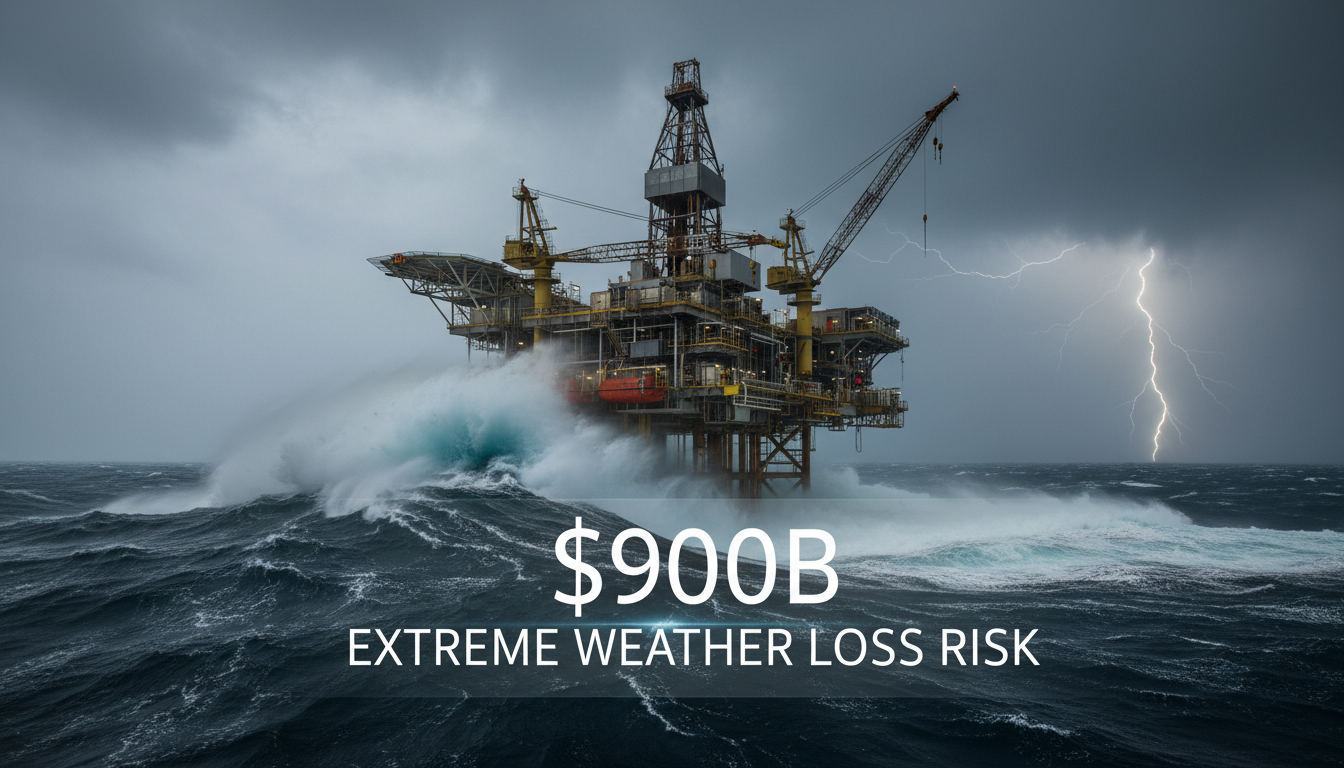
The global energy sector, an industry inherently exposed to the elements, faces an escalating threat from extreme weather events, presenting a formidable challenge to long-term profitability and asset integrity. A recent comprehensive analysis reveals that corporations globally anticipate nearly $900 billion in financial losses from escalating climate-related phenomena such as severe flooding and torrential downpours. These projected impacts span critical areas including revenue erosion from operational downtime, substantial asset impairments, and widespread disruptions across intricate supply chains, all directly influencing investor returns and portfolio resilience.
While the outlook paints a stark picture of future financial vulnerabilities, the same research offers a compelling counter-narrative: the cost of proactive risk mitigation stands remarkably lower than the projected damages. Companies could potentially avert these colossal losses by investing significantly less – an estimated 13 times less – than the financial burden they are expected to incur. This stark disparity underscores a critical opportunity for strategic capital allocation in the oil and gas industry to fortify against impending climate-related financial shocks.
The insights driving these projections derive from an extensive dataset, encompassing environmental disclosures from over 11,000 businesses and detailed reports from more than 1,000 governmental entities across various jurisdictions. This robust data forms the bedrock of an urgent call for enhanced risk management strategies across all sectors, including the capital-intensive oil and gas industry.
Billions at Risk: Dissecting the Financial Exposure
Companies are collectively forecasting an staggering $898 billion in losses attributable to extreme weather events, a figure that dwarfs historical impacts. Investors must pay close attention to the primary drivers of this anticipated financial damage. A significant portion, an estimated $326 billion, stems directly from lost revenue due to reduced production capacity – a direct threat to upstream and downstream operations in the energy sector. Another $218 billion is slated for asset impairment or premature retirement, impacting everything from drilling rigs and pipelines to refineries and storage facilities. Beyond these headline figures, additional financial pressures are expected from operational disruptions, elevated operating expenses, soaring insurance premiums, and fractured supply chains, all of which directly erode shareholder value.
When examining the specific perils, flooding emerges as the most financially devastating event, accounting for an astounding $528 billion in projected losses. This is particularly relevant for coastal energy infrastructure and inland river basin operations. Cyclones follow, threatening $161 billion in damages, posing a clear danger to offshore platforms and Gulf Coast facilities. Heavy rainfall, often a precursor to flooding, is expected to inflict an additional $86 billion in losses. Alarmingly, nearly half – 48% – of these identified extreme weather risks are not distant threats but are anticipated to materialize within the next two years, demanding immediate attention from energy investors and company boards alike.
The Proactive Imperative: Investing in Resilience
The economic logic for proactive investment in climate resilience is undeniable. Analysis indicates that the median cost of potential risks for a single company hovers around $39.4 million. In stark contrast, the median cost to implement mitigation strategies to address these very risks stands at a mere $3.1 million. This 13-fold difference highlights a profound opportunity for companies to protect significant capital and ensure long-term operational continuity.
While companies are indeed deploying capital to reduce their exposure to extreme weather hazards, these actions primarily focus on direct vulnerabilities. Strategies include physical adaptation measures, such as hardening infrastructure, and enhancing operational resilience through robust business continuity and emergency response planning. However, a critical gap persists: coordinated actions with other stakeholders and initiatives addressing shared systemic dependencies represent a much smaller fraction of reported responses. For an interconnected sector like oil and gas, where upstream production depends on midstream transport and downstream processing, integrated resilience planning is paramount.
Subnational Challenges and the $34 Billion Funding Gap
The ripple effect of extreme weather extends beyond corporate balance sheets to impact the operational environments where energy assets reside. A significant majority, 62%, of subnational governments (cities, states, and regions) already report substantial impacts from extreme weather. Furthermore, over 60% of these entities anticipate an increase in the frequency or intensity of hazards like extreme heat, urban flooding, and drought. Such local impacts directly affect workforce availability, infrastructure reliability, and regulatory stability for oil and gas operations.
Compounding this challenge, nearly half (46%) of these subnational governments cite budgetary constraints as a significant impediment to adapting to climate change impacts. Over 60% require additional funding for at least one adaptation project, indicating an overall adaptation investment gap of at least $34 billion. This shortfall in public sector resilience can indirectly increase risks for private energy companies operating within these regions, highlighting the need for collaborative solutions.
The Insurance Blind Spot: A Hidden Financial Vulnerability
Despite the growing evidence, only 35% of companies currently classify extreme weather events as a financially material risk. This perception gap poses a considerable threat, particularly concerning the insurance market – a potentially underestimated source of future financial strain. Real-economy companies project only a modest $3.3 billion increase in future costs from rising insurance premiums. Even more concerning, fewer than 1% of businesses are pricing in the prospect of insurance withdrawal in high-risk areas. This suggests a dangerous underestimation, implying that future premium escalations, coverage restrictions, or outright insurer withdrawal could significantly exceed current corporate expectations, blind-siding unprepared energy firms.
Strategic Implications for Energy Sector Investors
The implications for energy investors are clear and pressing. The looming financial threat from extreme weather is not an abstract concept but a tangible risk poised to impact revenue, asset value, and operational stability in the near term. A systemic approach to climate resilience is imperative, extending beyond individual corporate actions to encompass collaborative efforts across the industry and with governmental bodies.
Robust disclosure and transparent reporting on climate risks and mitigation strategies are no longer optional but essential tools for informed investment decisions. By prioritizing strategic investment in adaptation, fostering cross-sector collaboration, and rigorously integrating climate risk into financial planning, the oil and gas industry can not only mitigate impending losses but also position itself for sustained value creation in an increasingly volatile climate landscape. Investors should scrutinize companies’ preparedness for these “dangerous domino effects” and reward those demonstrating foresight and proactive resilience strategies.


