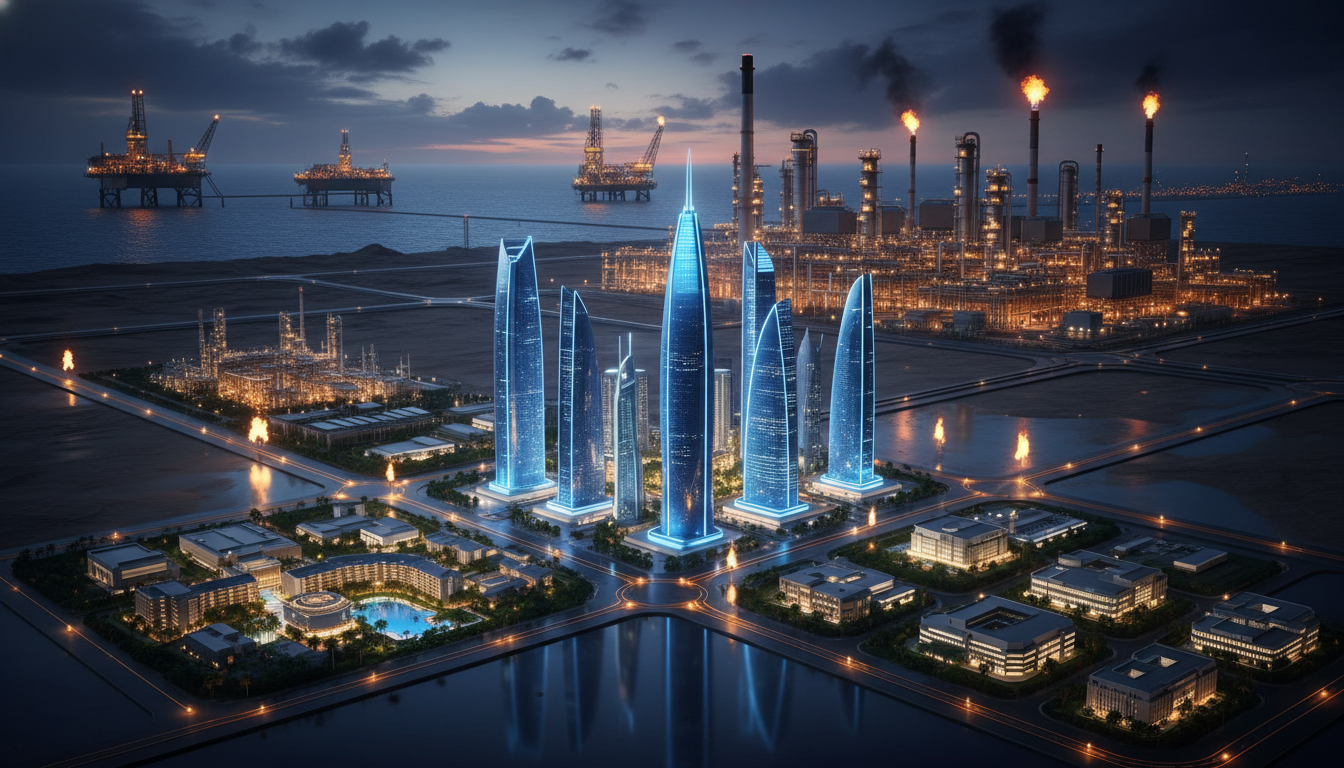
DHAHRAN – Saudi Arabian Oil Company (Aramco), the world’s leading integrated energy and chemicals enterprise, is actively pursuing a significant asset monetization strategy, targeting a raise of at least $10 billion through a sophisticated sale and leaseback arrangement for a portion of its extensive real estate portfolio. This initiative underscores Aramco’s ongoing commitment to optimize its capital structure and unlock value from non-core assets, even amidst the complex geopolitical landscape of the Middle East.
Unlocking Value from Real Estate Assets
The proposed transaction centers on a sale and leaseback model, a strategic financial mechanism that allows the company to divest ownership of its real estate while retaining full operational use through a long-term lease. Among the key assets reportedly included in this prospective deal is the Dhahran Camp residential community, a substantial development located in the Kingdom’s Eastern Province. This approach enables Aramco to convert illiquid assets into substantial cash infusions, which can then be deployed into its core energy operations, strategic growth projects, or to enhance shareholder returns.
Industry observers and financial sources indicate that real estate and infrastructure funds are the likely contenders for acquiring these assets. Such funds often seek stable, long-term income streams from high-quality, strategically important properties, making Aramco’s portfolio an attractive investment proposition. For Aramco, the deal is a shrewd move to bolster its financial flexibility, aligning with a broader trend among global energy majors to streamline their asset base and focus on core competencies.
A Proven Strategy: Lessons from Prior Infrastructure Deals
This anticipated real estate transaction is not an isolated event but rather a continuation of Aramco’s well-established strategy of leveraging its extensive asset base. The company has previously executed similar, highly successful infrastructure agreements that exemplify its adeptness at attracting significant international investment. Investors will recall last year’s landmark $11 billion midstream infrastructure deal involving an international consortium spearheaded by investment giant BlackRock. That transaction set a precedent for monetizing critical energy infrastructure while ensuring Aramco maintains operational control.
A more recent and equally substantial example unfolded in August, with an $11 billion lease and leaseback agreement focused on its Jafurah gas processing facilities. This complex transaction involved the formation of a new subsidiary, Jafurah Midstream Gas Company (JMGC). Under the terms, JMGC acquired the development and usage rights for the pivotal Jafurah Field Gas Plant and the Riyas NGL Fractionation Facility. Subsequently, these rights were leased back to Aramco for a period of two decades. This structure provides JMGC with a stable tariff payment from Aramco, in exchange for granting Aramco the exclusive mandate to receive, process, and treat raw gas originating from Jafurah, which holds the distinction of being Saudi Arabia’s largest non-associated gas development.
These previous deals highlight a successful blueprint: create a dedicated entity, transfer asset rights, secure a long-term lease, and receive substantial upfront capital. This strategy not only generates significant liquidity but also diversifies Aramco’s investor base, bringing in partners with specialized expertise in managing such asset classes.
Future Monetization Opportunities and Strategic Imperatives
Beyond the current real estate focus, Aramco is reportedly exploring additional avenues for asset monetization. Sources suggest that the company is considering similar arrangements for its water infrastructure business and its portfolio of gas-fired power plants. These potential deals further underscore Aramco’s strategic imperative to optimize every facet of its extensive operations, focusing capital where it can generate the highest returns and support its long-term growth ambitions in both traditional and transitional energy sectors.
The continuous pursuit of these financial strategies demonstrates Aramco’s commitment to maximizing shareholder value and ensuring robust financial health, a crucial consideration for investors examining its long-term prospects. This approach provides capital for ambitious projects, including expanding upstream capabilities, investing in downstream integration, and advancing its diversification into new energy technologies.
Operational Resilience in Challenging Times
Aramco’s proactive financial engineering is complemented by its proven operational resilience, a factor that deeply resonates with investors assessing risk in the global energy market. Just days ago, the company announced first-quarter earnings that notably surpassed consensus expectations, a remarkable achievement given the significant geopolitical tensions affecting maritime routes. The Strait of Hormuz, a critical choke point for global oil shipments, experienced a full month of closure during the quarter, yet Aramco successfully mitigated the impact.
The company achieved this by strategically re-routing its crude oil exports to the Red Sea, effectively bypassing the disrupted Strait. This operational flexibility was largely facilitated by its robust East-West Pipeline. Amin Nasser, Aramco’s President and CEO, highlighted this critical infrastructure in his comments on the results, stating, “Our East-West Pipeline, which reached its maximum capacity of 7.0 million barrels of oil per day, has proven itself to be a critical supply artery, helping to mitigate the impact of a global energy shock and providing relief to customers affected by shipping constraints in the Strait of Hormuz.” This demonstrates Aramco’s ability to maintain reliable supply to global markets even under duress, a key differentiator for investors seeking stability in energy investments.
For energy investors, Aramco’s multi-faceted strategy—combining astute financial optimization through asset monetization with robust operational capabilities to navigate geopolitical risks—presents a compelling narrative of a company effectively managing its vast resources to ensure continued profitability and strategic growth in an evolving global energy landscape.


