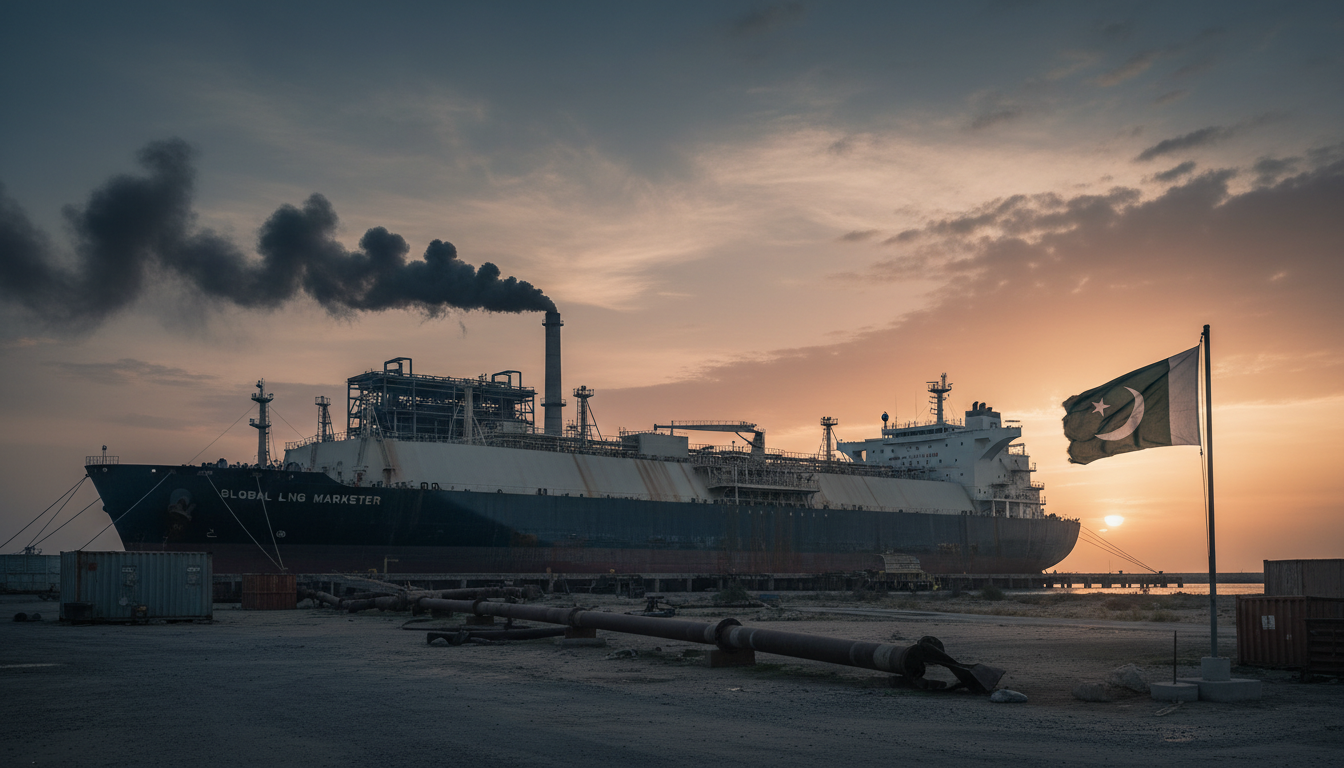
In a high-stakes bet against escalating geopolitical tensions, Pakistan has elected to forgo immediate liquefied natural gas (LNG) purchases on the volatile spot market. This calculated gamble, driven by the anticipation of de-escalation in the Strait of Hormuz and the imminent arrival of more affordable long-term supplies from Qatar, carries significant implications for its domestic energy security and global LNG market dynamics.
State-owned Pakistan LNG Ltd. confirmed its decision not to award an emergency tender that sought two critical shipments for May delivery. The tender, which closed recently, failed to secure a buyer, with traders familiar with the matter indicating the government’s confidence that the simmering conflict between the United States and Iran was easing. This conviction is reportedly bolstered by expectations of two crucial cargoes from Qatar arriving on schedule, at prices significantly more favorable than current spot rates.
Pakistan’s Precarious Energy Position
The nation’s energy import strategy currently hinges on this optimistic outlook. Data tracking LNG shipments reveals a stark reality: Pakistan has received only a single LNG delivery since early March. This contrasts sharply with an average import volume of approximately nine cargoes per month throughout the previous year, underscoring a deepening supply deficit. The reliance on long-term contracts, particularly with Qatar, becomes evident when considering the price differential; these contracted supplies are currently available at roughly half the cost of those offered on the open spot market.
However, the decision to shun readily available spot shipments is laden with risk. Analysts warn that bypassing these urgent purchases could severely exacerbate Pakistan’s existing natural gas shortfall, potentially leading to widespread power outages and further economic disruption. The nation’s Petroleum Minister, Ali Pervaiz Malik, has not yet commented on the situation, leaving investors and citizens to ponder the full extent of this energy gamble.
The Geopolitical Chessboard: Strait of Hormuz and US-Iran Tensions
At the heart of Pakistan’s strategic maneuver lies the Strait of Hormuz, a critical maritime choke point that has been severely impacted by the ongoing conflict. Since late February, when hostilities erupted, the waterway has been rendered virtually impassable for a significant portion of global energy traffic. This has severely curtailed the flow of natural gas, crude oil, and refined petroleum products to international markets. Before the recent escalations, approximately one-fifth of the world’s total LNG supply navigated through this vital strait.
While a ceasefire has been observed since early April, fresh skirmishes between the U.S. and Iranian forces have cast a dark shadow over prospects for a lasting peace agreement. This volatile geopolitical backdrop introduces substantial uncertainty into Pakistan’s supply chain, making its current strategy particularly daring. Pakistan itself has assumed a mediating role in the talks between the U.S. and Iran, a diplomatic effort that underscores its vested interest in regional stability and unimpeded trade routes.
Spot Market Resistance and Past Precedents
It’s worth noting that Pakistan was compelled to engage with the spot market as recently as late last month. That acquisition marked its first spot cargo purchase in over two years, a direct consequence of the Middle East conflict disrupting contracted deliveries. The latest rejected tender sought deliveries for two distinct windows in May: May 12-14 and May 24-26. This history highlights the critical nature of the current gas shortage and the lengths Pakistan has previously gone to secure supply. Interestingly, despite the prevailing challenges, some Pakistani vessels have successfully transited Hormuz, including a tanker carrying diesel last week, suggesting that passage, while risky, is not entirely impossible.
Diplomatic efforts continue in parallel with Pakistan’s energy decisions. Prime Minister Shehbaz Sharif reportedly engaged in a phone conversation with Qatar’s Prime Minister Sheikh Mohammed bin Abdulrahman Al Thani on May 7. The discussion, as detailed in a post on X, centered on the ongoing conflict and the shared commitment to peace initiatives, reinforcing the belief that contracted Qatari supplies remain a cornerstone of Pakistan’s energy security plan.
Investor Outlook: Risks and Rewards for Global LNG
For investors monitoring the global LNG market, Pakistan’s approach offers a fascinating case study in managing energy security amidst extreme geopolitical flux. The decision underscores the acute sensitivity of LNG prices to supply chain disruptions and regional conflicts. A successful outcome for Pakistan, with cheaper Qatari cargoes arriving as anticipated and a sustained easing of Hormuz tensions, could alleviate domestic energy pressures without incurring exorbitant spot market costs.
Conversely, a miscalculation – renewed conflict, delayed Qatari shipments, or a failure of the Strait of Hormuz to fully reopen – would plunge Pakistan deeper into its energy crisis, with severe economic and social repercussions. Such a scenario would inevitably drive up demand and prices on the international spot market, impacting other energy importers and potentially signaling heightened risk premiums for future LNG investments globally. The market will be closely watching the coming weeks for indications of whether Pakistan’s bold bet pays off, or if it precipitates a more profound energy challenge.


