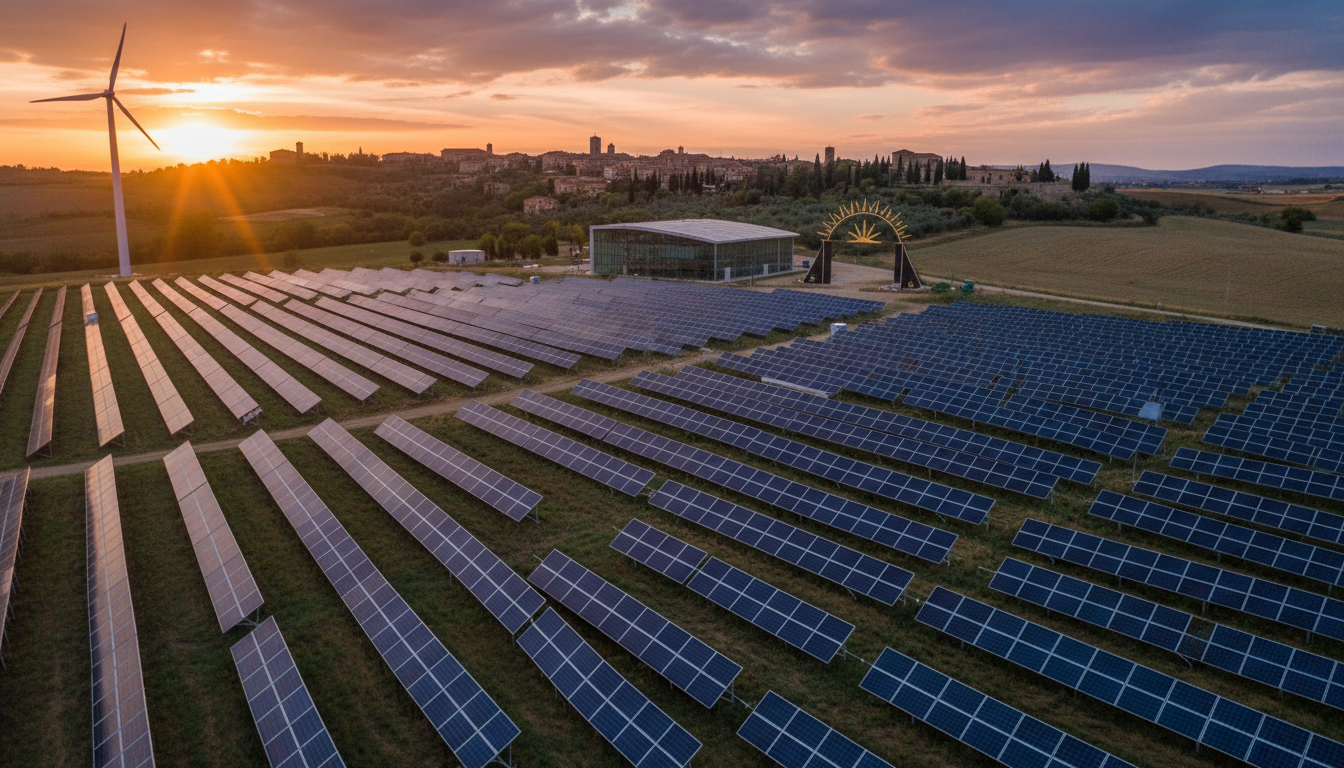
Zelestra Ignites Italian Portfolio with Landmark Agrivoltaic Project in Puglia
Ginosa, Italy – For investors closely monitoring the evolving energy landscape, Zelestra has made a significant statement, officially commissioning its inaugural operational solar power facility in Italy. This strategic move in Puglia marks the company’s entry into the nation’s burgeoning renewable energy sector, underpinning a broader growth strategy that demands attention from those analyzing power generation assets and the energy transition.
The newly operational 6.5 MWdc agrivoltaic plant in Ginosa represents more than just a single asset; it signifies a tangible step in Zelestra’s ambitious Italian expansion. This facility will contribute approximately 11.7 GWh of clean electricity to the grid annually, sufficient to power roughly 4,000 Italian households. From a carbon reduction perspective, the plant is projected to avert nearly 3,700 tons of CO₂ emissions each year, offering a clear environmental benefit that resonates with ESG-focused investment mandates and broader decarbonization objectives across Europe.
Strategic Foundations: A Glimpse into Zelestra’s Italian Ambitions
The inauguration event in Ginosa drew key stakeholders, including Deputy Mayor Domenico Gigante and industry leaders such as Eliano Russo, CEO of Zelestra Italia. Russo emphasized the significance of this milestone, stating, “With the Ginosa plant, we celebrate the first kWh produced by Zelestra in Italy. It is an important milestone that marks the beginning of an industrial journey in the country, built through dialogue with local communities and institutions. We will continue to invest to develop sustainable projects that combine energy production, land protection and local economic growth.” This sentiment highlights a crucial aspect for investors: the company’s commitment to integrated, community-centric development, which can de-risk projects and enhance long-term value in sensitive markets.
This initial operational success provides a crucial proof point for Zelestra’s extensive Italian development pipeline. The company currently commands a portfolio exceeding 1.4 GW, encompassing both solar and battery energy storage systems across various regions of Italy. For investors seeking exposure to diversified clean energy portfolios, Zelestra’s aggressive expansion and multi-faceted asset development strategy warrant close examination. The combination of solar generation with battery storage is particularly appealing, offering grid stability and enhanced revenue potential in markets grappling with intermittent renewable supply.
Agrivoltaics: Merging Agricultural Value with Energy Production
The Ginosa project employs an agrivoltaic design, a sophisticated approach where solar modules are elevated to permit agricultural activities to continue beneath them. This innovative method addresses a critical challenge in renewable energy deployment: land use competition. By integrating energy generation with food production, Zelestra aligns with Italy’s Ministry of the Environment and Energy Security’s National Guidelines, positioning the project as a model for sustainable infrastructure development.
This design choice is not merely an environmental consideration; it represents a shrewd risk mitigation strategy for investors. Projects that successfully navigate land use concerns often face fewer permitting delays and enjoy greater local community acceptance, enhancing project bankability. Zelestra’s commitment extends to rigorous environmental monitoring plans, covering soil, water, air, noise, and biodiversity, from pre-construction through operation. Such comprehensive ecological stewardship underscores a commitment to sustainability that can protect investor capital and foster long-term asset value in a world increasingly focused on responsible investment practices. Construction of the Ginosa facility alone created more than 50 jobs, with Altenia, a Terna Energy Solutions Group entity, serving as the EPC contractor.
Long-Term Contracts and Strategic Partnerships Bolster Investment Security
Central to the financial viability of the Ginosa project, and indeed Zelestra’s broader Italian strategy, is a robust 10-year Power Purchase Agreement (PPA) with BKW Energy. This long-term contract provides revenue certainty, a critical factor for investors evaluating the stability and predictability of returns from renewable energy assets. The PPA also encompasses the Bellomo agrivoltaic project in Modica, Sicily, boasting an installed capacity of 9.5 MWdc, further solidifying the strategic partnership between Zelestra and BKW Energy.
PPAs have become foundational in de-risking renewable energy investments. They offer developers predictable cash flows, facilitating project financing, while providing corporate buyers and utilities with access to stable, green electricity at a predefined price. In an Italian market marked by ambitious renewable targets and a drive for enhanced energy security, such agreements are pivotal. Investors should recognize that Zelestra’s focus on securing long-term contracted revenues through strategic alliances positions its assets favorably within the competitive power generation sector, appealing to those seeking stable returns amidst energy market volatility.
Cultivating Local Talent: The Zelestra Energy Academy
Beyond infrastructure, Zelestra is investing in human capital through its Zelestra FutureS initiative. The launch of the Zelestra Energy Academy in Ginosa’s Civic Library underscores a commitment to fostering local skills for the energy transition. This academy aims to educate young people on sustainability and the evolving energy sector, aligning social investment with infrastructure development.
Giorgia Epicoco, Director of Institutional Affairs and Public Policies for Zelestra Italia, affirmed, “The Zelestra Energy Academy represents a pillar of our sustainability strategy. Combining the development of energy infrastructure with a concrete commitment to training means creating lasting value for communities and contributing to the development of key skills for the energy transition.” For investors, such initiatives are crucial components of a comprehensive ESG strategy. They enhance a company’s social license to operate, reduce community-related risks, and can lead to a more skilled local workforce, ultimately benefiting the long-term operational efficiency and public perception of energy projects. Zelestra’s integrated approach to local engagement, land preservation, and secured power sales represents a sophisticated model for scaling renewable energy infrastructure.
As Zelestra lays down its initial operational footprint in Italy, the Ginosa project serves as a clear indicator of its strategic direction. Investors in the broader energy sector, including those evaluating opportunities beyond traditional oil and gas, should closely observe how quickly Zelestra can replicate this integrated model across its substantial Italian solar and storage pipeline, delivering consistent returns while navigating the complexities of the energy transition.


