Geopolitical Tensions Drive Crude Rally as Hormuz Flares Up
Global crude benchmarks surged higher on Friday, propelled by escalating military encounters between the United States and Iran within the vital Strait of Hormuz. This confrontational turn has rapidly undermined an already tenuous ceasefire, sparking profound concerns among investors about potential disruptions to maritime oil transit through this indispensable chokepoint for global energy supplies. The resurgence of hostilities intensified fears that the delicate diplomatic balancing act between Washington and Tehran is on the brink of collapse, sending shockwaves through energy markets.
Brent and WTI Surge on Escalated Risk Premium
The immediate market reaction was pronounced, reflecting a swift repricing of geopolitical risk into oil futures. International benchmark Brent crude for July delivery witnessed a significant uptick, climbing 2.26% to settle at $102.32 per barrel. Concurrently, U.S. West Texas Intermediate (WTI) futures for June delivery also posted robust gains, adding 2.06% to reach $96.76. These sharp movements underscore the market’s sensitivity to stability in the Middle East, particularly regarding the uninterrupted flow of oil through critical maritime routes. Investors are clearly factoring in an increased risk premium, anticipating potential supply chain vulnerabilities should the situation further deteriorate.
The Strait’s Strategic Imperative for Global Oil Flow
The Strait of Hormuz stands as one of the world’s most critical maritime passages, funneling a substantial portion of the planet’s seaborne crude oil and refined petroleum products. Its strategic importance cannot be overstated; any threat to shipping through this narrow waterway automatically triggers profound anxieties across global energy markets. With both Washington and Tehran trading accusations over who initiated the recent skirmishes, the geopolitical chessboard becomes increasingly complex. This latest flare-up occurred even as reports suggested Iran was actively reviewing a U.S. proposal aimed at de-escalating the broader conflict, adding another layer of uncertainty to an already volatile situation.
Diplomatic Fray and Ceasefire Uncertainty
The recent exchange of fire has cast a long shadow over the existing, already fragile ceasefire agreement between the two nations. Repeated allegations of violations from both sides had already weakened the accord, and the latest confrontations threaten its complete unraveling. Despite the military actions, U.S. President Donald Trump later maintained that the ceasefire remained in effect, humorously describing the strikes as merely “a love tap” during a conversation with an ABC News reporter. However, market participants are more inclined to focus on the tangible risks associated with naval clashes in such a critical region rather than on diplomatic reassurances.
Presidential Rhetoric and Market Volatility
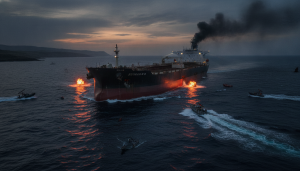
President Trump further escalated the rhetoric in a post on Truth Social, asserting that U.S. forces had successfully neutralized the Iranian targets involved in the clash, specifically mentioning small boats and drones. He also issued a stark warning that Iran would face additional military consequences if it failed to agree to a nuclear deal. Initially, some market optimism had emerged regarding a potential reopening of the Strait of Hormuz to unfettered shipping. However, this sentiment quickly dissipated following intelligence reports that Washington was preparing to resume naval operations dedicated to escorting commercial vessels through the waterway. This development, interpreted by many as a precursor to heightened tensions, contributed to a “rollercoaster rise” in oil prices, as noted by analysts at ANZ, who highlighted growing doubts over the U.S.-Iran peace negotiations. Interestingly, President Trump subsequently announced a pause in “Operation Freedom,” the U.S. naval mission designed to escort commercial vessels. Despite this pause, the underlying geopolitical friction persists, leading ANZ Research experts to conclude that the “risk of a proposed U.S. peace deal breaking down will likely keep oil markets volatile.”
Expert Insights on Future Outlook and Investor Positioning
Financial institutions are closely monitoring the evolving situation, offering cautious outlooks for investors. Analysts at Citi, for instance, project that broader financial markets are likely to stabilize despite the recent volatility linked to the Middle East. However, they provided a critical caveat: the path toward a complete normalization of market conditions is unlikely to be smooth. Citi warned that this bumpy transition could sustain elevated oil prices for months to come, emphasizing the enduring impact of geopolitical uncertainty on energy commodity valuations.
For energy investors, this volatile environment necessitates a strategic approach. The persistent risk of supply disruptions from key regions like the Middle East underscores the importance of a diversified portfolio. While elevated crude prices can boost the profitability of upstream exploration and production companies, the inherent geopolitical risks also introduce significant downside potential. Integrated oil majors, with their diversified operations spanning refining, marketing, and petrochemicals, may offer some insulation against direct crude price swings but remain exposed to overall economic stability and global demand dynamics.
Furthermore, investors should consider the implications for hedging strategies, utilizing futures and options to mitigate exposure to sudden price movements. The ongoing diplomatic dance, coupled with the potential for further military incidents, ensures that energy markets will remain a focal point for global economic stability and investor returns. Prudent risk management and a keen eye on evolving geopolitical narratives will be paramount for navigating the commodity landscape in the coming quarters.
Source