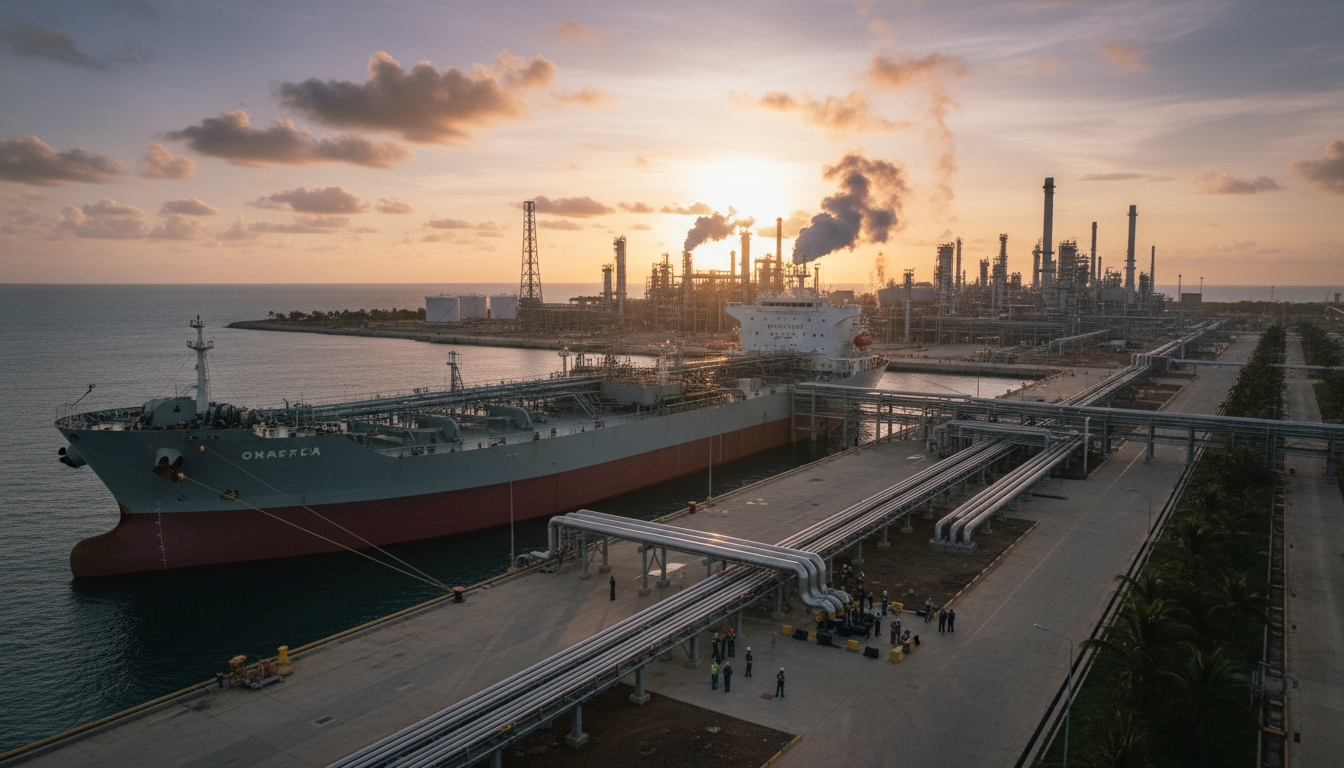
Angola’s Cabinda Refinery: A New Dawn for Domestic Fuel Security and Regional Energy Dynamics
The global oil and gas landscape is continually reshaped by strategic infrastructure developments, and the recent operational launch of Angola’s Cabinda oil refinery marks a significant milestone. This facility, the first new refinery in the nation since its independence from Portugal nearly five decades ago, has commenced shipments of refined fuels, offering crucial relief to domestic supply chains and contributing to broader international market stability amidst escalating geopolitical tensions, particularly from the Middle East.
Historically, Angola, a prominent African crude oil producer, has paradoxically relied heavily on imported refined products. Its only other operational refinery, located in the capital Luanda and managed by state-owned Sonangol, has long been insufficient to meet national demand. The inauguration of the Cabinda refinery represents a pivotal shift towards enhancing Angola’s energy self-sufficiency and reducing its vulnerability to volatile global fuel markets.
Strategic Capacity and Geopolitical Resilience
The Cabinda refinery boasts an initial processing capacity of 30,000 barrels per day (bpd) of crude oil. Its output is already making a tangible impact, supplying diesel to the Angolan domestic market and exporting naphtha and heavy fuel oil to international buyers. This diversified product slate underscores its strategic value, allowing Angola to capture more value from its indigenous crude resources.
Investment firm Gemcorp Capital, holding a commanding 90% ownership stake in the new refinery, has highlighted the core rationale behind this monumental project. Atanas Bostandjiev, founder and CEO of Gemcorp, articulated the primary investment thesis as “energy security for Angola.” He further noted that the unfolding geopolitical crises, particularly in the Middle East, have unequivocally validated this long-term strategy. The ability to locally produce essential fuels insulates Angola from external supply disruptions and price volatility, a critical advantage for any nation’s economic stability and national security.
While its 30,000 bpd capacity is modest when compared to continental giants like Nigeria’s 650,000 bpd Dangote facility, Cabinda’s current production capability is estimated to fulfill approximately one-tenth of Angola’s total fuel demand. This significant contribution measurably lessens the country’s dependence on imported refined products, a particularly timely development given the current state of international relations impacting global energy flows.
Investment and Future Expansion Prospects
The first phase of the Cabinda refinery project required an investment of $470 million. However, Gemcorp Capital is not resting on its laurels. The firm is actively planning a substantial expansion, targeting a doubling of the refinery’s capacity to 60,000 bpd. This proposed second phase is estimated to cost an additional $700 million, reflecting a robust commitment to scaling up Angola’s refining capabilities. Investors will be keenly watching for a Final Investment Decision (FID) on this expansion, which Gemcorp aims to secure by the close of the current year. Such an expansion would further solidify Angola’s position as a more self-reliant energy player in Africa.
This development in Angola is part of a broader, transformative trend across the African continent. For decades, many African nations have operated under an economically disadvantageous model: exporting crude oil while simultaneously importing refined petroleum products. This structural imbalance stemmed largely from insufficient domestic refining capacity. However, this paradigm is beginning to shift, led by major producers like Nigeria and Angola.
The commissioning of facilities such as the Dangote refinery in Nigeria and now the Cabinda refinery in Angola signifies a concerted effort by these nations to build out their downstream infrastructure. This strategic pivot promises to reduce their reliance on costly fuel imports, enhance energy independence, and unlock greater value from their natural resource endowments. For investors tracking the global oil and gas sector, these African refining projects represent compelling opportunities and a clear indicator of evolving energy market dynamics.
Implications for Oil & Gas Investors
For investors focused on the evolving global energy matrix, Angola’s Cabinda refinery offers several key takeaways. First, it underscores the increasing importance of energy security as a primary driver for infrastructure investment, especially in politically dynamic regions. Second, it highlights the potential for significant value creation within the downstream sector in emerging markets, as nations strive to capture more of the energy value chain internally.
The projected expansion plans for Cabinda, coupled with the broader trend of refining capacity build-out across Africa, signal a long-term shift away from the traditional “crude exporter, product importer” model. This transition creates new investment avenues in refining technologies, logistics, and regional fuel distribution networks. Investors should closely monitor the FID for Cabinda’s second phase, as it will serve as a strong indicator of Angola’s continued commitment to this strategic direction and the potential for further growth in its energy sector.
In essence, Cabinda is more than just a refinery; it is a symbol of Angola’s determined path towards greater economic resilience and energy autonomy. Its successful operation and planned expansion will undoubtedly contribute to a more stable and diverse global fuel supply, while simultaneously bolstering Angola’s standing within the international oil and gas community.


