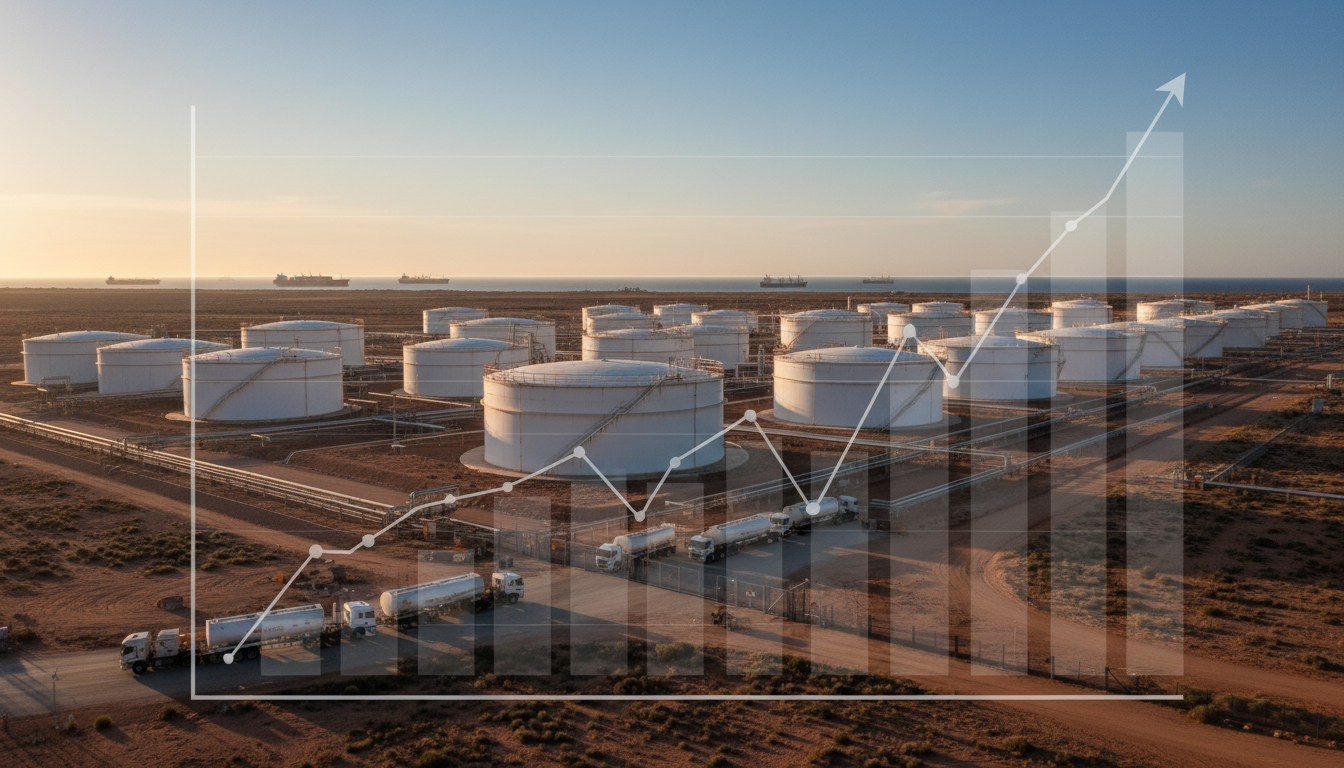
Australia is set to inject a massive AUD 10 billion ($7.26 billion) into its national fuel security strategy, signaling a profound commitment to safeguarding its energy future. This significant financial package, slated for inclusion in the upcoming federal budget, aims to fortify the nation’s resilience against global supply disruptions, a critical consideration for investors tracking the stability of energy markets in the Asia-Pacific region.
Building Robust Fuel Reserves
At the core of this ambitious initiative is the establishment of a government-owned Australian Fuel Security Reserve, backed by an allocation of AUD 3.2 billion. This strategic reserve is designed to hold approximately 1 billion liters of vital diesel and aviation fuel. The primary objective is clear: to mitigate the impact of regional stockouts and alleviate supply constraints for essential services and industries during any unforeseen crisis. For energy sector investors, this represents a de-risking of Australia’s operational environment, ensuring greater reliability of essential fuel supplies.
The government plans to engage extensively with industry stakeholders on the reserve’s implementation, exploring mechanisms such as underwriting, direct fuel purchases, support for new storage infrastructure, and strategic trading of stocks. This consultative approach suggests a dynamic and adaptable framework for managing national fuel inventories, offering a transparent pathway for potential private sector involvement in storage and logistics.
Bolstering Minimum Stockholding Obligations
Alongside the creation of a direct government reserve, Canberra will also significantly enhance its regulatory framework for fuel inventories. The existing Minimum Stockholding Obligation (MSO), which mandates refiners and fuel importers to maintain specific levels of petroleum products, will be increased by 10 days across all fuel types. This regulatory uplift will be supported by an investment of AUD 34.7 million over four years, specifically earmarked to help the industry invest in new and refurbished fuel storage facilities.
The progressive implementation of these changes is set to elevate Australia’s critical fuel reserves to a combined total of 50 days. This target, achieved through both direct government stockpiling and enhanced industry obligations, provides a crucial buffer against market volatility. As of a recent Saturday assessment, Australia’s MSO levels stood at 43 days for gasoline, 33 days for diesel, and 28 days for kerosene. The planned increase will substantially improve these figures, demonstrating a proactive stance on energy security that should resonate positively with investors concerned about supply chain vulnerabilities.
Strategic Procurement and Refining Resilience
Australia has already begun exercising its new Strategic Reserve powers, demonstrating immediate action in bolstering supplies. Recently, the nation successfully secured over 450 million liters of diesel and 100 million liters of jet fuel. This proactive procurement highlights the government’s readiness to intervene directly in markets to secure essential energy commodities.
Beyond liquid fuels, Export Finance Australia (EFA) is actively pursuing discussions with various businesses to secure, ship, and distribute critical fertilizers into the country, with further shipments anticipated in the coming weeks. This broader focus underscores a comprehensive approach to securing not just energy, but also agricultural inputs crucial for food security, recognizing the interconnectedness of vital supply chains.
Looking ahead, the federal government is committed to preserving and potentially expanding domestic refining capabilities. Collaborative feasibility studies with state governments are underway to explore new or expanded refining capacity, building on existing efforts with current operators to retain current refining capabilities beyond 2030. For investors in Australian energy infrastructure, this signals potential opportunities in upgrading existing facilities or developing new ones, reinforcing the long-term viability of the domestic refining sector.
Financial Mechanisms and International Cooperation
The fuel security package extends beyond direct investment, incorporating a robust suite of financial tools designed to support the energy sector. These include “loans, equity, guarantees, insurance, and price support” mechanisms for both fuels and fertilizers. This multi-pronged financial strategy aims to stimulate private sector investment and participation, providing a safety net and encouraging stability in key markets.
In a related development, Australia recently formalized an energy cooperation agreement with Japan, a move with significant implications for regional energy dynamics. A joint statement emphasized the complementary nature of their trade and economic partnership and the interdependence of their energy security. Both nations reaffirmed their commitment to strengthening energy security, ensuring the unimpeded flow of essential energy goods—including liquefied natural gas (LNG), coal, and liquid fuels—between their countries.
This bilateral agreement highlights a dedication to maintaining stable and transparent engagement in energy trade, while simultaneously enhancing predictability and transparency in the investment environment. Furthermore, it confirms a shared commitment to diversify energy sources, supporting the broader energy transition through investment and cooperation in energy efficiency initiatives. For investors, this agreement signals continued stability in critical energy trade routes and a collaborative approach to evolving energy landscapes, reinforcing Australia’s role as a reliable energy partner in the Indo-Pacific.


