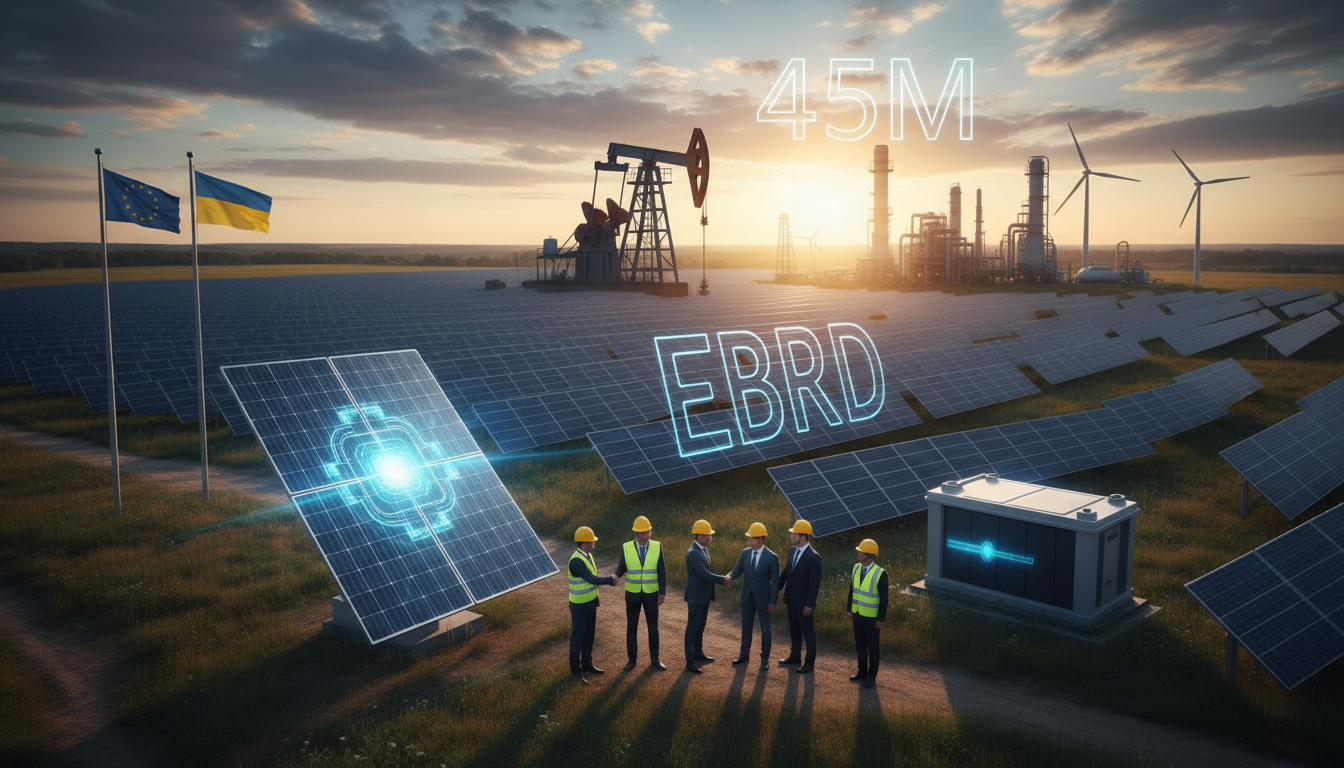
The global energy landscape continues its rapid evolution, driven by geopolitical imperatives, technological advancements, and the relentless pursuit of energy security. A recent development underscoring these forces is the significant $45 million loan secured by Kernel Holding SA from the European Bank for Reconstruction and Development (EBRD). This capital infusion is earmarked for a substantial 106-megawatt solar facility in southern Ukraine, complete with integrated energy storage solutions. For oil and gas investors, this isn’t merely a story about a solar farm; it’s a potent signal regarding the increasing valuation of resilient, decentralized power infrastructure in conflict-affected regions, and the broader capital flows shifting towards sustainable energy, even amidst persistent volatility in traditional hydrocarbon markets. Understanding these interwoven dynamics is crucial for navigating the investment opportunities and risks of the coming years.
Ukraine’s Strategic Pivot Towards Decentralized Energy Resilience
Kernel, a Luxembourg-registered agribusiness giant, is not just building a solar farm; it’s spearheading a critical shift in Ukraine’s energy strategy. The nation currently faces a severe deficit in power generation, with centralized facilities proving vulnerable to ongoing hostilities. Kernel’s chief executive, Yevgen Osypov, has articulated a clear response: a robust expansion of distributed generation, focusing on solar and wind, complemented by advanced energy storage. This 106 MW solar-plus-battery project, with an estimated cost of $86 million, is projected to generate 141 gigawatt hours annually, contributing substantially to energy security while reducing carbon dioxide emissions by approximately 82,500 metric tons each year. This initiative is part of Kernel’s ambitious plan to install up to 600 MW of renewable energy capacity, a formidable undertaking with projected investments reaching around $400 million. The project’s backing by the EBRD, bolstered by a guarantee from the EU’s Ukraine Investment Framework (UIF), highlights a concerted international effort to de-risk and accelerate critical infrastructure development in challenging environments, a trend oil and gas investors should note for its implications on future regional energy supply and demand balances.
Crude Volatility Underpins Renewable Acceleration
The investment in Ukraine’s solar capacity occurs against a backdrop of significant shifts in the global energy markets. As of today, Brent Crude trades at $111.78, reflecting a 1.25% gain, with an intraday range of $110.86 to $112.43. WTI Crude also shows strength at $105.9, up 0.79%. This sustained bullish momentum is not new; our proprietary data indicates Brent has surged by over 12% in the last two weeks alone, climbing from $99.36 on April 13th to its current level. Gasoline prices, currently at $3.65, mirror this upward trend. Such elevated and volatile crude prices serve as a powerful economic incentive for accelerating investments in alternative energy sources, even in regions facing high geopolitical risk. For oil and gas investors, this dynamic presents a dual challenge: while higher crude prices boost fossil fuel producers’ immediate profitability, they simultaneously enhance the economic viability and investment appeal of renewable projects globally, particularly those offering enhanced energy security and grid stability. The $45 million loan to Kernel exemplifies how capital is being deployed to diversify energy portfolios and mitigate reliance on fossil fuels, especially in vulnerable regions, despite the immediate profitability of high oil prices.
Navigating Investor Concerns: Geopolitics, Supply, and Future Outlook
Our proprietary reader intent data reveals a strong focus among investors on the immediate and mid-term outlook for crude oil, with frequent queries about the ‘2026 weekly trend for crude oil’ and requests to ‘build a base-case Brent price forecast for next quarter.’ These questions underscore a pervasive concern about market direction and the sustainability of current price levels. The Kernel project, while renewable-focused, speaks directly to the underlying geopolitical risks and energy security concerns that often underpin crude oil volatility. Furthermore, investor questions like ‘Which OPEC+ members are over-producing this month?’ highlight persistent supply-side anxieties that keep a floor under oil prices. These supply constraints and geopolitical risks create a compelling investment case for energy independence and diversified generation capacity, even if the direct beneficiaries are not traditional oil and gas firms. The substantial commitment by the EU, through its Ukraine Facility, aiming to mobilize up to EUR 50 billion (approximately $58.72 billion) between 2024 and 2027, including EUR 33 billion in loans and EUR 17 billion in grants, signals a long-term, structural shift in capital allocation towards rebuilding and modernizing energy infrastructure in strategically important regions. Oil and gas investors should monitor the flow of this capital, as it will inevitably impact regional demand for hydrocarbons and create new opportunities in related infrastructure and technology sectors.
Upcoming Market Signals and Long-Term Energy Implications
The coming weeks will offer crucial insights into the evolving energy market dynamics, providing further context for investments in both traditional and transitional energy assets. On May 1st, we anticipate the latest Baker Hughes Rig Count, offering a snapshot of North American drilling activity. This will be followed closely by the EIA Short-Term Energy Outlook on May 2nd, which can significantly influence market sentiment and price forecasts. Next week, investors will scrutinize the API Weekly Crude Inventory on May 5th and the EIA Weekly Petroleum Status Report on May 6th for insights into near-term supply and demand balances. Further out, the IEA Oil Market Report on May 12th will provide a comprehensive global analysis, potentially revising demand projections and offering a broader perspective on the speed of the energy transition. These reports, while primarily focused on hydrocarbons, will indirectly shape the investment environment for projects like Kernel’s. Should global oil supply remain tight or demand forecasts prove robust, it reinforces the economic incentive for clean energy development. Conversely, any signs of weakening demand or increased supply could temper some of the urgency, though the geopolitical imperative for energy security in regions like Ukraine will likely remain paramount. Savvy oil and gas investors will integrate these upcoming data points into their broader strategic outlook, recognizing that the long-term viability of fossil fuels is increasingly intertwined with the acceleration of diversified, resilient energy systems.
The $45 million loan to Kernel for its Ukrainian solar project is more than a single transaction; it’s a microcosm of the larger forces shaping the global energy investment landscape. It demonstrates the strategic imperative of energy security, the catalytic effect of high and volatile crude prices on renewable deployment, and the significant role of international financing in de-risking critical infrastructure in geopolitically sensitive regions. For oil and gas investors, this signals a need to diversify portfolios, understand the interplay between traditional and new energy sources, and recognize that capital flows are increasingly directed towards resilience and decentralization. As global energy markets continue to evolve, staying attuned to these fundamental shifts will be key to unlocking future value.


