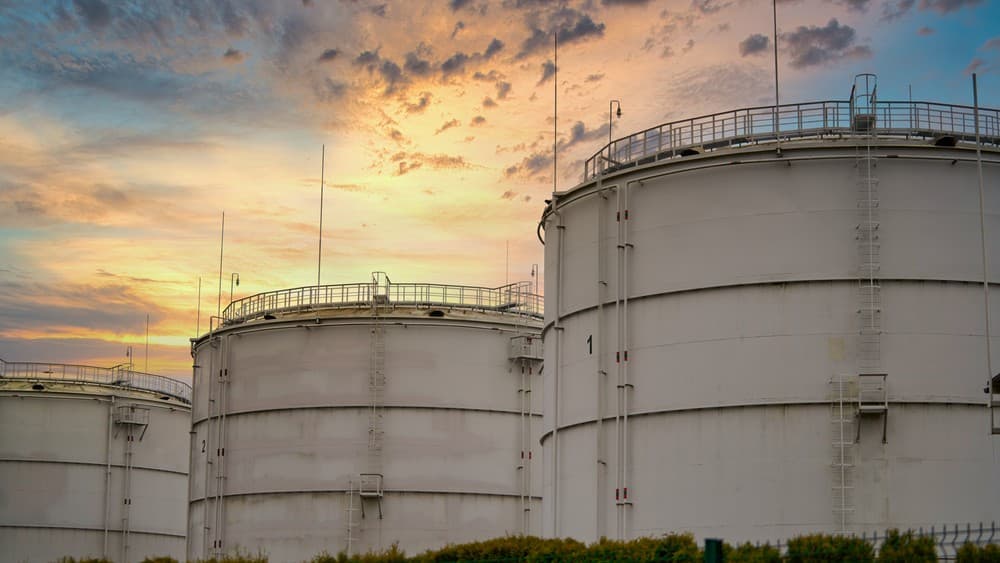
The global oil market is signaling a critical inflection point, with crude oil inventories plummeting towards historic lows amidst persistent geopolitical tensions in the Middle East. This tightening supply picture, exacerbated by significant production losses and disruptions to key transit routes, is setting the stage for a potentially robust bullish run for crude prices. Investors are keenly observing these dynamics, seeking clarity on future price trajectories as the fundamental supply-demand balance tilts precariously.
Inventory Levels Sound the Alarm for Supply Squeeze
Global crude oil stockpiles are currently approaching what analysts describe as record-low levels, a stark indicator of an undersupplied market. This concerning trend is primarily driven by the ongoing conflict in the Middle East, which has severely impacted tanker traffic through the critical Strait of Hormuz. Even under an optimistic scenario where transit flows improve by the end of April, commodity experts from leading financial institutions anticipate the decline in global oil inventories will persist well into May and potentially June. This prolonged inventory draw suggests that the market’s ability to absorb further supply shocks is diminishing rapidly, amplifying upward price pressure.
Geopolitical Fallout and Production Disruptions
The human and economic toll of the Middle Eastern conflict on oil supply has been substantial. Estimates from the head of the International Energy Agency (IEA), Fatih Birol, indicate that regional producers have already lost an estimated 13 million barrels per day (bpd) in crude oil output. When refined products are included, the total export slump is even more dramatic, reaching an estimated 20 million barrels. Compounding this, over 80 oil and gas facilities across the region have sustained damage, further crippling production capacity. Looking ahead, financial analysts are forecasting additional production losses; one institution projected an extra 2.3 million bpd would be lost in March alone. The year-over-year comparison paints an even grimmer picture: Middle Eastern oil production is down by a staggering 9.3 million bpd, representing a 57% supply squeeze compared to the previous year. This severe contraction underscores the depth of the challenge facing global energy markets.
Current Market Performance and Investor Focus
The market is already reflecting these supply concerns. As of today, Brent Crude is trading at $103.95, marking a 2.22% increase for the session, while WTI Crude stands at $98.46, up 2.17%. Gasoline prices have also seen an uptick, currently at $3.41, a 1.49% rise. This upward momentum is not a recent anomaly; our proprietary data reveals Brent Crude has trended significantly higher over the past two weeks, climbing from $94.75 on April 8th to $101.95 on April 27th, representing a robust 7.6% gain. The tightening market conditions are clearly reflected in these price movements. Investors are increasingly focused on what this means for future valuations, with our proprietary intent data showing a surge in questions regarding base-case Brent price forecasts for the next quarter, and the specific catalysts that could push Brent above the $120 threshold. The current geopolitical landscape and the sustained inventory depletion certainly align with a bullish sentiment.
The Long Road to Recovery and Future Catalysts
Bringing lost production back online is a monumental task, with analysts warning it could take months, if not years, to restore normal output rates. The IEA’s Birol specifically suggested that a full return to pre-conflict production levels in the Middle East could realistically take up to two years, with recovery timelines varying significantly by country; for instance, Iraq is expected to require substantially more time than Saudi Arabia. This extended recovery period implies that the current supply deficit is unlikely to be a short-term phenomenon. For investors navigating this complex environment, key upcoming events will offer crucial insights. Market participants should closely monitor the API Weekly Crude Inventory reports, scheduled for April 28th, May 5th, and May 12th, alongside the EIA Weekly Petroleum Status Reports on April 29th and May 6th. These releases will provide fresh data on inventory draws and refinery activity, offering direct indicators of supply-demand dynamics. Additionally, the Baker Hughes Rig Count on May 1st and May 8th, and the EIA Short-Term Energy Outlook on May 2nd, will offer broader perspectives on drilling activity and future supply projections, all of which will be critical for shaping the forward outlook for crude oil prices.


