Australia’s recent policy maneuvers in Queensland signal a pragmatic, two-pronged strategy to bolster national energy independence amidst ongoing global supply uncertainties. This approach, characterized by simultaneous investments in both nascent alternative fuels and traditional hydrocarbon extraction, presents an intriguing case study for energy investors tracking global supply dynamics and the evolving energy transition narrative. While the scale of these initiatives might seem modest on a global stage, they underscore a growing imperative for nations to secure domestic fuel supplies, influencing regional market stability and offering insights into broader investment themes.
Queensland’s Dual Energy Mandate: Biodiesel and Crude
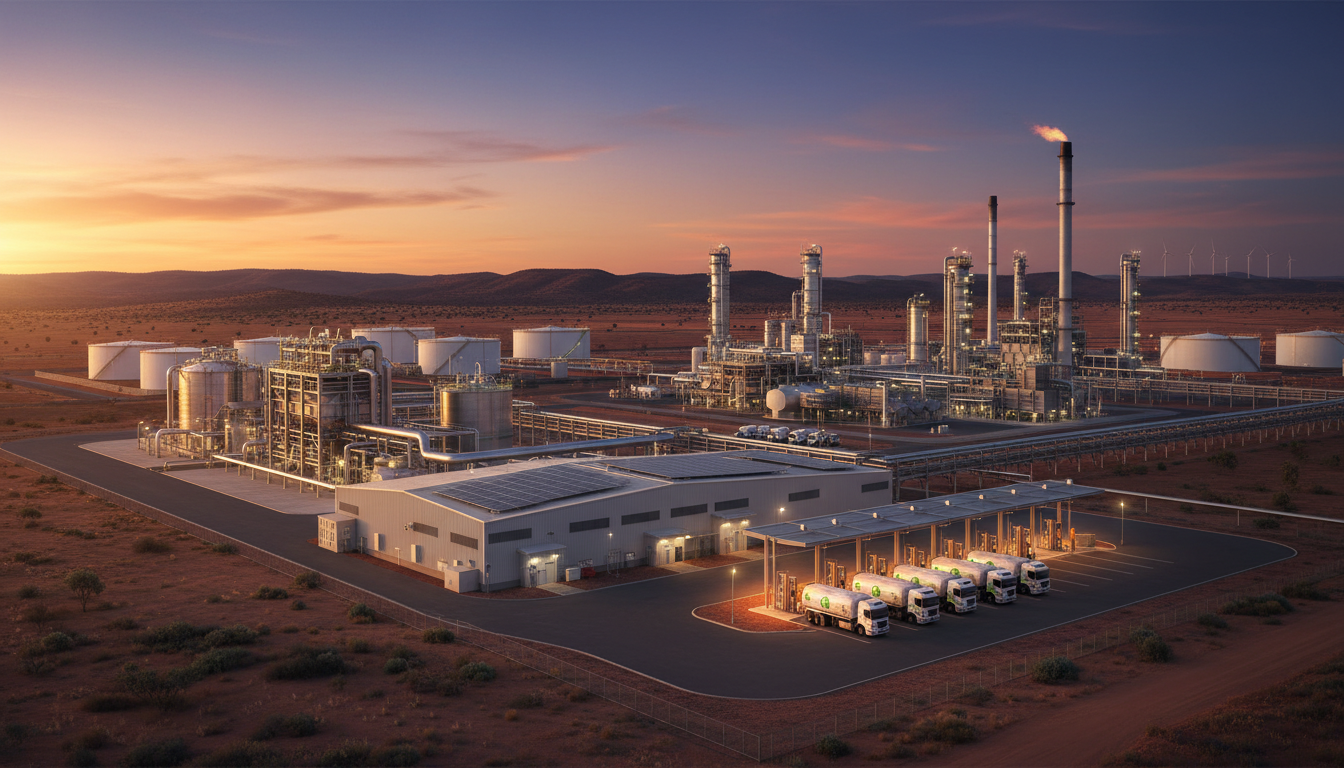
The state of Queensland has committed A$25 million, equivalent to approximately $18 million, towards a significant biodiesel production project. This initiative aims to produce 20 million liters of biodiesel annually at a local refinery, with operations projected to commence in 2028. Translating this volume, it represents about 2,000 tons or roughly 125,000 barrels of crude oil equivalent per year. This strategic investment is driven by a clear objective: to diminish reliance on imported fuels, particularly in light of recent geopolitical disruptions impacting global supply chains. However, for investors assessing immediate impact, it’s crucial to note that this planned capacity constitutes only about one-tenth of Australia’s current daily oil consumption, indicating its role is more about long-term diversification and strategic resilience than immediate supply transformation.
Concurrently, Queensland is actively championing the acceleration of conventional oil development. The state government has thrown its full support behind the Taroom Trough project, located west of Brisbane, urging Australia’s federal government to fast-track its approval through the National Interest Fast-Track Assessment Pathway. This project marks a pivotal moment, as it represents the first new oil development in the country in half a century. Initial barrels are already entering the domestic supply chain, with Shell producing 200 barrels of crude oil per day, which is then refined into diesel at iOR’s Eromanga refinery. Diesel is a cornerstone of the Australian economy, especially for its vast agricultural sector. This “all-of-the-above” strategy highlights a recognition that while future energy landscapes may evolve, current economic stability hinges on reliable, accessible fuel sources.
Current Market Dynamics and Investor Focus
The Australian policy shifts arrive against a backdrop of elevated and volatile crude prices, a key concern for investors. As of today, Brent Crude trades at $103.95, marking a 2.22% increase within the day’s range of $101.6 to $104.11. Similarly, WTI Crude stands at $98.46, up 2.17% from its daily low of $96.24, while gasoline prices are at $3.41, up 1.49%. This upward trend is not isolated; Brent has seen a significant 7.6% surge over the past 14 days, climbing from $94.75 to $101.95. This sustained upward pressure underscores the persistent supply concerns exacerbated by geopolitical tensions.
Our proprietary reader intent data reveals a keen interest among investors in understanding the drivers behind these price movements and forecasting future trajectories. Many are asking for a base-case Brent price forecast for the next quarter, and what factors could push Brent above $120 or below $80. While Australia’s domestic production increases are relatively small, they contribute to the broader narrative of global supply augmentation. Projects like Taroom Trough, even at modest initial volumes, signal a commitment to maximizing conventional energy output where feasible, providing some counter-pressure against supply deficits. This focus on immediate supply security, even as long-term questions like the impact of EV adoption on oil demand persist, indicates that near-term energy availability remains a dominant investment theme.
Forward-Looking Catalysts and Supply Outlook
The strategic moves in Australia, while locally focused, resonate with broader global energy market dynamics. For investors, monitoring upcoming data releases will be crucial in assessing the overall supply-demand balance. The API Weekly Crude Inventory report on April 28th and May 5th, alongside the EIA Weekly Petroleum Status Report on April 29th and May 6th, will offer critical insights into U.S. crude and product inventories. These reports are often market movers, reflecting the immediate health of the largest consuming nation.
Further shaping the forward outlook will be the Baker Hughes Rig Count on May 1st and May 8th, providing a gauge of future production activity. Perhaps most significantly, the EIA Short-Term Energy Outlook, due on May 2nd, will offer a comprehensive official forecast for global and domestic energy markets, potentially incorporating the cumulative effect of various nations’ efforts to secure their energy supplies. While Australia’s biodiesel project has a longer horizon, its 2028 start date means its influence is more on long-term investment strategies in renewables. However, the accelerated approval process for Taroom Trough could bring more conventional crude online sooner, offering a tangible, albeit limited, boost to supply in the medium term. These events, taken together, will provide the analytical framework for investors to refine their energy portfolio strategies in the coming weeks and months, balancing the immediate demands of energy security with the evolving landscape of the energy transition.


