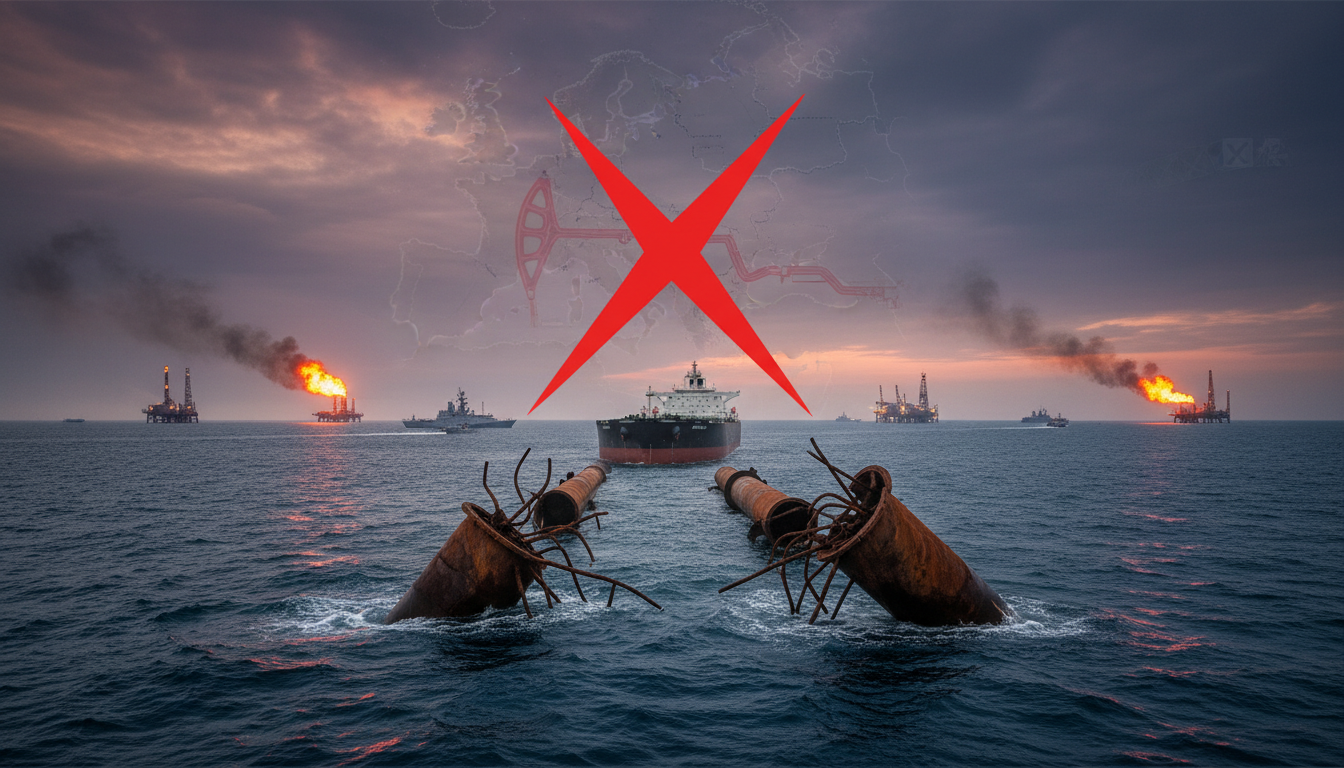
The global energy landscape is undergoing a profound structural shift, driven by escalating geopolitical tensions in the Middle East. The International Energy Agency (IEA) has issued a stark warning through its Executive Director, Fatih Birol: the Strait of Hormuz, long considered the world’s most critical oil chokepoint, can no longer be seen as a reliable artery for global oil and gas supply. This declaration marks a pivotal moment for energy investors, signaling a new era of heightened supply risk and sustained market volatility. As of today, Brent crude trades at $100.99, marking a +1.88% gain within the day’s range of $99.99-$101.71, while WTI crude stands at $95.92, up +1.61% from its daily low of $94.99. These price points underscore a market already sensitive to supply disruptions, digesting the IEA’s assessment of a fundamentally altered risk profile for a major portion of global crude exports.
Hormuz: A Chokepoint Unreliable, A Market Redrawn
Birol’s unequivocal statement that the Strait of Hormuz has lost its status as a dependable energy export route represents a re-evaluation of fundamental geopolitical risk. This isn’t merely a temporary disruption; it’s a systemic change that promises to redraw the global energy map. The IEA’s latest monthly report vividly illustrates the immediate impact: global oil supply plummeted by an astonishing 10.1 million barrels per day in March, settling at 97 million bpd. This dramatic decline, attributed to attacks on Middle Eastern energy infrastructure and severe restrictions on tanker movements through the Strait, constitutes the largest supply disruption in recorded history. For investors, this data point is critical – it quantifies the vulnerability of the current supply chain and highlights the immediate price premium embedded in crude benchmarks like Brent and WTI, which have seen Brent climb from $94.75 on April 8th to $101.28 by April 26th, a significant 6.9% increase over two weeks.
The Long Road to Recovery and Persistent Volatility
The IEA’s outlook for a return to pre-war output levels is sobering, projecting a recovery period of up to two years. This extended timeline implies sustained market tightness and elevated prices for the foreseeable future. Birol emphasized that the pace of recovery would vary significantly across nations; for instance, Iraq is expected to require substantially more time to restore its production capabilities compared to Saudi Arabia. Such disparities introduce complex regional investment considerations and highlight the varying risk exposures of companies operating in different parts of the Middle East. Birol’s assertion that “there is no magic wand that will immediately normalize the markets” reinforces our analysis that the era of expecting quick fixes to supply shocks is over. Investors should brace for a prolonged period where high prices and significant market volatility become the new normal, even if direct conflict were to subside. The global economy’s critical dependence on a single strait, as Birol noted, is indeed “becoming history,” necessitating a re-evaluation of energy security strategies.
Navigating Investor Concerns and Price Forecasts
Our proprietary reader intent data reveals investors are actively seeking guidance on future price trajectories, asking critical questions like, “What would push Brent below $80? What would push it above $120?” and requesting a “base-case Brent price forecast for next quarter.” Given the IEA’s assessment of Hormuz reliability, our base-case for Brent in the next quarter leans towards sustained upward pressure, with the $100 psychological barrier now firmly breached. A push above $120 could materialize rapidly with any further escalation of Middle East tensions or sustained disruptions through the Strait, as the market recalibrates for diminished reliable supply. Conversely, a retreat below $80 would require a confluence of factors: a dramatic and sustained de-escalation of regional conflict, a significant global economic slowdown impacting demand, or a major surge in non-OPEC+ supply, particularly from the Americas, which currently seems unlikely to fully offset the Mideast risk premium. The elevated gasoline prices, currently at $3.38 per gallon, up 1.5% today, reflect these upstream pressures translating directly to the consumer and refining margins. Investors must consider these dynamics, balancing immediate supply risks with longer-term shifts such as the impact of EV adoption on long-term oil demand, a question frequently posed by our readership, which while relevant, offers little solace for the immediate supply crunch.
Upcoming Catalysts and Strategic Positioning
In this volatile environment, closely monitoring key data releases and upcoming events is paramount for informed investment decisions. The next two weeks offer several critical data points: the API Weekly Crude Inventory reports on April 28th and May 5th, followed by the EIA Weekly Petroleum Status Reports on April 29th and May 6th. These releases will provide crucial insights into U.S. crude stocks, refining activity, and product demand, offering a real-time pulse on global supply-demand balances in the wake of the Hormuz disruption. Furthermore, the Baker Hughes Rig Count on May 1st and May 8th will shed light on North American drilling activity, indicating potential for future supply growth. Perhaps most importantly, the EIA Short-Term Energy Outlook (STEO) due on May 2nd will offer updated forecasts on global oil supply, demand, and prices, incorporating the latest geopolitical realities. Investors should analyze these reports for any signs of demand destruction or, more likely, persistent inventory draws that would further underscore the IEA’s warning. Strategic positioning in this market demands an acute awareness of these data releases, alongside a robust understanding of the increased geopolitical risk premium now firmly embedded in oil prices.


