By OilMarketCap.com Staff – April 17, 2026
U.S. Drilling Activity Retreats as Geopolitical Flare-Up Slams Oil Prices
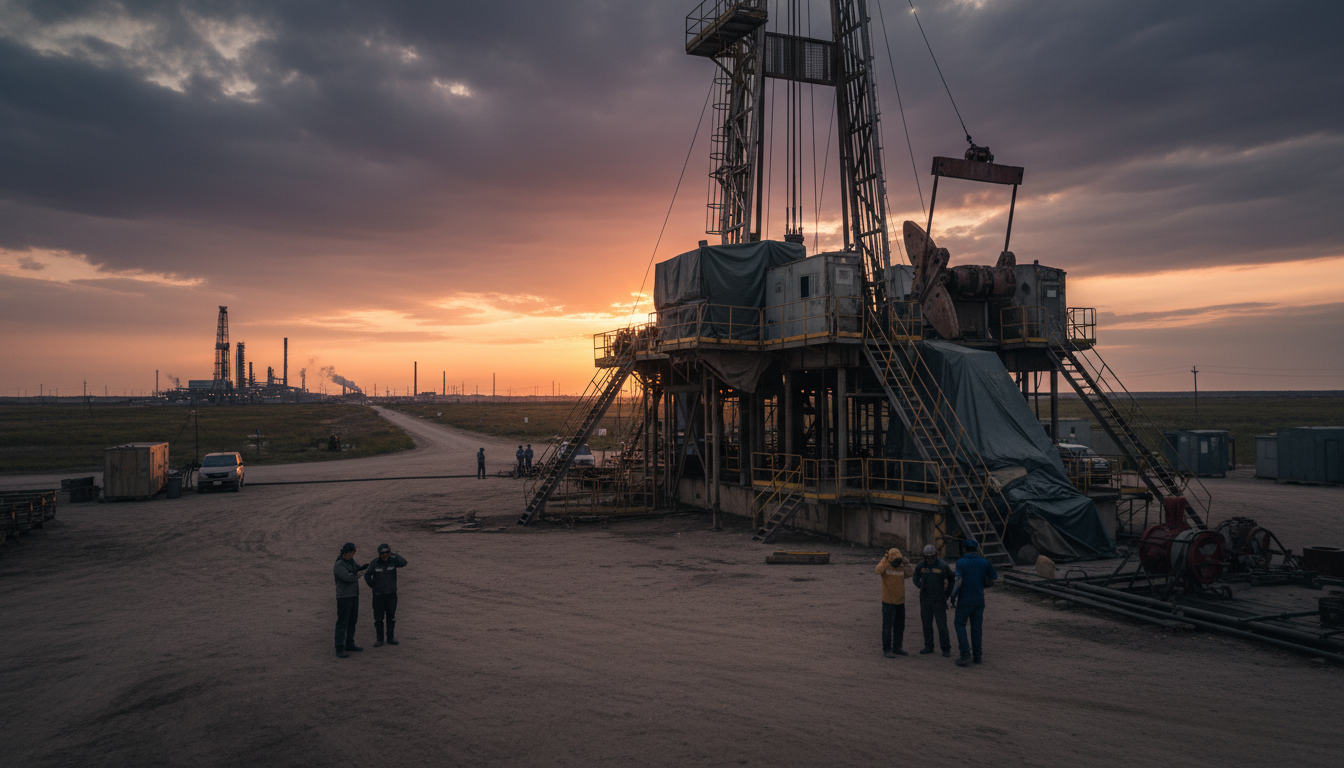
The latest market intelligence reveals a continued retrenchment in U.S. upstream activity, with the national count of active drilling rigs for oil and gas registering a notable decline this past week. According to Baker Hughes’s Friday publication, the total operational rig count across the United States now stands at 543, marking a significant decrease of 42 rigs compared to the same period last year. This contraction in drilling capacity unfolds amidst a dramatic downturn in global crude prices, triggered by a critical geopolitical development in the Middle East.
Rig Count Dynamics: A Closer Look at Oil and Gas Activity
Investors closely monitor drilling rig figures as a leading indicator of future production trends and capital expenditure in the energy sector. In the most recent reporting cycle, the active oil rig tally experienced a marginal dip of one unit, settling at 410. This figure positions the current oil rig count 63 rigs below its level a year ago, underscoring a persistent trend of cautious investment or strategic recalibration by producers. The narrative for natural gas rigs also points to a downward trajectory, with a two-rig reduction following a similar decline in the preceding week. The U.S. now operates 125 gas rigs, a noteworthy increase of 19 rigs from this time last year, suggesting a targeted shift in some drilling efforts towards gas-rich plays despite the recent weekly slide. Furthermore, miscellaneous rig operations observed a slight expansion, adding one unit to reach a total of eight.
U.S. Crude Production Holds Steady, Frac Activity Ramps Up
While drilling numbers demonstrate a retreat, U.S. crude oil production figures from the Energy Information Administration (EIA) present a different picture for the week ending April 10. Domestic crude output maintained a steady pace, averaging 13.596 million barrels per day. This consistent production level positions the U.S. just 266,000 barrels per day shy of its all-time peak, showcasing the industry’s remarkable efficiency and resilience in maintaining high output even with fewer active drill bits. Complementing this production stability, Primary Vision’s Frac Spread Count, a vital metric for well completions, demonstrated robust growth. The number of crews actively bringing new wells online surged by five in the week ending April 10, building on an impressive seven-crew gain from the prior week. This uptick in fracking activity suggests operators are diligently working through their inventory of drilled but uncompleted (DUC) wells, ensuring a steady stream of new crude and natural gas to market even as the pace of new drilling slows.
Regional Spotlights: Permian and Eagle Ford Basins
Key North American shale basins continue to serve as bellwethers for the broader industry. In the prolific Permian Basin, the active rig count remained unchanged this week at 242. However, this stability masks a year-over-year reduction of 47 rigs, reflecting the ongoing emphasis on capital discipline and optimized drilling programs within this vital region. Meanwhile, the Eagle Ford Shale experienced a marginal contraction, with its rig count falling by one to 42. This figure is also five rigs lower than its year-ago counterpart, indicating a similar trend of reduced drilling intensity in another one of the nation’s premier hydrocarbon provinces. These regional dynamics provide critical insights into where producers are concentrating their resources and adapting to current market conditions.
Geopolitical Shockwave: Strait of Hormuz Reopening Triggers Steep Oil Price Drop
The stability in production data and nuanced rig count shifts were overshadowed by a dramatic turn in global oil markets on Friday. Brent crude prices plummeted by a staggering 10.46%, trading at $88.99 per barrel. This sharp decline reflects an immediate and forceful market reaction to Iran’s announcement of the reopening of the Strait of Hormuz, a critical maritime chokepoint that had been effectively closed for several weeks. The news, suggesting an imminent easing of concerns surrounding tanker transit and global oil supply routes, immediately alleviated market anxiety that had been propping up prices. Although Brent saw some upward movement earlier in the day, the overarching impact of the announcement pushed it down by more than $8 per barrel from its valuation just a week prior. West Texas Intermediate (WTI) crude, the U.S. benchmark, mirrored this downward pressure, trading sharply lower on the day at $83.24 per barrel. While the practicalities of immediate, confident tanker passage through the Strait may take time to normalize, the market’s instant pricing mechanism clearly discounted the geopolitical risk premium that had built up. Investors must now recalibrate their risk assessments, weighing the implications of restored shipping lanes against other supply-demand fundamentals.
Navigating the Volatility: Investor Outlook
For investors in the oil and gas sector, the confluence of these events presents a complex landscape. The declining rig count, particularly for oil, suggests that future production growth from new drilling might temper, potentially supporting prices in the medium term. However, this is counterbalanced by robust existing production and an active completions sector working through DUC inventories. The sudden and significant drop in crude prices due to geopolitical de-escalation underscores the profound sensitivity of energy markets to global events. While a reopened Strait of Hormuz is fundamentally bullish for global trade and supply, the immediate price impact highlights how quickly sentiment can shift. Market participants will be closely watching for sustained stability in the Strait, further production data, and any indications of OPEC+ strategy adjustments to guide their investment decisions in this volatile environment. Adaptability and a keen eye on both fundamental and geopolitical drivers will be paramount for successful navigation of the energy market in the weeks ahead.