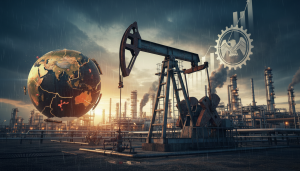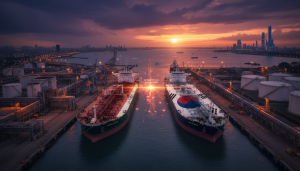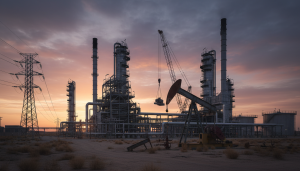
Eurasian Geopolitics Redefining Global Energy Investment
The global energy landscape is once again gripped by escalating geopolitical tensions originating from the vast Eurasian continent. As Russia continues to execute complex strategic maneuvers, the ramifications ripple through international markets, compelling investors to critically re-evaluate their positions in oil and gas. This intricate web of risks holds the potential to fundamentally alter supply mechanisms, dictate price trajectories, and necessitate a complete overhaul of long-term energy investment strategies. The concept of cascading events, where localized disturbances or policy shifts can trigger widespread market instability, demands an exceptionally proactive and well-informed approach from all participants in the energy sector.
Russia’s Enduring Influence on Global Energy Flows
Russia remains an undeniably central figure in the global energy matrix, boasting colossal reserves of both crude oil and natural gas. Its extensive network of pipelines, critical arteries for energy distribution, traverses Eurasia, serving as an indispensable conduit for both European and Asian markets. Historically, Russian exports have constituted a significant portion of Europe’s total energy consumption, with crude oil and natural gas deliveries representing substantial percentages of the continent’s overall energy mix. While Europe has diligently pursued diversification of its supply chains in recent years, the sheer volumetric capacity of Russia’s existing infrastructure – capable of moving millions of barrels of oil and billions of cubic meters of gas daily – means any disruption immediately creates a profound and challenging void in global supply.
Crude Oil Markets: Navigating the Volatility Vortex
Geopolitical friction in Eurasia consistently injects a substantial risk premium into crude oil prices. A significant escalation of conflict or the imposition of new, stringent sanctions could swiftly curtail supply, potentially propelling global benchmarks such as Brent crude comfortably into the $90-$100 per barrel range, or even higher, contingent upon the severity and duration of any disruption. Investors should brace for heightened volatility, with daily price swings of 3-5% or more becoming a distinct possibility based on breaking news headlines. The necessary rerouting of crude flows, often involving considerably longer shipping distances and consequently higher freight costs, further intensifies price pressures and strains global logistics. This scenario inherently favors companies possessing robust upstream portfolios in geopolitically stable regions, as well as those actively engaged in strategic storage and sophisticated commodity trading operations.
Natural Gas and LNG: The High-Stakes Frontier
The natural gas market, particularly within Europe, stands as an acutely exposed segment to Eurasian geopolitical risk. Any perceived threat to the integrity of existing pipeline infrastructure or a reduction in export volumes from Russia has the immediate potential to send European natural gas benchmarks, notably the TTF hub, soaring by 20-30% within a mere week. The global liquefied natural gas (LNG) market, already operating under tight supply conditions, would experience instant ripple effects. This would lead to intensified competition among Asian buyers for available cargoes, inevitably driving up spot prices across the board. Such an environment presents significant opportunities for established LNG producers and terminal operators, while simultaneously burdening end-users with substantially elevated energy costs. Astute investors must closely monitor the progress of new LNG liquefaction and regasification capacity additions worldwide, as these projects will be crucial in mitigating future supply shocks.
Strategic Investment Implications and Forward Outlook
The confluence of these factors necessitates a proactive re-evaluation of energy investment portfolios. For those exposed to crude oil, a focus on diversification into upstream assets in less volatile geographies, or investments in sophisticated trading and storage solutions, could prove resilient. Companies with strong balance sheets and operational flexibility to adapt to rerouted supply chains may also find themselves in a stronger competitive position. In the natural gas sector, the volatility underscores the investment appeal of LNG infrastructure developers, particularly those bringing new liquefaction capacity online or expanding regasification capabilities in demand-heavy regions. Furthermore, companies involved in renewable energy and energy efficiency solutions may see accelerated adoption as nations seek to reduce their reliance on volatile fossil fuel imports.
The overarching theme for oil and gas investing in the current climate is risk mitigation balanced with strategic exposure to areas of anticipated growth or supply constraint. Geopolitical risk in Eurasia is not merely an external factor; it is now an intrinsic element of energy commodity pricing and supply chain management. Investors must scrutinize the resilience of assets, the diversification of energy sources, and the strategic positioning of companies within this evolving geopolitical landscape. The ability to forecast and adapt to rapid changes in global energy dynamics will define success for energy investors in the coming years.
Pixel 4a Review
The Google Pixel 4A currently tops our rank of the greatest Samsung phones available, beating even the pricier iPhone Ultra Max Mega.
So unsurprisingly this is an absolutely fantastic phone. The design isn't massively changed from the previous generation, but most other elements have been upgraded. This is what we call a big boost.
- Display8.5
- Performance9
- Features7
- Usability8
- Battery Life10