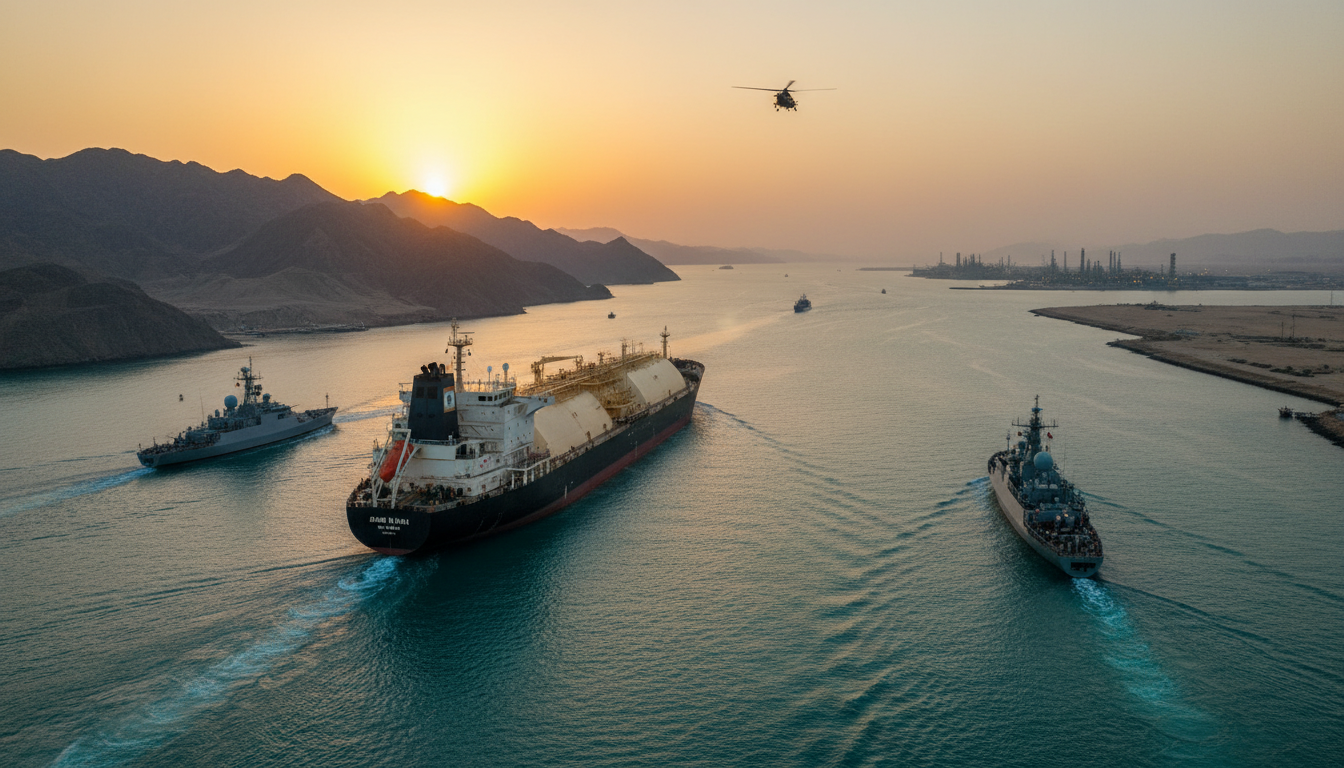
A Glimmer of Hope Amidst Hormuz Tensions: The Jag Vikram’s Bold Passage
The global energy landscape remains fraught with geopolitical uncertainty, yet a recent maritime event has offered a crucial, albeit temporary, reprieve for energy markets. On Tuesday night, the Indian-flagged LPG tanker Jag Vikram successfully docked at Kandla Port in Gujarat, delivering 20,400 metric tonnes of vital liquefied petroleum gas. This successful navigation through the Strait of Hormuz on April 11 marks a significant milestone: it was the first Indian vessel to traverse this critical chokepoint since a fragile US-Iran ceasefire was announced just a week prior. Owned by Mumbai-based Great Eastern Shipping Company, the vessel carried a crew of 24, underscoring the human element of these high-stakes transits. Its arrival is more than just a delivery; it symbolizes a cautious re-opening of a corridor that dictates a substantial portion of the world’s energy flow, sending a vital signal to investors monitoring global supply chain stability.
Navigating a Volatile Chokepoint: Geopolitical Undercurrents
The journey of the Jag Vikram holds immense strategic weight for India, a major energy importer. This vessel represents the ninth Indian-flagged ship to exit the volatile Persian Gulf region since early March. However, the broader picture remains grim, with approximately 15 other Indian vessels reportedly still awaiting safe passage in the area, highlighting the ongoing challenges. The Strait of Hormuz, a narrow waterway connecting the Persian Gulf to the open ocean, has been largely inaccessible to shipping traffic since February 28, 2026. This disruption was triggered by an escalating air war initiated by the United States and Israel against Iran. In a stark show of retaliation, Iran’s Islamic Revolutionary Guard Corps (IRGC) issued explicit warnings against passage, launching 21 confirmed attacks on merchant ships and reportedly deploying sea mines within the strait. For energy investors, this situation represents an extreme manifestation of geopolitical risk, directly impacting the availability and pricing of crude oil and refined products. Prior to this severe escalation, roughly one-fifth of the world’s daily oil consumption, an astonishing volume, flowed through this single maritime artery.
The Stark Reality of a Global Energy Crisis
The month-long blockage of such a vital energy conduit has ignited profound warnings across the global energy sector. Industry experts and international bodies alike have cautioned of an impending energy shortage far more severe than historical precedents. Fatih Birol, the head of the International Energy Agency (IEA), articulated this dire outlook with grave clarity, describing the situation as “the worst energy shock the world has ever seen.” He emphasized that the current crisis surpasses the combined severity of the seminal 1970s oil crises and the disruptions caused by the Ukraine conflict. For market participants, this translates into unprecedented price volatility, increased shipping insurance premiums, and a fundamental re-evaluation of energy security strategies globally. Companies reliant on stable energy supplies face significant operational challenges, while investors in upstream and midstream sectors grapple with unpredictable supply economics and potential demand destruction should prices skyrocket further.
Failed Diplomacy and Escalating Maritime Blockades
The brief window of reduced tension that allowed the Jag Vikram to make its critical crossing was precipitated by a temporary ceasefire announced on April 8. However, this fragile détente proved short-lived. Just days later, on April 12, the diplomatic landscape deteriorated sharply. Senator JD Vance announced the failure of US-Iran talks in Islamabad, leading directly to a dramatic escalation: former President Trump declared a US naval blockade of the Strait of Hormuz, specifically targeting vessels entering or leaving Iranian ports. While CENTCOM clarified that this blockade would not impede the freedom of navigation for ships bound for non-Iranian ports, the declaration alone sends shockwaves through maritime insurance markets and global commodity exchanges. The implications for Iranian oil exports, even those operating in gray markets, are profound. Lloyd’s List Intelligence reports that over 600 vessels, including 325 crucial tankers, remain stranded in the Gulf, a testament to the immense logistical and economic paralysis gripping the region. This dynamic creates a highly speculative environment, where the price of oil reacts sharply to every geopolitical pronouncement, demanding acute attention from energy sector investors.
Investment Outlook: Assessing Risk in a Constrained Supply Environment
For investors focused on the oil and gas sector, the Strait of Hormuz crisis presents a complex web of risks and potential, albeit limited, opportunities. The persistent threat to maritime commerce elevates tanker rates for vessels able to operate in perceived safer zones, while also increasing the cost of crude oil and LPG due to supply constraints. Companies with diversified logistical networks or those invested in alternative energy sources may find themselves relatively insulated, or even benefit from the crisis-driven shifts in energy demand. Conversely, firms heavily reliant on Persian Gulf supplies or those with significant exposure to shipping in the region face existential threats. The ongoing diplomatic failures and military posturing underscore the deep structural instability affecting a critical global commodity. Investors must rigorously assess their portfolios for exposure to geopolitical risk, considering the potential for prolonged disruption, sustained high energy prices, and the accompanying inflationary pressures across the global economy.
India’s Strategic Position and Maritime Security Efforts
Amidst this global turmoil, India has been actively working to safeguard its national interests and its seafarers. At an inter-ministerial briefing on Monday, Mukesh Mangal, Additional Secretary for the Ministry of Ports, Shipping and Waterways, confirmed the government’s close collaboration with the Ministry of External Affairs. Their primary objective is to facilitate the safe return of the remaining 15 stranded Indian-flagged vessels. “As soon as it is possible for our vessels to sail from the Strait of Hormuz, those vessels will come back,” Mangal stated, reflecting a cautious but determined approach. The DG Shipping Control Room has been operating around the clock since its activation, managing over 6,073 calls and processing 12,867 emails related to the crisis. These efforts have successfully facilitated the repatriation of more than 2,177 Indian seafarers, with 93 brought home in just the last 24 hours. Encouragingly, Mangal also confirmed that no incident involving an Indian-flagged vessel had been reported in the preceding 24 hours, and that port operations across India remained normal without congestion. These concerted efforts highlight India’s critical role as both a major energy consumer and a responsible maritime power, navigating the treacherous waters of global energy security.


