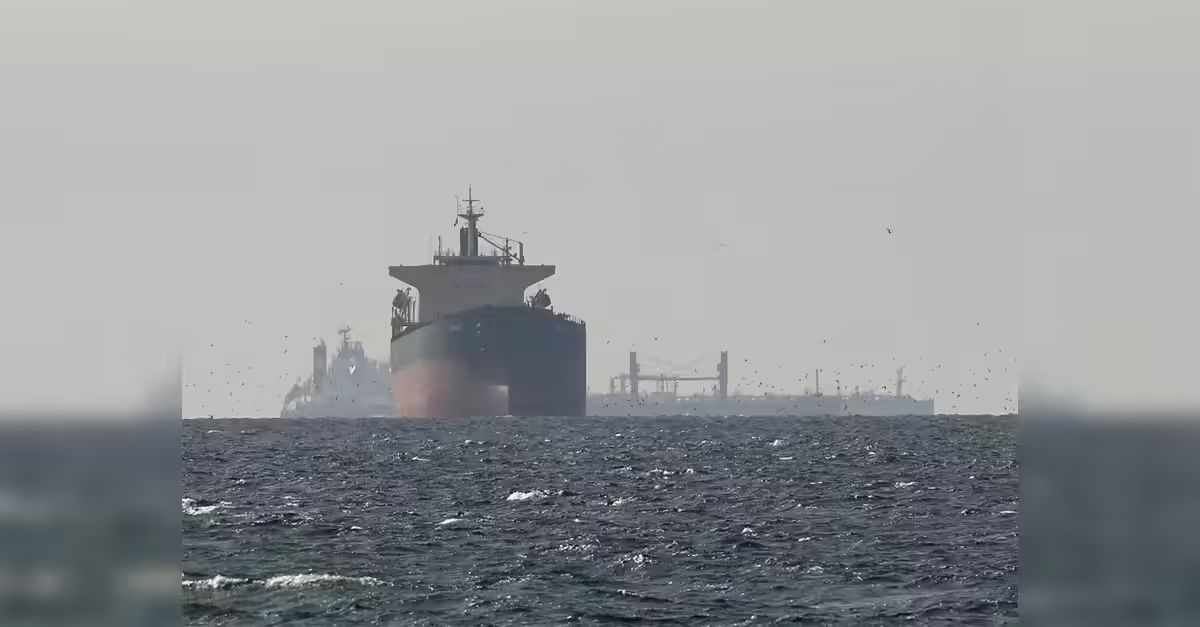
The global oil market is once again gripped by acute uncertainty following the United States’ implementation of a naval blockade on Iranian ports. This assertive action, coupled with Tehran’s immediate threat of severe retaliation across the Gulf, has ignited a fresh crisis for energy cargo movements and sent ripples of anxiety through the investor community. As geopolitical tensions escalate, the risk of significant supply disruptions and further price volatility becomes a tangible reality, demanding vigilant analysis from all market participants.
Geopolitical Escalation and Immediate Market Volatility
The US naval blockade directly targeting Iranian ports and coastal areas represents a significant hardening of Washington’s stance, moving beyond earlier threats to encompass the entire Strait of Hormuz. This confrontational posture immediately followed the breakdown of weekend negotiations in Islamabad, where a temporary ceasefire agreement failed to solidify into a lasting resolution. Iran’s defiant response, warning that “no port in the region will be safe,” underscores the perilous environment now facing all maritime traffic in the Persian Gulf, a critical artery for global energy flows.
Investors have reacted swiftly to this heightened risk. As of today, Brent crude trades at $95.19 per barrel, marking a substantial 5.32% increase within the day, with prices fluctuating between $92.77 and $97.81. This surge is mirrored in West Texas Intermediate (WTI) crude, which has climbed to $87.05 per barrel, up 5.4%. These movements highlight the market’s sensitivity to perceived supply threats. While today’s jump is significant, it’s crucial to place it in recent context: Brent crude had seen a steep decline over the past two weeks, falling by nearly 20% from $112.78 on March 30th to a recent low of $90.38 on April 17th. The current price point of $95.19 signals a sharp reversal from that downward trend, driven purely by geopolitical fear premium returning to the market. Even gasoline prices are feeling the heat, rising to $3.04, up 3.75% for the day, indicating broader energy market concern.
Supply Chain Under Siege: Global Implications and India’s Quandary
The direct consequence of an effective blockade is the removal of a substantial volume of crude oil from global circulation. Analysts estimate that blocking Iranian exports could immediately strip approximately 1.5 million barrels per day (bpd) from the market. This is a considerable figure in a tightly balanced global supply landscape and would exacerbate any existing supply deficits, pushing prices higher still.
Beyond the headline figures, the blockade creates immediate logistical nightmares. India, in particular, finds itself in a precarious position. Having recently capitalized on a temporary easing of US sanctions to secure significant volumes of Iranian crude and liquefied petroleum gas (LPG), many Indian-bound cargoes are now at risk. While some shipments successfully arrived prior to the blockade’s announcement, numerous tankers awaiting loading or departure from Iranian ports now face the distinct possibility of being stranded indefinitely. Industry executives view the targeting of Iranian coastal facilities as a clear escalation that could undermine the previously declared two-week ceasefire, further stifling energy flows crucial to India’s economy. Reports indicate that around 15 India-flagged vessels, alongside several foreign-flagged carriers destined for India, remain ensnared in the Gulf. While Indian authorities have managed to coordinate the movement of nine LPG carriers out of the region, the broader challenge for crude remains critical. Although India’s petroleum ministry has expressed confidence in New Delhi’s supply comfort, the sustained disruption of 1.5 million bpd would undoubtedly test the resilience of any nation’s energy security strategy.
Furthermore, the risks extend beyond Iranian-flagged or Iranian-destination vessels. Tehran’s warning that “no port in the region will be safe” suggests a potential hardening of its stance on transit through the Strait of Hormuz for *all* vessels, including those loaded at non-Iranian ports within the Persian Gulf. This broader threat could impact a much wider array of global energy shipments, creating an even more pervasive choke point for international trade.
Navigating Future Catalysts and Addressing Investor Concerns
The current geopolitical landscape demands that investors remain acutely aware of upcoming market catalysts that could either exacerbate or alleviate present anxieties. Critical events on the immediate horizon include the OPEC+ Joint Ministerial Monitoring Committee (JMMC) Meeting scheduled for today, April 20th, followed by the full OPEC+ Ministerial Meeting on April 25th. These meetings will be pivotal. Will the cartel consider adjusting output quotas in light of the potential 1.5 million bpd supply loss from Iran? Any indication of increased production could temper price increases, while a decision to maintain current levels could signal confidence in the market’s ability to absorb the shock or, conversely, exacerbate the supply crunch if the blockade persists.
Beyond OPEC+, investors will be closely monitoring weekly data releases. The API Weekly Crude Inventory report on April 21st and the EIA Weekly Petroleum Status Report on April 22nd will provide crucial insights into US supply and demand dynamics, offering a snapshot of how current market conditions are impacting inventories. The Baker Hughes Rig Count on April 24th will also shed light on North American production trends, a key factor in global supply. These data points, while not directly addressing the geopolitical crisis, offer vital context for understanding the broader supply-demand equilibrium.
Our proprietary reader intent data reveals that investors are grappling with significant uncertainty, with questions like “Is WTI going up or down?” dominating sentiment. There’s also a strong focus on longer-term price trajectory, with many asking, “What do you predict the price of oil per barrel will be by the end of 2026?” The current blockade throws a major variable into all such predictions. In the short term, the bias remains firmly to the upside given the immediate supply threat. However, the duration and intensity of the blockade, as well as the nature of any Iranian retaliation, are unknown. For the longer term, the specter of continued geopolitical instability in the Gulf could bake in a higher risk premium for crude prices, impacting investment decisions across the upstream sector and influencing capital allocation for years to come. Market participants must meticulously track these developments, as the risk-reward profile for energy investments has fundamentally shifted.


