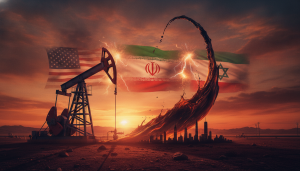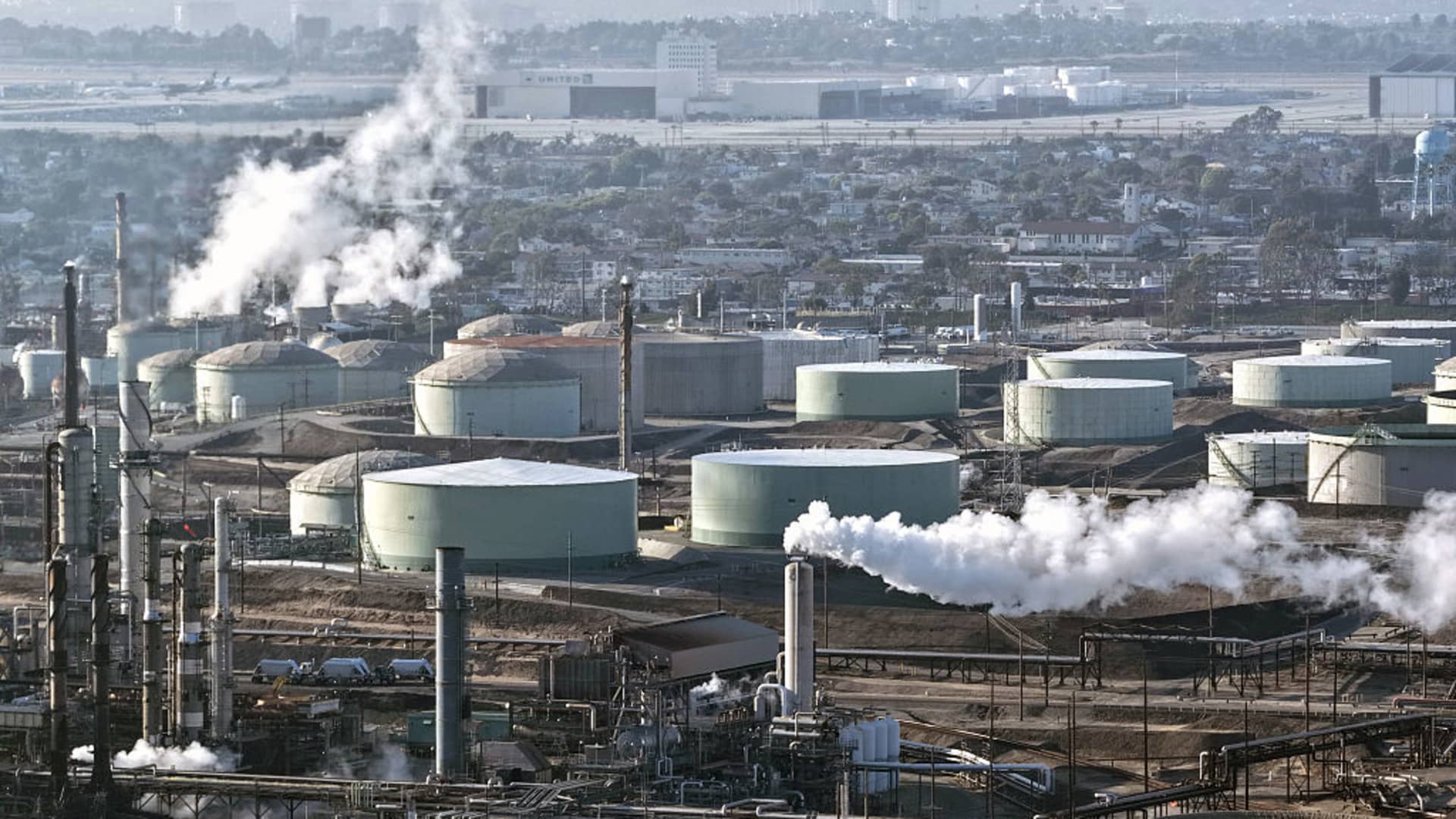
The global oil market finds itself at a critical juncture, navigating the treacherous waters between heightened geopolitical risk and the ever-present specter of diplomatic solutions. Recent developments in the Persian Gulf, particularly concerning Iranian shipping lanes, have injected a fresh wave of volatility into crude prices. Investors are keenly watching how the delicate balance between potential supply disruptions and ongoing peace efforts will dictate the trajectory of energy markets in the coming weeks and months. Our analysis leverages proprietary market data and forward-looking insights to provide a clear perspective on these defining forces.
Current Market Dynamics Reflecting Heightened Tensions
Today’s trading session underscores the market’s sensitivity to geopolitical undercurrents. As of today, Brent crude is trading at $95.32 per barrel, marking a significant 5.47% increase, with its intraday range spanning $92.77 to $97.81. Similarly, West Texas Intermediate (WTI) crude has seen a robust rally, currently priced at $87.23 per barrel, up an impressive 5.62%, after trading between $85.45 and $89.60. This upward momentum contrasts sharply with the recent 14-day trend, where Brent crude had experienced a substantial decline, falling from $112.78 on March 30th to $90.38 by April 17th. This sharp rebound suggests that while underlying concerns about demand or broader economic factors may have driven the earlier downturn, the immediate market reaction is now dominated by supply-side risk premium. Gasoline prices are also reflecting this upward pressure, currently at $3.04, up 3.75% today. The sudden surge indicates that traders are re-evaluating risk, particularly in light of the unfolding situation in the Strait of Hormuz, quickly repricing crude to account for potential supply disruptions.
The Strait of Hormuz: A Supply Chokepoint Under Pressure
A major catalyst for the recent market volatility stems from the U.S. commencement of a blockade targeting Iranian ports in the Persian Gulf. This action, initiated on Monday, follows President Donald Trump’s earlier declaration of an intent to blockade the vital Strait of Hormuz, signaling a notable escalation after a two-week ceasefire. While United States Central Command later clarified that these measures would apply specifically to vessels entering or exiting Iranian ports and coastal zones, the implications for global oil supply are significant. According to analysis from Commonwealth Bank of Australia’s Vivek Dhar, such a blockade “directly endangers” Iran’s critical oil exports, which were recorded at approximately 1.7 million barrels per day last month. This substantial volume, primarily transported through the Strait of Hormuz, is now at heightened risk, tightening an already sensitive physical oil and refined product market. For investors, the potential for even a partial disruption of this flow translates directly into upward pressure on crude benchmarks, as the market grapples with the prospect of reduced availability.
Diplomacy’s Role and Investor Outlook
Amidst the escalating tensions, diplomatic channels remain open, albeit with growing uncertainty. U.S. Vice President JD Vance recently indicated that the next steps in U.S.-Iran peace efforts now largely rest with Tehran. Following weekend talks that concluded without a definitive breakthrough, Vance stated, “Whether we have further conversations, whether we ultimately get to a deal, I really think the ball is in the Iranian court, because we put a lot on the table.” He further suggested that a comprehensive agreement, especially one addressing Iran’s nuclear program, could yield mutual benefits. This diplomatic tightrope walk profoundly impacts investor sentiment. Our proprietary reader intent data highlights this uncertainty, with investors actively seeking clarity on market direction. Common queries include “is WTI going up or down?” and requests for predictions on “the price of oil per barrel by end of 2026?” These questions underscore the market’s need for a stable geopolitical outlook to inform long-term investment strategies, as the potential for either de-escalation or further confrontation holds immense sway over future price discovery.
Navigating the Weeks Ahead: Key Calendar Events for Energy Investors
As investors assess the interplay between geopolitical risk and diplomatic progress, several upcoming energy events warrant close attention over the next two weeks, offering potential inflection points for market direction. The OPEC+ Joint Ministerial Monitoring Committee (JMMC) is scheduled to meet on Monday, April 20th, with the full OPEC+ Ministerial Meeting following on Saturday, April 25th. These gatherings are crucial for understanding potential supply adjustments from major producers, especially in light of current market volatility and the Iranian situation. Any signals regarding production quotas or compliance levels could significantly impact crude prices. Furthermore, the weekly API and EIA crude inventory reports, slated for April 21st/22nd and April 28th/29th respectively, will provide vital insights into U.S. supply-demand dynamics. Higher-than-expected draws could amplify supply concerns, while builds might offer some relief. Finally, the Baker Hughes Rig Count on April 24th and May 1st will offer a snapshot of drilling activity, indicating future production trends. Collectively, these events will provide crucial data points that, when viewed through the lens of ongoing geopolitical developments, will help shape the near-term outlook for oil and gas investments.